The morning I nearly let noodles ruin the border run
I crossed into China at Mohan (磨憨) in the back end of the rainy season, humidity sitting on the windscreen like a damp handkerchief. Ahead of me was a British-registered right-hand-drive campervan, its driver looking far too calm for a man about to drive your own car into China. Behind him, a Lao-registered pickup was already dripping rainwater off its tailgate.
The calm man? That was me. Briefly.
Twenty minutes earlier I had been crouched by a roadside stall, sweating through a second bowl of rice noodles because the broth smelled of garlic, herbs and decisions I was unqualified to resist. I paid for that confidence. By the time the paperwork window opened, my stomach was staging a protest and my alarm was still buzzing from a nap I had absolutely not planned. Lesson learned: at the Mohan border, eat boldly, but sleep like the customs clock has no sense of humour.
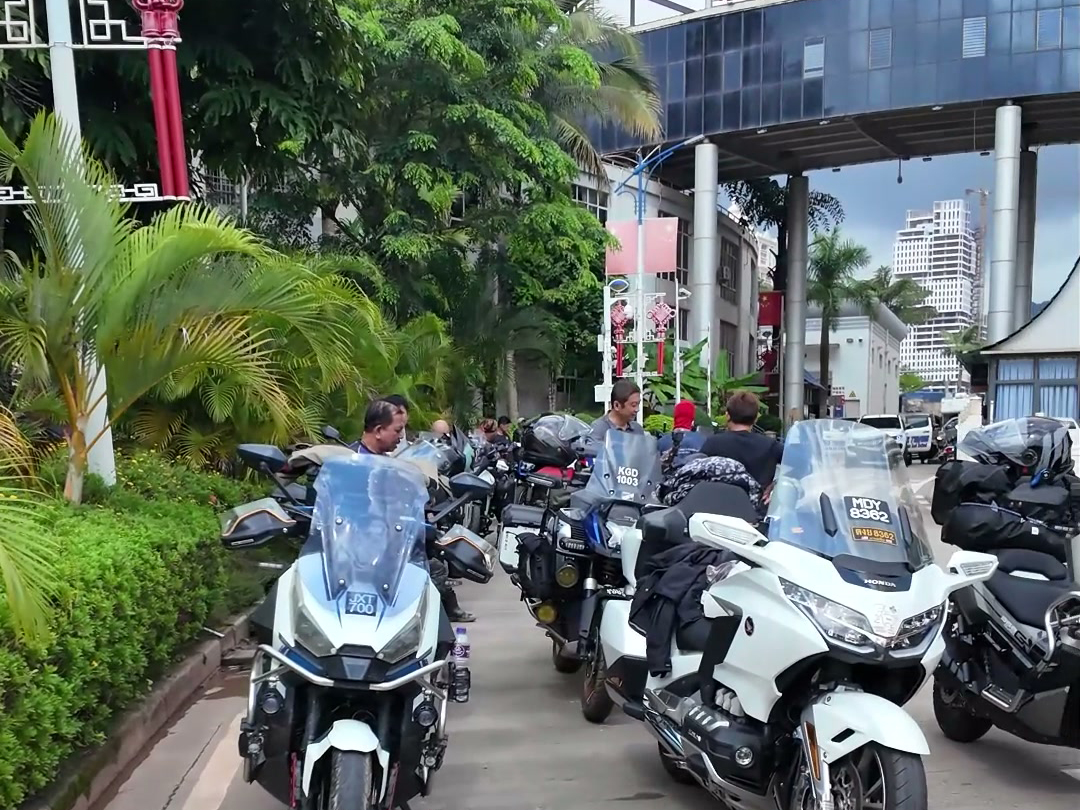
Why you cannot simply wander through alone
A foreign vehicle China entry has to be declared through a qualified travel agency acting as guarantor. Individuals have no standing to declare and cannot clear customs on their own. I know this sounds like the bit travellers skim, but it is the bit that stops the whole adventure in the lane.
Our arrangements were handled by Yunnan Province International Travel Agency (Group) Co., Ltd; contact person Zara, reachable on WeChat/WhatsApp at +86 13759155671, WeChat ID qxzj7557, or email [email protected]. The company holds a RMB 1.6 million tourism quality deposit. Qualification requires that deposit plus three years of operation, which is rather more reassuring than a stranger on a messaging app promising “no problem, my cousin knows the gate.”
The first paper: your Temporary China Licence
The document people want photographed first is the Temporary China Licence. China is not party to the UN road convention and does not recognise the International Driving Permit, so the Chinese temporary driving licence is not a decorative translation of your home licence. It is the thing that lets you legally take the wheel.
Check the name against your passport, check the vehicle category, and then check again while pretending you are not checking. The officer will not mind. Future you, pulled over at a mountain checkpoint while rain hammers the roof, will mind very much.
The licence is arranged by the agency as part of the port service. There is no separate fee tucked into the list for it. I’d rather spend ten minutes comparing every line at the window than discover a typo three provinces later.
The temporary plate and the sobering insurance slip
Next comes the temporary plate. It is valid for 3 months. That is the number to photograph, memorise and build your China road trip around.
The compulsory traffic insurance slip matters because without compulsory traffic insurance, a temporary plate cannot be issued. Commercial third-party cover from RMB 500,000 is optional. The agency purchases insurance before entry and the client pays the actual cost. Keep the paperwork in the same waterproof folder as the licence, not buried under a bag of mangoes. I say this from the school of “it seemed like a sensible place at the time.”
What the customs paperwork actually looks like
The customs declaration identifies the vehicle, the owner and the entry arrangement backed by the agency guarantee. With that guarantee, the customs deposit the owner pays is only RMB 10,000. It must be paid into the company’s corporate account, never a personal account, and it needs to arrive 3 days before entry. If it arrives late, the declaration is cancelled and the service fee is not refunded.
That last sentence is the boring one that saves holidays. Set the transfer, confirm it, then go eat. Do not eat first and forget the transfer. Especially do not eat something ferociously spicy first and forget the transfer.
After exit, the deposit is fully refunded by the same route within 3–5 working days, provided you leave on time without overstay, have no outstanding traffic fines, and leave no unpaid fees or unfinished customs matters behind.
The other sheets in the folder
There will also be immigration paperwork, route filing documents and exit-clearance records. None of it is cinematic. All of it matters.
The service fee at Mohan is RMB 5,000–6,000 per vehicle; Laos-registered vehicles pay RMB 4,000. Cars, motorhomes and motorcycles are the same price. That fee covers customs declaration, immigration formalities, the temporary driving licence, temporary plate, exit clearance, route filing and on-site port assistance.
It does not cover the customs deposit, vehicle insurance, document translation, vehicle inspection at about RMB 200, or fuel, tolls, food, accommodation and a guide. The fee stays the same whether your trip runs one month or three months; it is not charged per day.
Both left- and right-hand-drive vehicles are accepted at every port, with the same fees and no surcharge. As a right-hand-drive driver, I allowed myself a quiet half-hour after formalities to remember that China drives on the right. Mirrors, junctions, lane position — reset all of them. The first roundabout is no place for patriotism about your usual side of the road.
What to send before you reach Mohan
Documents should be ready 20 days ahead; Tibet itineraries need a month. You will need your passport, Chinese visa, driving licence, a white-background ID photo, vehicle licence, registration certificate, engine number, and one photo each of the front, rear and side.
Vehicles over six years old need an inspection certificate and must pass an inspection at the vehicle management office after entry; some ports also require a valid home-country annual inspection certificate. Documents other than a Chinese licence need Chinese translation, which the agency arranges.
If 30 days is enough, China offers 30-day visa-free entry. For a longer trip, the agency can issue an invitation letter to help obtain a longer tourist visa.
Where the paperwork lets you go
You can travel nationwide, subject to restricted areas. Tibet requires a full-time guide and a Tibet permit; there is no separate Tibet driving licence, because the China temporary driving licence is valid nationwide. Beijing requires a capital entry permit. Some border-restricted areas in Xinjiang and Gansu are off limits, along with the G219 Dahongliutan section, the Kashgar/Yecheng to Ritu (Pangong Lake) section, and the new Minfeng no-man’s-land highway. From Xinjiang to Tibet, detour via Golmud on G109. Legal highways into Tibet are G109, G318 and G214.
Drive the filed route. No escort or lead vehicle is required, except the mandatory Tibet guide. Ports are not open 24 hours, so do not arrive smugly at dusk expecting the mountain to stay awake. At checkpoints or police stops, the agency provides supporting documents remotely.
Other ports and the fee picture
Mohan is not the only door. The four land ports are Mohan (China–Laos), Khorgos (霍尔果斯, China–Kazakhstan), Gyirong (吉隆, China–Nepal) and Erenhot (二连浩特, China–Mongolia). The three sea ports are Dalian, Guangzhou and Shenzhen.
- Khorgos entry: RMB 6,000–9,000
- Cross-through, Khorgos in/Mohan out or reverse: RMB 8,000 full package
- Erenhot entry: RMB 8,500
- Guangzhou sea entry: RMB 22,000, ocean freight not included
- Dalian sea entry: RMB 18,000, ocean freight not included
After the stamps: grilled fish, midnight streets and kindness
Once the folder was complete and the van was legal, the journey changed shape. The road opened into green hills, tunnels cut through karst ridges, and Chinese tail lights streamed ahead in neat red strings.
I stopped in a small Yunnan town that night, still fragile from the noodle incident, and found myself at a table with grilled fish, herbs, peanuts and a bowl of rice. An older woman noticed I was treating the chilli oil like an enemy negotiating surrender, laughed, and brought over a smaller plate with plain vegetables. She refused extra money. Her grandson used a translation app to ask, in careful English, whether British people really ate fish with chips. I confirmed it. He looked underwhelmed.
What stays with me from that China road trip is not only the paperwork. It is walking back to the van near midnight through streets full of families, fruit sellers and people playing cards outside shops. I never felt nervous. I felt hungry, mostly, which is its own kind of danger.
One morning I slept through the alarm after a late barbecue and only made the planned road because the hotel receptionist knocked, pointed at her watch, and handed me a bag of hot buns. She shook her finger like a disappointed aunt. I deserved it.
So photograph every page at Mohan: the Temporary China Licence, plate record, customs declaration, insurance and route filing. Keep them dry. Pay the deposit into the correct corporate account, on time. Then go and eat well — but perhaps have a nap first.
Zara
Yunnan Province International Travel Agency (Group) Co., Ltd
WeChat/WhatsApp: +86 13759155671
WeChat ID: qxzj7557
Email: [email protected]