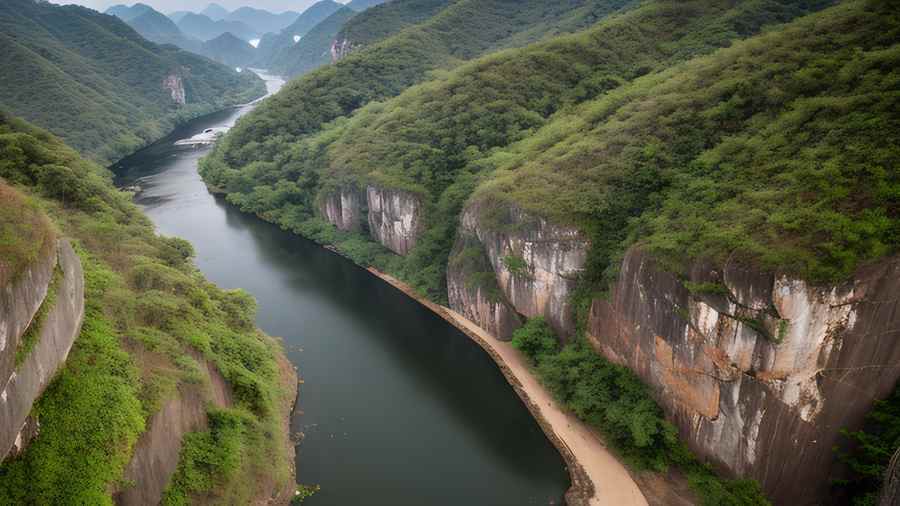
Most visitors to Fujian stay on the coast: Xiamen, Quanzhou, the harbour towns. Inland is a different province, high and green, where the county seats sit on mountain basins and the rivers cut through red sandstone. I drove it as a seven-day loop from Fuzhou with a hired car: 190 km up to the highland county of Zhouning, a play day there, then east to the Min River city of Nanping, south-west into the Danxia country around Taining, and north to the tea mountains of Wuyishan before the long motorway run home. The drive alternates climbs and plains, and two days are spent off the road altogether, walking villages and gorges rather than moving between them. Two questions come up on a loop like this. The first is how to arrive with a car. For 880 km around inland Fujian, Foreign Car Entry Self-Drive is a poor fit: bringing your own vehicle across the border means entry paperwork, a customs bond and a fixed window that do not match a one-week hire, and the mountain roads here are easier to cover in a local rental. Renting a Car in China as a Foreigner at the Fuzhou station or airport, with the licence translation and paperwork arranged at the desk before you leave, gives you the whole loop in seven days and a car handed back in the same place. The second is what the country is like: cool highland villages, stone lanes, protected fish in a clear brook, bamboo rafts through red cliffs, and tea sold at the ridge where it was picked.
Trip overview
- Day 1 – Fuzhou to Zhouning, 190 km: Louping village, Carp Stream and the Jiulongji falls.
- Day 2 – Zhouning, 0 km on the loop: the stone village, the protected carp, the gorge waterfalls.
- Day 3 – Zhouning to Nanping, 155 km: Mangdang Mountain, Jiufeng Hill and Yanping Lake.
- Day 4 – Nanping to Taining North, 120 km: Shangqing Stream, Jiulong Lake and Zhuangyuan Rock.
- Day 5 – Taining North to Wuyishan, 140 km: Xiamei village, Wuyi Palace and the Nine Bend Stream.
- Day 6 – Wuyishan, 0 km on the loop: tea village, palace grounds, bamboo raft on the bends.
- Day 7 – Wuyishan back to Fuzhou, 275 km: motorway home, reaching the city in the evening.
Total 880 km over seven days, an average of about 126 km a day, with two full play days and no stage over four hours. Mountain roads run cool in summer; fill up in county seats before climbing.
Day 1 · Fuzhou to Zhouning, 190 km
Road
Leave Fuzhou inland on the ring expressway toward Ningde, climbing into the mountains for 190 km, roughly three hours with one stop. The first stretch is wide motorway; after Ningde the road rises through tunnels and cuttings, with the valley falling away on the left and small tea plots on the slopes. Zhouning sits on a highland basin, and the last twenty kilometres climb steadily; the air turns cooler and the pines replace the palms. There are toll stations on the motorway section, and fuel stations every thirty or forty kilometres down below, but few once you start climbing, so fill up before the ascent. The county seat has roadside parking near the old quarter; the village car parks at Louping and Carp Stream are signed and fill by ten in summer.
Sights
Zhouning is a highland county in the foothills north-west of Ningde, and the loop spends two days on its three best places. Begin with Louping, a stone village set back on the slope: its houses are built of local grey stone, laid in courses along the lane, with tile roofs and courtyards that hold drying racks for tea and vegetables. The walk up through the village passes old stone mills, a pond where the water buffalo used to stand, and a lookout over the terraced fields on the far hill; in the morning the mist sits in the valley and the village comes out onto its doorsteps slowly. Midday, go down to Puyuan and the Carp Stream, a clear brook that runs straight through the village. The carp here have been protected by village custom for centuries: no one catches them, families record the obligation on stone tablets, and the fish are old, large and unafraid, gathering when someone lowers a bowl of food from the stone bank. The banks are paved and lined with old houses; feeding the fish follows local practice, and the stream never carries other people's leftovers. In the afternoon drive the short gorge road to Jiulongji, the Nine Dragon Cascade: a chain of waterfalls dropped through a narrow cleft in the mountain, the first wide and foaming, the later ones taller and thinner, with a walkway that climbs beside the water from the lower pool up to the top falls. The spray keeps the path damp; bring a coat and watch the stone steps after rain.
Food
The Zhouning table is mountain food: local wontons with thin skins and a clear broth, taro noodles and loach rice noodles among the county's everyday bowls. Highland potato is fried crisp outside and soft inside, served with mountain greens and perilla. The small town kitchens cook plainly, and the local high-mountain roast tea cuts through the richness at dinner.
Where to stay
Stay in Zhouning county seat near the old quarter. The nights are cool up on the basin, no air conditioning needed, and the courtyard takes the car. Ask for the room toward the village edge if you want quiet and the sound of the stream in the morning.
Day 2 · Zhouning, 0 km on the loop
Road
No driving today. The three Zhouning sites are close: Carp Stream and Louping are a few minutes from the county seat by road, and Jiulongji is a half-hour drive out and back if you left something undone the afternoon before. Leave the car in the guesthouse yard and walk the village lanes; the streamside path connects Puyuan to the upper village without a car.
Sights
The second day is for going back slowly. In the morning, before the tour buses, walk the Carp Stream again: the carp feed early, the water runs clear over the stones, and the old arcade of houses along the bank keeps its laundry poles and its doorsteps where the villagers sit. Find the stone tablets that record the village's centuries-old rule of protecting the fish; the custom is older than any written sign at the gate, and it is why the stream still holds fish in a county that otherwise fishes every water. Then up to Louping for the village in daylight: the stone walls, the narrow lanes where the eaves almost meet, the tea drying on bamboo racks in the courtyards, and the old ancestral hall with its carved screen. The highland around the village grows tea and cool-climate vegetables; the small tea houses on the lane sell the local high-mountain roast, and you can sit with a cup while the owner talks through the picking seasons. In the afternoon, if the weather holds, return to Jiulongji for the upper falls that the first day's light did not show: the top cascade drops into a deep pool, and the trail above it runs along the ridge with views back over the gorge. If it rains, the gorge paths close; spend the afternoon in the county's tea shops and the small mountain folk museum instead, which keeps old farm tools, stone mortars and the village contracts written on red paper.
Food
Breakfast is wontons with a yellow rice cake; lunch in the village kitchen: mountain yam, braised bamboo shoots with pork and a bowl of loach noodles. In the afternoon the roast tea comes with a rice cake, and the county's sweets are never heavy.
Where to stay
Second night Zhouning, same guesthouse. Ask for the window over the mountain side; the night stays cool, and you can watch the mist come up from the valley in the morning.
Day 3 · Zhouning to Nanping, 155 km
Road
From Zhouning across country to Nanping, 155 km, about three hours. The road leaves the highland basin, drops through switchbacks to the valley, then joins the expressway east; traffic is light on weekdays, slower on market days when trucks carry vegetables down to the coast. Tunnels mark the ridge crossings; after the last one the Min River plain opens and Nanping appears on the confluence of the Jian and Futun streams. Mangdang Mountain has its own car park at the gate, a short climb from the city; Jiufeng and Yanping Lake are both reachable by city road from the old quarter.
Sights
Nanping, the Yanping old town, sits where two streams meet to form the Min River, and the day covers its three green spaces around the city. Mangdang Mountain rises behind the town: a forested slope with an ancient stone path, the Three Thousand Eight Hundred Steps, that climbs from the foothill temple to the ridge. The path is paved in old stone, shaded by maples and bamboo, and the side terraces carry the old lookout pavilions; at the top the view opens over the river plain and the lines of the two streams coming together. The mountain is close enough to the city that locals walk it in an hour after work. Back down, Jiufeng Hill is the city park on the opposite bank: a wooded knoll with pavilions up the slope, a small zoo of local animals at the foot, and a terrace that looks straight across the river to the old quarter's tiled roofs. Yanping Lake is the widened reservoir reach of the Min below the town; the waterfront road runs along the water with willows and boat docks, and in the evening the locals walk it before dinner. The old quarter itself, between the two bridges, has the old commercial streets and the riverside temples worth a slow pass before dark.
Food
Eat Min River fish, cooked simply clear-poached or braised with soy, served with the local flatbread. Fish ball soup is the everyday bowl in town, and the osmanthus cake from Xiayang is soft and sweet, worth taking two pieces back to the hotel. Most kitchens sit along the river in the old quarter, with plain prices.
Where to stay
Stay in the Yanping old town or by Yanping Lake. The old quarter is close to food and walking; the lake side is quiet, with a morning waterside walk and wider parking.
Day 4 · Nanping to Taining North, 120 km
Road
South-west from Nanping to Taining North, 120 km, roughly two and a half hours. The road alternates expressway and good provincial road, crossing rolling country of red sandstone; the Danxia peaks begin to appear on the right an hour before Taining. The county seat and the scenic area gates are close together; each of the three sites has its own signed car park, and the Shangqing Stream raft pier has a small lot that fills on weekends.
Sights
Taining is one of Fujian's Danxia country, red sandstone carved by water into cliffs, gorges and isolated peaks, and the day takes three of its classic cuts through that rock. Shangqing Stream is the classic drift: a bamboo raft poled through a narrow gorge where the red walls hang over dark water, the boat threading gaps so tight the cliff shadow touches the deck. The guide points out the shapes in the rock, the small caves where swallows nest, and the deep eddies; the whole drift lasts an hour and a half, silent except for the pole and the water. Jiulong Lake, the Nine Dragon Lake, is the same rock opened into water: a reservoir among the red peaks, with boardwalks along the shore and short climbs to lookouts where the reflections sit in still water in the early morning. Zhuangyuan Rock, the Scholar Rock, stands above the stream as a cliff with caves and stone steps; it takes its name from a Song dynasty scholar who studied in these gorges and later topped the imperial examination, and the trails round the rock pass the old study cave, the spring he drank from and the terrace where he sat. The Danxia stone is soft and crumbly underfoot when wet, and the boardwalks are maintained only when the weather holds; check the gate notice before the climb.
Food
Stream fish, red mushroom soup, mountain spring tofu and pan-fried konjac are the county plates; steamed rice cake is soft with tea as a snack. Wild mushrooms follow the season, red mushroom stewed with chicken is the table's main dish, and do not order any wild fungus you cannot identify.
Where to stay
Stay at Taining North or the county seat, near the Danxia scenic gates. You do not need an early start for the morning raft; small guesthouses are plentiful, parking is easy, and the county food street runs at night.
Day 5 · Taining North to Wuyishan, 140 km
Road
From Taining North east to Wuyishan, 140 km, about two and a half hours, mostly expressway through the hills. The road leaves the Danxia country behind and climbs toward the Wuyi range; the tea bushes appear on the lower slopes before the town does. The Xiamei village lane has its own parking at the village entrance; Wuyi Palace and the Nine Bend Stream pier are a few kilometres apart on the scenic road, with signed parking at each.
Sights
Wuyishan is the tea mountain: the range that gives its name to the rock tea sold across China, and the loop spends two days around its old village, its palace and its famous water. Xiamei, the Lower Plum village, sits on a canal outside the scenic reserve: a trading village from the tea-road era, its merchant houses lining the water where tea was loaded onto narrow boats for the port. The canal runs through the middle of the village, crossed by old stone bridges; the big houses have carved gates, courtyards and tea rooms where the family still sells the local roast. Walking the lane you pass the old grain shops, the guild halls and the stone bollards that once tied the boats. Then Wuyi Palace, at the foot of the scenic mountains: an ancient temple site of the Taoist tradition, rebuilt over the centuries, with a walled garden, old banyans and a hall that explains the mountain's religious and tea history. The palace grounds connect to the footpath along the Nine Bend Stream, where you can watch the rafts go down the first bend and book the morning slot for the next day. The stream itself is the mountain's central feature: clear water over rounded boulders, cliffs on the far bank, tea terraces on the slopes, and the rafts poled bend by bend through the seven kilometres of water.
Food
Try the Langu smoked goose, cured over smoke so the flavour runs through the meat, sliced for a plate with drinks; Zixi rice noodles are the town's everyday bowl, and snails and stream fish come with shredded bamboo shoots. Rock tea goes with the meal, a strong brew cutting the richness; snacks include pan-fried dried tofu and pickled bamboo shoots.
Where to stay
Stay in the Wuyishan resort town near the raft pier. The morning drift does not mean a long drive; guesthouses line the stream, courtyards take the car, and the tea street runs at night.
Day 6 · Wuyishan, 0 km on the loop
Road
No driving today. The scenic area runs its own shuttle between the palace, the village and the raft pier; leave the car at the hotel and use the park buses, which are included with the entry ticket.
Sights
The second Wuyishan day belongs to the water and the tea. In the morning take the bamboo raft down the Nine Bend Stream, the reserved slot: the raft drops bend by bend past the sheer cliffs, the tea-named peaks and the rock formations the guide names from the boat, landing below the palace after an hour and a half. From the landing the path climbs back along the bank through the tea plots; stop at the small tasting rooms where pickers sell the spring roast straight off the ridge. Back in Xiamei in the afternoon, walk the village without the morning's crowd: sit in one of the canal-side tea rooms, compare a light rock tea with a darker roast, and look through the old merchant house to the courtyard where the tea was once sorted. The village museum keeps the old trade ledgers, the weights and the boat toll documents from the tea-road century. If time remains, the path behind Wuyi Palace climbs a short ridge for the view over the range: the peaks in a row, the stream as a line of silver below, and the tea bushes stepping up the south slopes. On clear evenings the light stays on the ridges late; the town below is where dinner and the night are booked.
Food
Breakfast in town: Zixi noodles with sliced smoked goose; lunch a farmhouse table, braised bamboo shoots with pork and stream fish soup. Afternoon tea comes with rice cakes and peanuts; dinner follows the local Zhu-family home cooking, savoury and fresh in flavour.
Where to stay
Second night in the Wuyishan resort town. Ask for the room over the stream side, where the raft calls carry up in the morning; changing hotels here would slow the return leg tomorrow.
Day 7 · Wuyishan back to Fuzhou, 275 km
Road
Return to Fuzhou, 275 km, the longest stage of the loop, about three and a half hours on the motorway with a rest stop. The road leaves the Wuyi foothills, crosses the northern Fujian hills on the expressway, and drops toward the coast plain near Fuzhou. Traffic builds toward the city by evening; leave Wuyishan after breakfast rather than after lunch. Fuel at the last county station before the long motorway run, and keep the toll receipts for the return.
Sights
The last day is the road home, but the drive itself shows the change from mountain to coast. Out of Wuyishan the tea plots give way to mixed forest and then to the bamboo hills of northern Fujian; the motorway crosses ridge after ridge on viaducts, and the villages appear in the valleys with their own farmland and duck ponds. A rest stop at a county town halfway gives the usual Fujian highway food: rice noodles, stir-fried greens and tea eggs. Coming down toward Fuzhou the plain widens, the housing rises on both sides of the road, and the city arrives through the outer ring. Arriving in the evening leaves the night for Fuzhou's own food streets: fish balls, meat swallow soup and line noodles, the coastal cooking the inland loop has been working toward all week.
Food
Lunch on the motorway stop: noodles and a simple stir-fry. Dinner in Fuzhou: fish balls in broth, meat swallow, and a bowl of line noodles with shrimp; the night markets sell sweet rice cakes to take back to the hotel.
Where to stay
The loop closes in Fuzhou. Sleep near the city centre if the onward travel is by rail, or near the airport road if flying; return the hired car at the city desk or the airport lot depending on which you used for pickup.
Practical tips
- Zhouning and Wuyishan sit high and cool even in summer; bring a layer and a rain jacket, and check the weather before the gorge walks.
- Rafts on Shangqing Stream and the Nine Bend Stream book out on weekends and holidays; reserve the morning slot a day ahead.
- Fill the tank in the county seats before the mountain climbs; stations are sparse on the highland stretches.
- The Carp Stream fish are protected by centuries-old village custom; feed only as the locals do, and do not take anything from the water.
- Danxia paths are slippery after rain and the boardwalks close in heavy weather; check the gate notice before climbing.
- For an 880 km loop like this, Renting a Car in China as a Foreigner fits better than Foreign Car Entry Self-Drive, since own-vehicle entry paperwork cannot be finished inside the trip window.
About this route
Seven days are split deliberately: two full play days at Zhouning and two at Wuyishan, with driving days between the mountain, the river city and the Danxia country. If you have five days, merge the two Zhouning mornings and the two Wuyishan afternoons, and drive the loop as Fuzhou, Zhouning, Nanping, Taining, Wuyishan, Fuzhou. If you have more, the tea villages deeper in the Wuyi range and the old porcelain towns south of Nanping are the natural extensions, on the same roads without extra border paperwork.
Kilometre figures are what this drive logged against the exit signs. Raft schedules move with the water level and the season, and opening hours at the scenic gates were confirmed at entry and can change; check the notice on site before the visit.
Route notes by Zara, Yunnan Province International Travel Agency (Group) Co., Ltd.