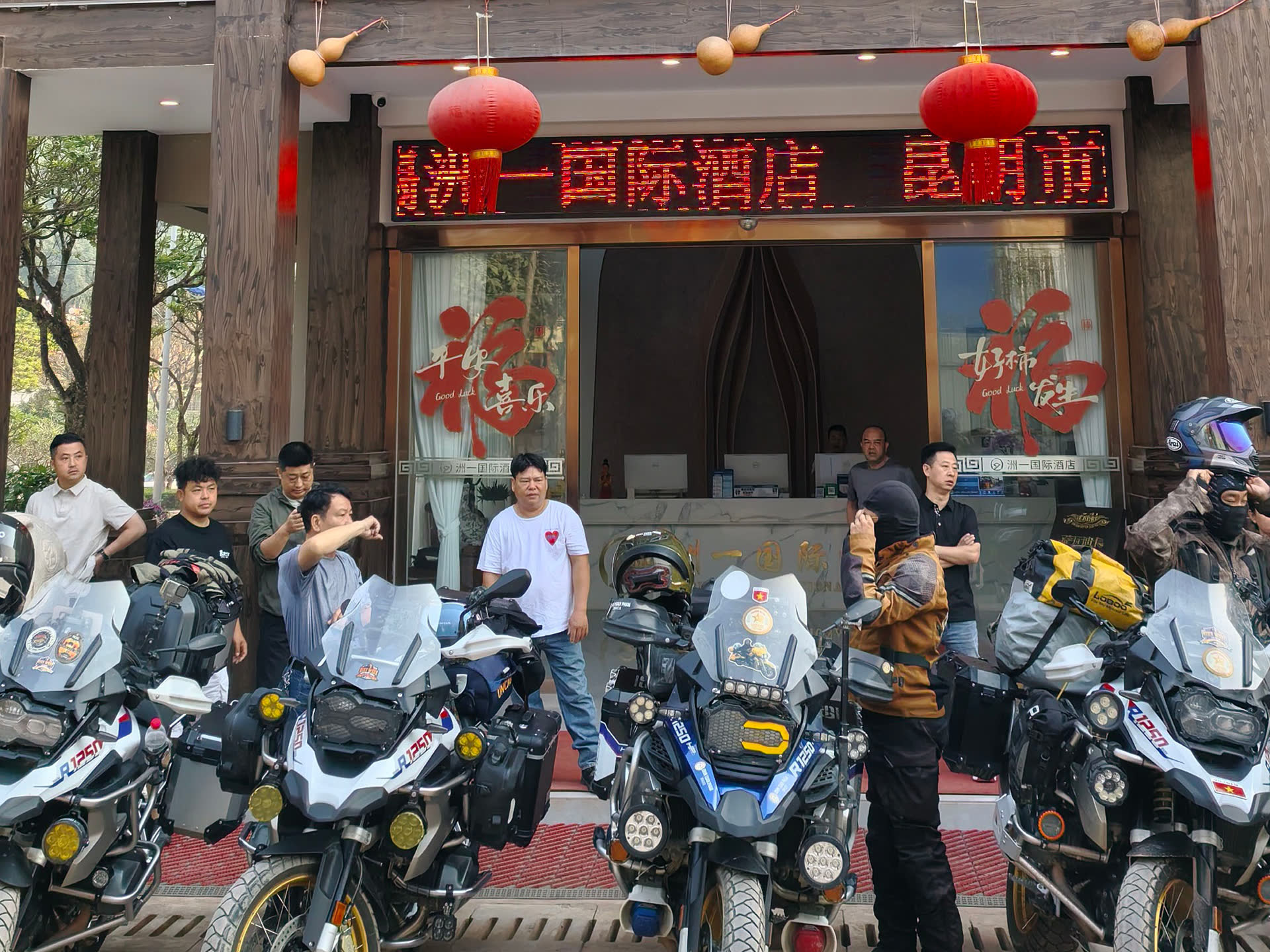
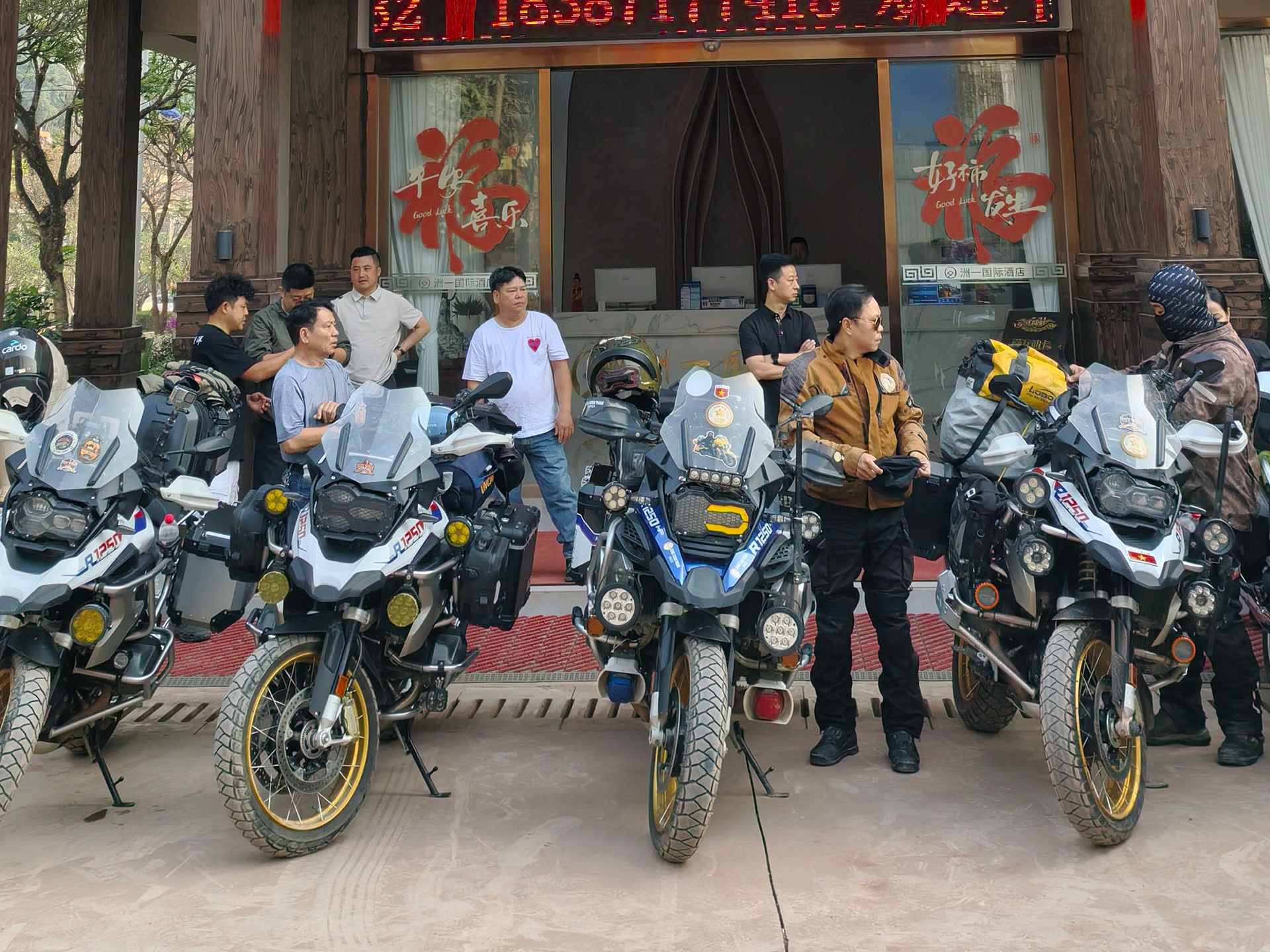
There is a particular energy when a motorcycle convoy comes together. The photos show a group of Vietnamese-registered bikes lined up outside a hotel in Kunming, riders milling around, panniers being checked and last-minute adjustments being made. Scenes like this are a common sight in the city, and they are worth explaining because Kunming plays a particular role in the way foreign motorcycle groups move through China. This piece looks at why the convoys gather here, how a group entry is organised, and what the setup means for the riders taking part.
Kunming is the natural hub for overland traffic entering through the southern land route. It is the first major city most riders reach after the border, and it works as a place to regroup, sort out any remaining formalities and prepare for the longer roads ahead. Hotels in the city are used to foreign bikes and the people who ride them, which is why a group can pull up and park without the confusion that a less experienced venue might create.
1. Why riders travel as a convoy
Some riders prefer to travel alone, but there are practical reasons Vietnamese groups tend to come together. A convoy offers support if a bike develops a problem, shared navigation and route decisions, and a level of confidence that helps on unfamiliar roads. There is also the social side, which matters on a long trip; riding with a group turns a series of long days into a shared experience rather than a solo effort.
Group riding does need discipline, though. Keeping a sensible formation, maintaining spacing and agreeing on hand signals and meeting points keeps everyone safe and together. The riders gathered outside the hotel in the photo are usually doing more than chatting; they are confirming the plan, the route and the order of travel before the group moves.
2. How a group entry is arranged
A convoy is not simply a collection of individuals who happen to cross together. Each motorcycle still has to be declared and each rider still needs the correct documents, but the process is coordinated as a group through a licensed travel agency. The agency prepares the customs declaration for the vehicles, arranges the temporary entry plates and the Chinese temporary driving licences, and files the route the group intends to follow.
Every bike receives a temporary entry plate with a validity of three months, and every rider needs a temporary driving licence for the motorcycle category, because China does not rely on an international driving permit in the way many visitors assume. Handling this as a coordinated package is far more reliable than each rider trying to manage their own paperwork, and it keeps the group together rather than splitting it at the border.
3. The role of the licensed agency
The requirement for a licensed agency applies to a convoy just as firmly as to a single rider, and in some ways it matters more with a group. A foreign vehicle cannot be self-declared, so the entry has to run through an agency with the proper outbound-tourism qualifications and the required quality deposit. The agency acts as the guarantor for the vehicles while they are in China and confirms the group leaves again on schedule.
For a convoy, the agency also handles the practical coordination that keeps the trip moving: the route filing, the timing at checkpoints, and the communication if anything needs confirming on the road. A group that turns up without that arrangement in place cannot complete the crossing, no matter how well organised the riders are among themselves.
4. The deposit, insurance and costs for a group
The financial arrangements apply per vehicle rather than as one lump sum. Each bike has the same customs deposit structure: a fixed 10,000 yuan paid into the agency's corporate account, cleared at least three days before the crossing so the declaration can proceed. Once the vehicles leave on time and with no outstanding issues, the deposit is returned in full, usually within three to five working days.
Insurance is compulsory for each motorcycle and has to be in place before the temporary plates are issued. The agency arranges it ahead of entry and the riders pay the actual cost. A vehicle inspection fee of around 200 yuan applies across the board, and translation costs may add a little. Coordinating these as a group makes the process predictable and helps the riders know exactly what they are paying.
5. From the hotel onto the road
Once the group leaves the hotel, the riding settles into a rhythm. The roads out of Kunming climb through the hills and open into the wider province, and a well-run convoy keeps a steady pace that suits every rider rather than the fastest one. The lead and the rear riders carry particular responsibility for keeping the group together and watching for anyone falling behind.
Checkpoints are a routine part of the journey, especially further from the cities, and a coordinated group usually passes through them smoothly when the documents are in order. Officers check that the bikes match the temporary plates and declarations and that the riders match their licences. Staying calm and handing over the folder as planned is usually the whole interaction, with the agency available remotely if anything needs confirming.
For groups aiming toward the high plateau, the usual restricted-area rules apply. Tibet requires separate permits and a guide, and some border zones are not open to foreign visitors. A convoy planning these routes needs to sort the permits well in advance rather than deciding on the road, and where there is no clear current answer, the agency and the printed permits are the reliable source.
6. What makes a group trip work
The gathering outside the Kunming hotel is really the visible sign of preparation done well. Each rider has a temporary plate and a Chinese temporary licence, the route is filed, the deposits and insurance are in place, and the group has agreed how it will ride together. The hotel stop is the last chance to check all of that before the kilometres begin.
The Vietnamese convoy in these photos is a reminder that group travel is not about numbers alone. It is about coordination, discipline and having the entry formalities handled correctly through a licensed agency. Get those foundations right and use Kunming as the regrouping point it is designed to be, and a motorcycle convoy can move through China in an orderly, enjoyable way that solo riders often look on with envy.