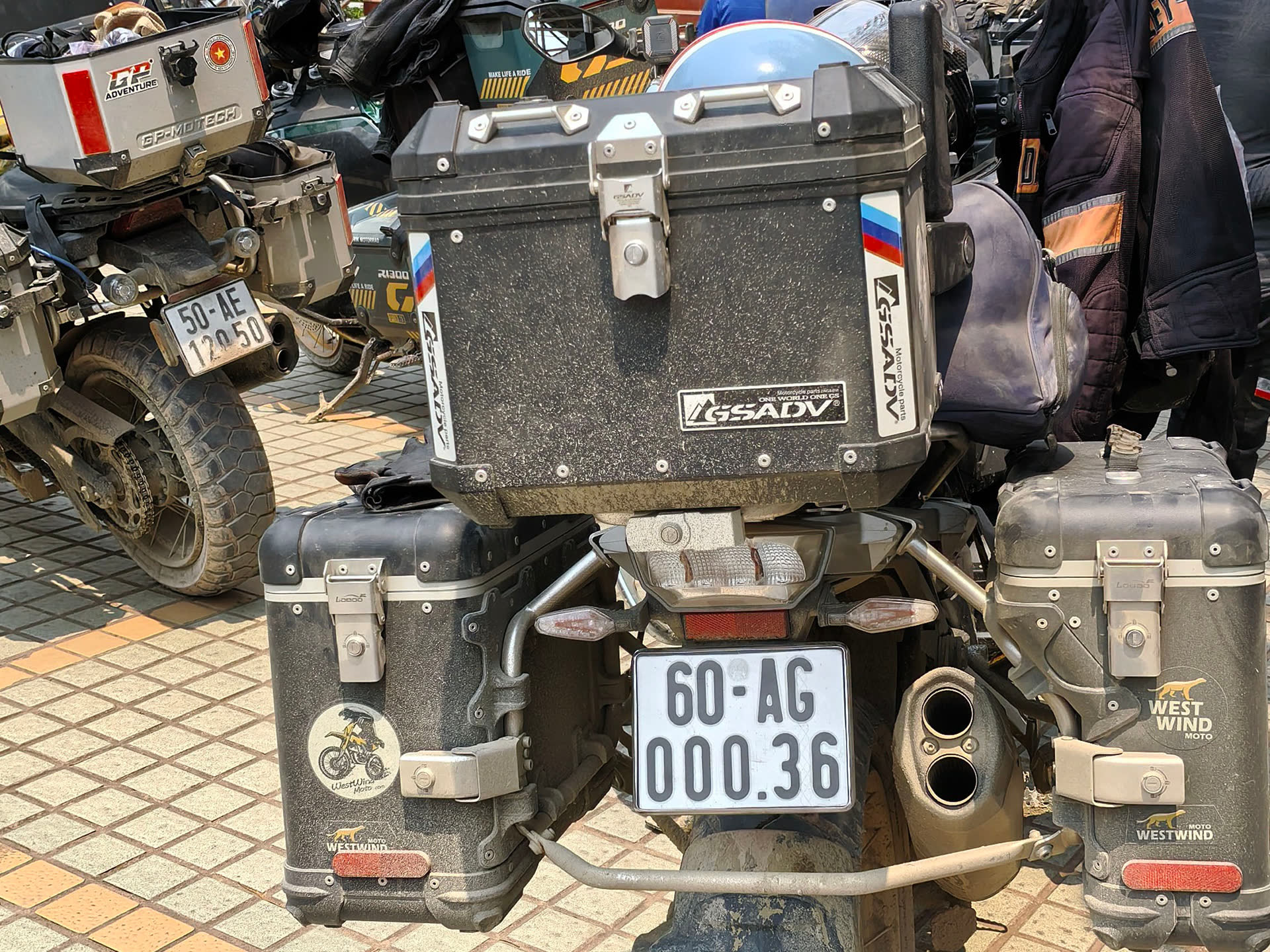
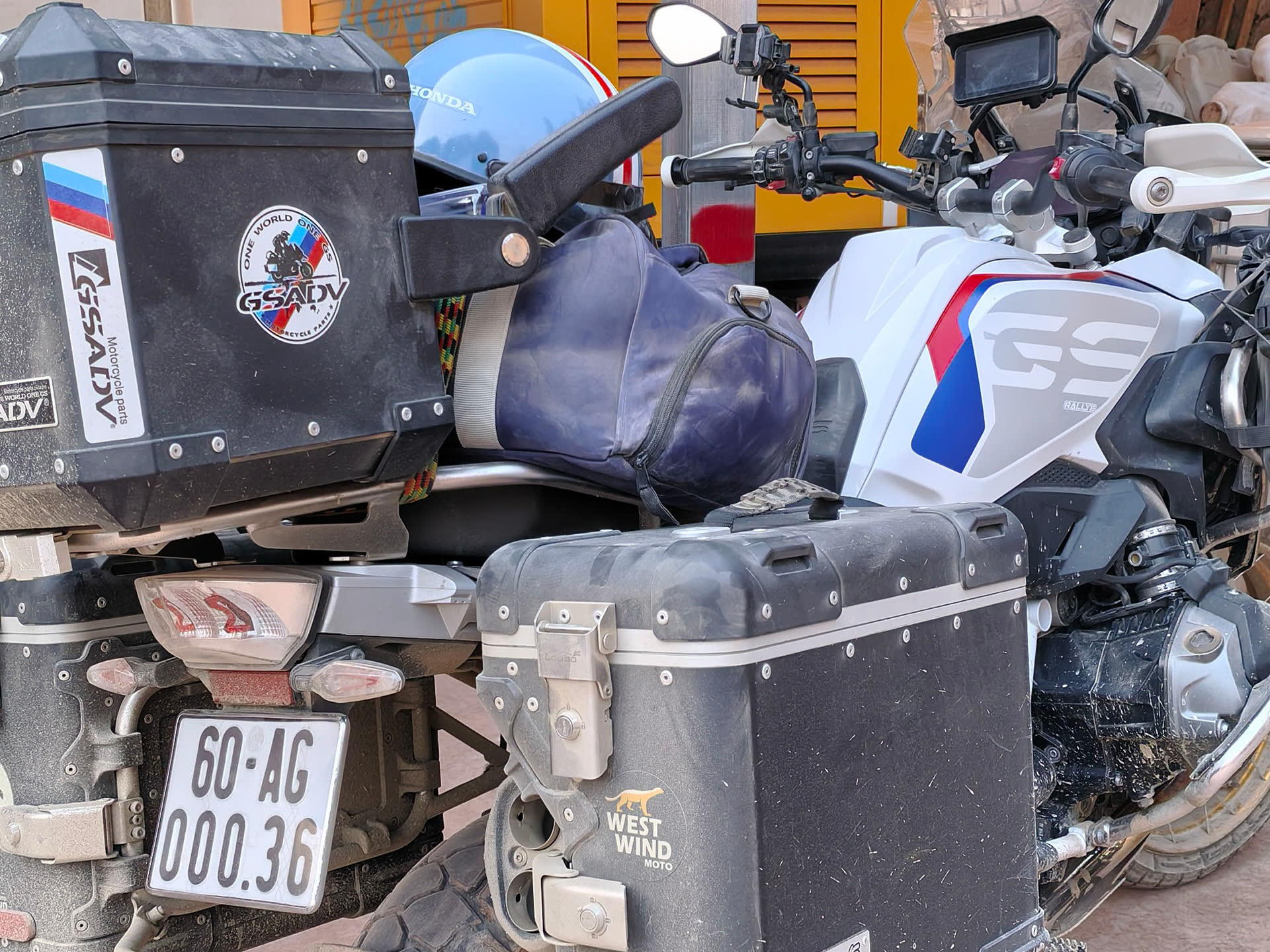
If you have spent any time around the land crossings between Vietnam, Laos and southern China, you will recognise the scene straight away: a big-capacity adventure bike, Vietnamese plates still on the front and rear, and a set of hard aluminium panniers packed tight for the weeks ahead. The bike in these photos is exactly that kind of machine, and it is a useful example to walk through because the way it is set up tells you a lot about what actually works on a long China road trip on two wheels.
Riders coming over from Vietnam tend to be practical rather than precious about their bikes. They are not arriving on showroom machines. They turn up on well-used adventure tourers fitted with metal cases, decent tyres, added lights and the odd protective bar, because the whole point is to cover distance, cross the border cleanly, and then keep riding through Yunnan and beyond without chasing luggage problems every evening. In this piece I want to cover three things: why the luggage matters, what the bike legally needs before it can enter, and how the paperwork, deposit and insurance actually work in plain English.
1. Why aluminium panniers make sense for the riding ahead
Soft luggage has its fans, and there is no argument that quality waterproof bags are lighter. But for a multi-week trip that starts with a customs inspection and then runs through mountain roads, variable weather and hotel stops every night, most experienced riders lean towards hard aluminium cases, and the reasons are fairly straightforward.
They survive being handled. At the border, bags may need to come off and be opened for inspection. Rigid boxes keep their shape and can be repacked without everything spilling onto the ground. They lock to the bike. When you stop for lunch or walk into a hotel, the cases stay secured rather than being grabbed in a few seconds. They shrug off rain and dust. Southern China can throw heavy tropical downpours at you, and unsealed sections throw up a lot of dust. A good seal keeps clothes and documents dry. They double as a bench. It sounds minor, but after a long day in the saddle a solid top case is genuinely handy at camp stops.
The trade-off is weight and cost, and there is a real skill in not overfilling them. The temptation with large boxes is to carry far more than you need, which changes how the bike feels, especially when fully loaded on a climb. Disciplined riders treat the fixed capacity as a helpful limit rather than a target.
2. What the bike needs before it can legally enter China
This is where a lot of first-time riders get caught out, because the rules for a foreign-registered motorcycle are not the same as simply crossing on foot with a passport. The machine itself has to be declared and given permission to be on Chinese roads, and the rider needs the correct licence to go with it.
The temporary entry plate. A foreign plate alone is not enough to ride around inside China. Once the entry formalities are completed, the bike is issued a Chinese temporary entry plate, which is carried on the motorcycle for the duration of the trip. The temporary plate is issued with a validity of three months, and the dates printed on the paperwork are what matter, so the route and the exit plan should be built around that window rather than the other way round.
The Chinese temporary driving licence. China does not recognise an international driving permit under the road-traffic convention setup that many riders assume applies. To legally ride here, a foreign rider needs a Chinese temporary driving licence for the appropriate motorcycle category. This is arranged as part of the entry process alongside the plate, using the rider's home licence and the supporting documents, rather than something you can simply turn up and collect on the day without preparation.
Why a licensed travel agency is part of the process. This is the point worth being clear about, because it is a requirement rather than an optional extra. A foreign vehicle, including a motorcycle, has to be brought in through a licensed travel agency with the proper outbound-tourism qualifications and the required quality deposit in place. The agency acts as the guarantor for the vehicle and prepares the customs declaration, the plate and the temporary licence. An individual cannot just self-declare and ride through, and turning up at the gate without that arrangement in place simply means the bike does not enter.
That is not a hurdle dreamt up to make things difficult. Customs need a responsible party on the Chinese side who can account for the vehicle while it is in the country and confirm it leaves again. A well-established agency will also know the current format of every document, which saves riders from having their paperwork rejected on a technicality.
3. The deposit, insurance and fees in plain English
Money is where misunderstandings grow, so it is worth separating the different costs rather than lumping them together.
The customs deposit. There is a customs guarantee attached to a temporarily imported vehicle. In practical terms, the rider pays a fixed deposit of 10,000 yuan into the agency's corporate account, which needs to have arrived at least three days before the border crossing so the declaration can proceed. After the bike has left the country on time and with no outstanding issues, the deposit is refunded in full, normally within three to five working days. It is not a fee that disappears; it is a refundable guarantee, and the timing exists to make sure the funds are genuinely cleared before customs commit.
Insurance. The compulsory traffic cover needs to be in place before the temporary plate can be issued, because riding without it is not permitted. The agency arranges this ahead of entry, and the rider pays the actual cost rather than a marked-up figure. Optional higher third-party cover is available depending on how much protection you want for a long trip.
Vehicle inspection and other fixed costs. A vehicle inspection fee of around 200 yuan applies across the board, and there can be translation costs for the documents, since the supporting paperwork needs Chinese versions. The service fee itself covers the customs declaration, the immigration steps, the temporary licence, the temporary plate, the route filing and the on-the-ground handling at the port. Fuel, tolls, food and accommodation are, as always, the rider's own running costs.
Keep the entry documents, the temporary plate paperwork and a copy of the insurance together in one waterproof folder inside a case. At police checkpoints it is this set that gets asked for, and having it ready keeps everything moving.
4. Riding on from the border
Once the formalities are behind you, the riding itself is the reward. The roads climbing through Yunnan wind through tea hills, river valleys and mountain passes, and the surface on the main routes is generally good. A loaded adventure bike feels settled on these roads as long as you respect the extra weight when braking and cornering, particularly after rain when patches can be slick.
Checkpoints are a normal part of driving in the more remote areas, and they are not something to worry about when the paperwork is in order. Officers are checking that the bike and the rider match the documents and that the temporary plate is being used correctly. Being polite, pulling over calmly and handing over the folder is usually the whole interaction. If anything is unclear, the agency can be contacted remotely to confirm the details.
For riders who want to push further into the high plateau, it is important to know that some areas have extra requirements. Tibet, for example, needs a dedicated permit and a guide throughout, and certain border stretches and restricted zones are not open to foreign travellers regardless of the plate. Where there is no confirmed, up-to-date answer on a specific route, the sensible move is to check with the agency and rely on what the permit and the printed paperwork actually state, rather than guessing from an old forum post.
5. Practical takeaways before you set off
Fit hard cases you trust, then resist the urge to fill every last litre of space. Start the agency process early; the deposit needs to clear three days before entry and the documents take time to prepare. Expect both a temporary entry plate and a Chinese temporary driving licence; an international permit alone is not sufficient. Treat the 10,000 yuan as a refundable deposit, not a cost, and keep the proof of payment. Build the itinerary around the three-month validity window and plan the exit accordingly. Check any high-plateau or border-route plans in advance, since some regions need separate permits.
The bike in these photos is a good reminder that a successful trip is rarely about having the newest machine. It is about a reliable adventure bike, sensible luggage, and getting the entry formalities done properly the first time. Get those foundations right, and the riding through China becomes the enjoyable part rather than a series of paperwork problems.
If you are planning to ride your own motorcycle into China, sort the agency and the deposit before you travel, not at the border. Riders who arrive without the guarantee and declaration in place cannot simply process it on the spot.