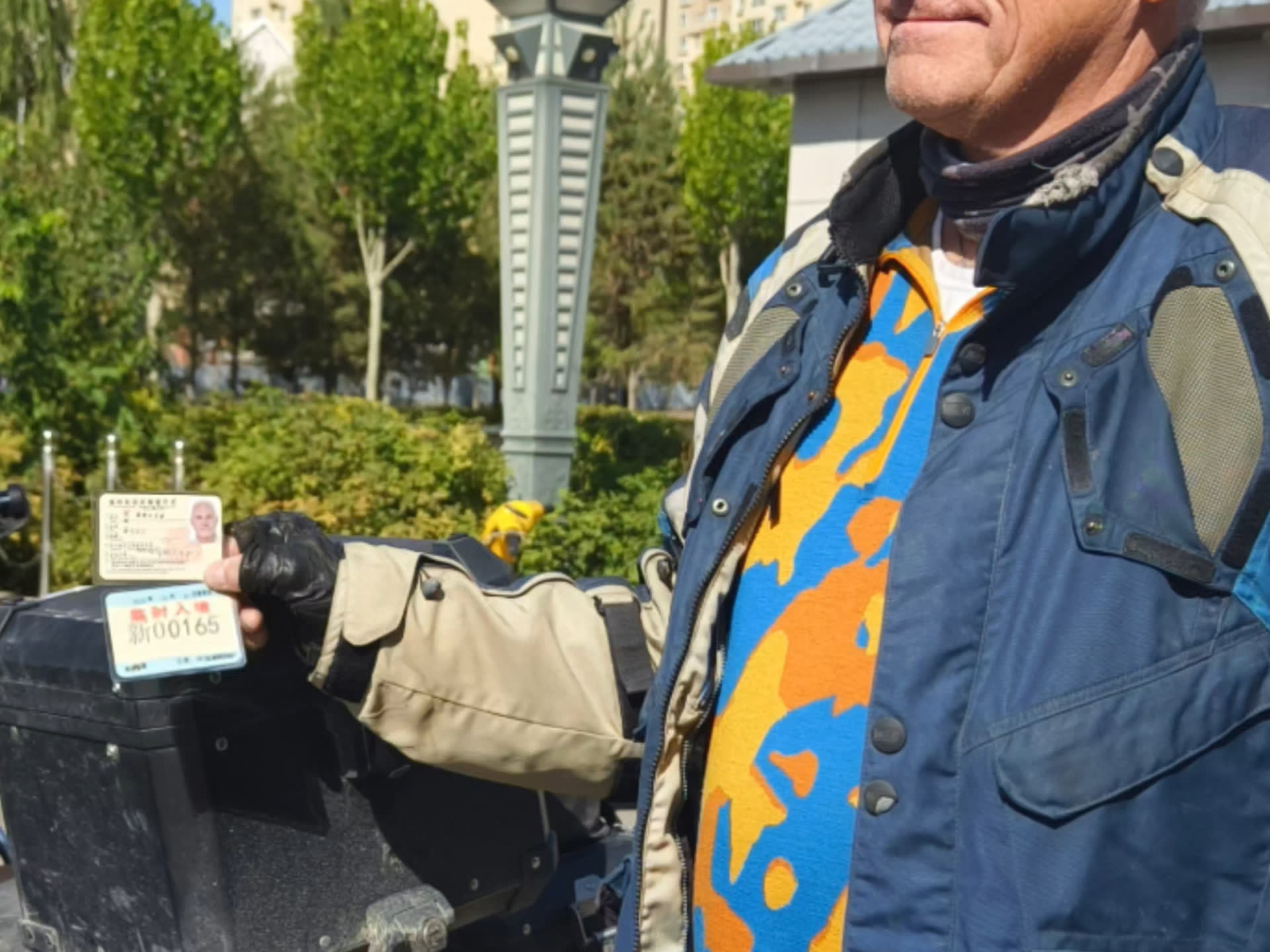
There is something direct about these photographs. A foreign rider is holding the Xinjiang temporary plate and the licence paperwork in their own hands, rather than the documents being shown on a bike or spread across a desk. It puts the focus on the person doing the riding and the papers they personally carry. A lot of guides concentrate on the vehicle, so this piece takes the rider's point of view: what the documents in their hands actually are, why they matter at every stop, and how a motorcyclist should look after them on a long trip.
The rider in the photo has completed the entry process and now holds the physical evidence of it. For a motorcyclist, the documents are more personal than for a driver who can leave a folder in a glove box; they are carried on the body or in a bag at every moment. Understanding exactly what each one is helps avoid the panic that can set in when an officer asks to see them.
1. The temporary plate in the rider's hands
The Xinjiang temporary plate is the permission for the motorcycle to be on Chinese roads. The bike's foreign registration alone does not grant that, so once the customs declaration was completed the vehicle was issued this temporary plate, which is displayed on the motorcycle while the rider is in the country. Holding it here makes clear that it is a physical, issued document tied to the specific bike and the entry record.
The plate is issued with a validity of three months, and the dates printed on the accompanying paperwork define how long the motorcycle may remain. The route and the planned exit need to fit within that window. The regional marking reflects that the formalities were handled in Xinjiang, at the western entry, rather than confining the bike to that region; a properly issued temporary plate allows the rider to follow the filed route through the country.
2. The Chinese temporary driving licence
The other essential document is the Chinese temporary driving licence. China does not rely on an international driving permit in the way many riders assume, so a foreign motorcyclist needs a temporary licence for the motorcycle category in order to ride legally. The rider's home licence supports the application, together with a Chinese translation, but the temporary licence is the actual authority to ride during the visit.
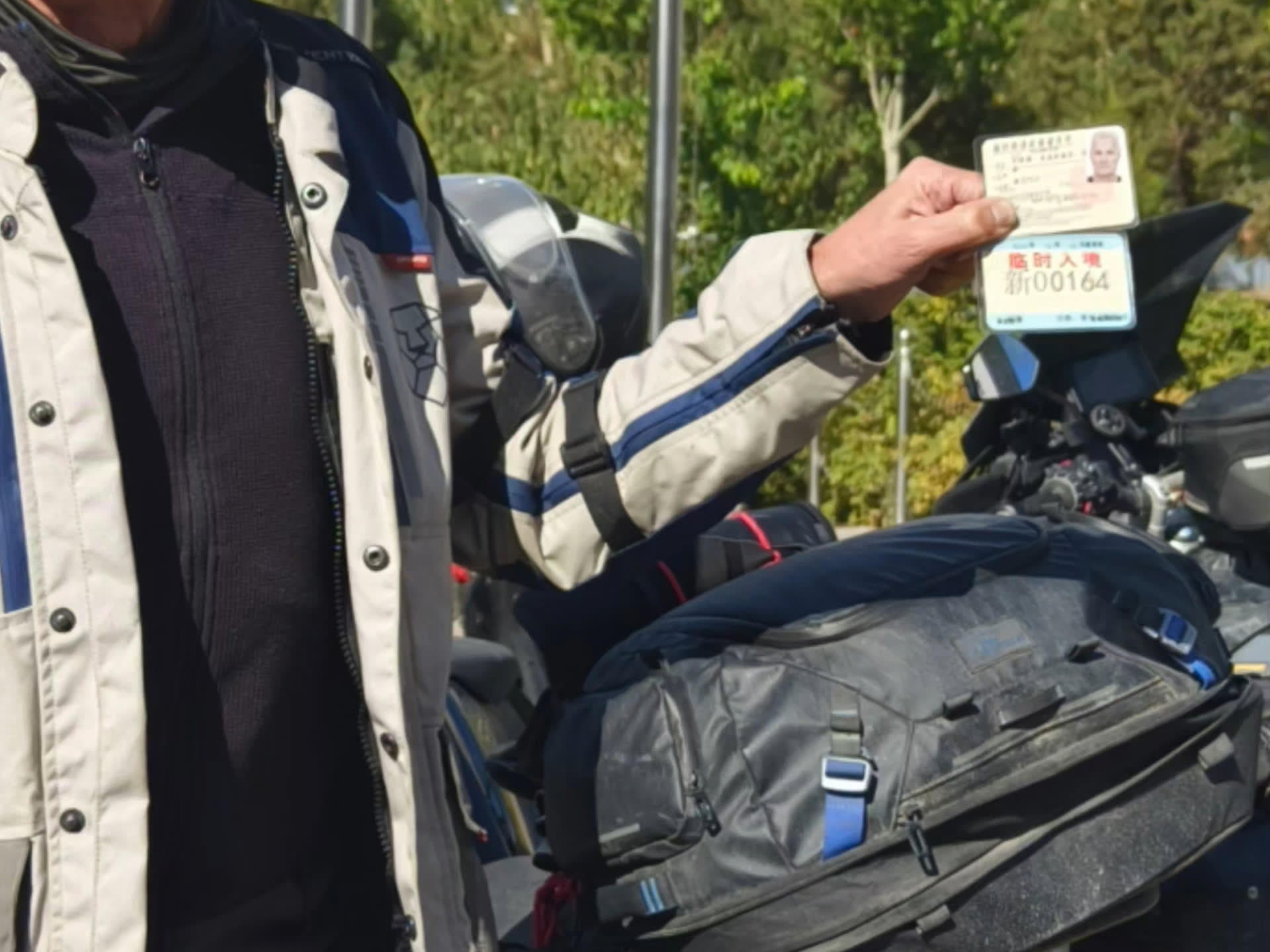
It is important to keep the two distinct in your mind. The plate authorises the vehicle; the licence authorises the person to ride it. Both are needed, and neither substitutes for the other. The rider in the photograph is holding exactly the pair that makes the setup complete, and both should be in hand before the bike leaves the port area.
3. Why a licensed agency is involved
A foreign motorcycle cannot be self-declared at the border. The entry has to run through a licensed travel agency with the proper outbound-tourism qualifications and the required quality deposit lodged with the authorities. The agency acts as the guarantor for the vehicle, prepares the customs declaration and arranges the temporary plate and temporary licence the rider is now holding.
The reason is that customs need a responsible party on the Chinese side who can account for the bike and confirm it leaves again on schedule. The rider benefits because the agency knows the current document formats and handles the technical preparation, which is where self-attempted entries most often fail. The agency also remains a point of contact on the road if an officer needs anything confirmed.
4. The deposit, insurance and costs
The financial side follows the standard structure. The customs deposit is refundable: the rider pays a fixed 10,000 yuan into the agency's corporate account, and it must have cleared at least three days before the crossing so the declaration can proceed. Once the motorcycle leaves on time and with no outstanding issues, the deposit is returned in full, usually within three to five working days.
Insurance is compulsory and has to be in place before the temporary plate is issued, with the agency arranging it ahead of entry and the rider paying the actual cost. A vehicle inspection fee of around 200 yuan applies across the board, and translation costs may add a little. The service fee covers the declaration, the immigration steps, the temporary licence and plate, the route filing and the handling at the port.
5. Looking after the documents on two wheels
This is the practical heart of the matter for a rider. The papers cannot be left in a parked bike, so they are carried in a waterproof pouch on the body or in a secure, known pocket. Keeping the temporary plate paperwork, the temporary licence, the insurance and copies of the declaration together means the whole set can be produced at a checkpoint without rummaging through luggage.
A waterproof holder is worth the small investment, because riders get caught in rain and a soaked, illegible document is a genuine problem. Having a routine, always returning the papers to the same place, means they are never mislaid at a hotel or a fuel stop. The rider in the photo treats the documents as the valuable items they are.
6. Using the documents at checkpoints
Checkpoints are a routine part of motorcycling, especially in the western regions, and they are nothing to worry about when the papers are in order. Officers check that the rider matches the temporary licence and that the bike matches the plate and declaration. Pulling over calmly and handing over the organised folder is usually the whole interaction, and the agency can be contacted remotely if anything needs confirming.
Restricted-area rules are a separate consideration. Some border zones in the west are not open to foreign visitors, and moving toward Tibet requires the additional permits and arrangements that the agency can advise on. Where there is no clear current answer, the reliable move is to trust the printed permits and the agency rather than an old forum post.
The rider in these photographs is a useful reminder that the entry process ultimately hands a person a specific set of documents and expects them to be carried and produced. The temporary plate authorises the bike, the temporary licence authorises the rider, and both result from a declaration arranged through a licensed agency. Know what you are holding, keep the papers dry and to hand, and the checkpoints across China become a calm routine rather than a source of anxiety.