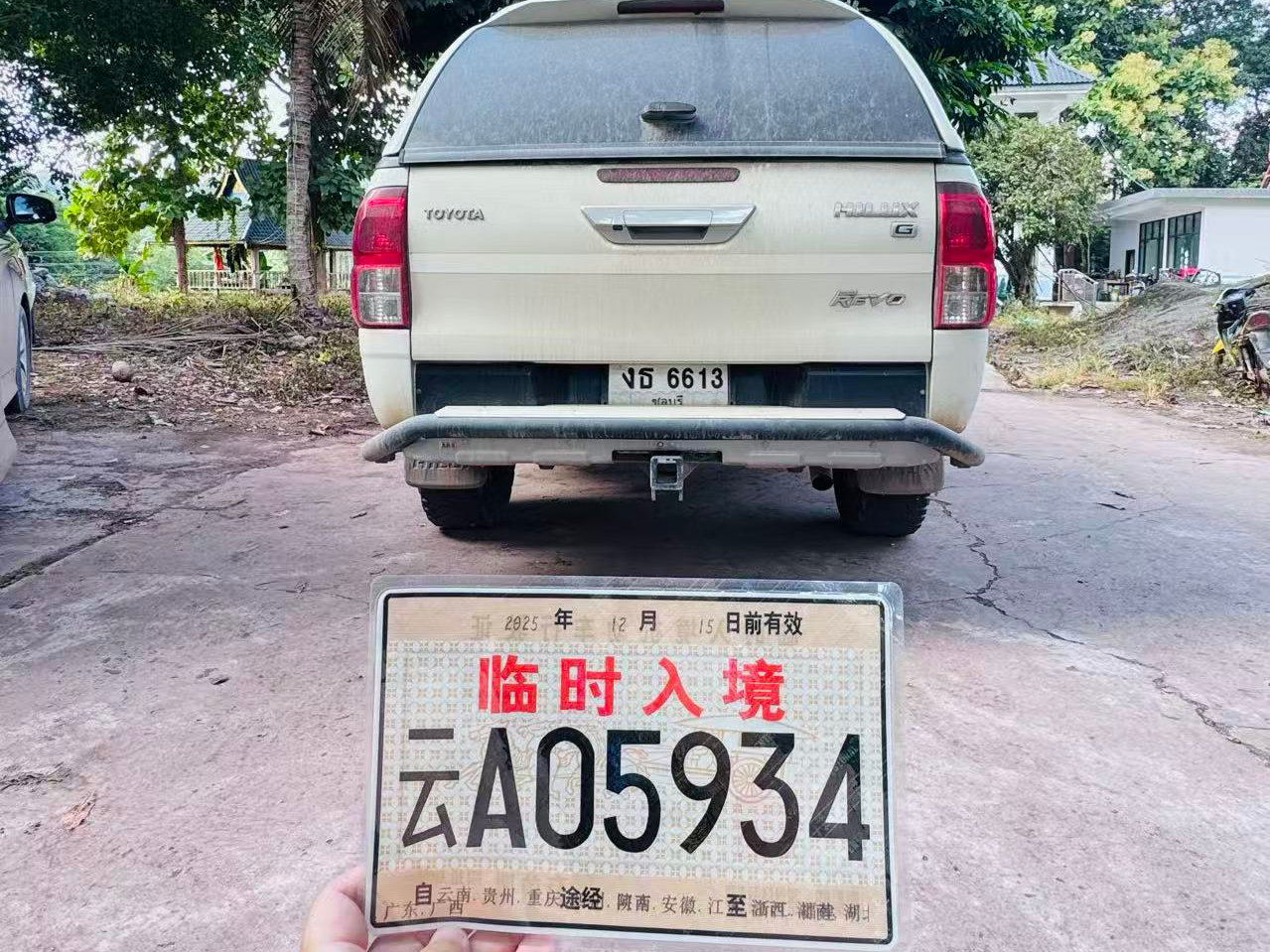
If you stand by the Mohan border crossing for a single morning, you will see the same pattern again and again. A pickup rolls in from the Lao side, dust on the doors and a Thai plate on the bumper, and by the time the formalities are done it is carrying a Chinese temporary entry plate as well. The Toyota Hilux in these photos is one of the most common vehicles making that trip, and that is no accident. It is a machine built for exactly this kind of work, and it gives me a good way to explain what the extra plate on the front actually means.
Pickups are the workhorses of mainland Southeast Asia, and the Hilux is the most widely known of the lot. Owners love them because they are simple, tough and remarkably tolerant of the rough roads, long distances and heavy loads that an overland trip throws at them. A Thai owner driving one into China is usually carrying luggage, spare parts and supplies for a journey measured in weeks rather than days, and the load bay swallows all of it without fuss. The first thing to understand is that the truck itself is not the complicated part of this journey. The paperwork is.
1. What the temporary entry plate actually is
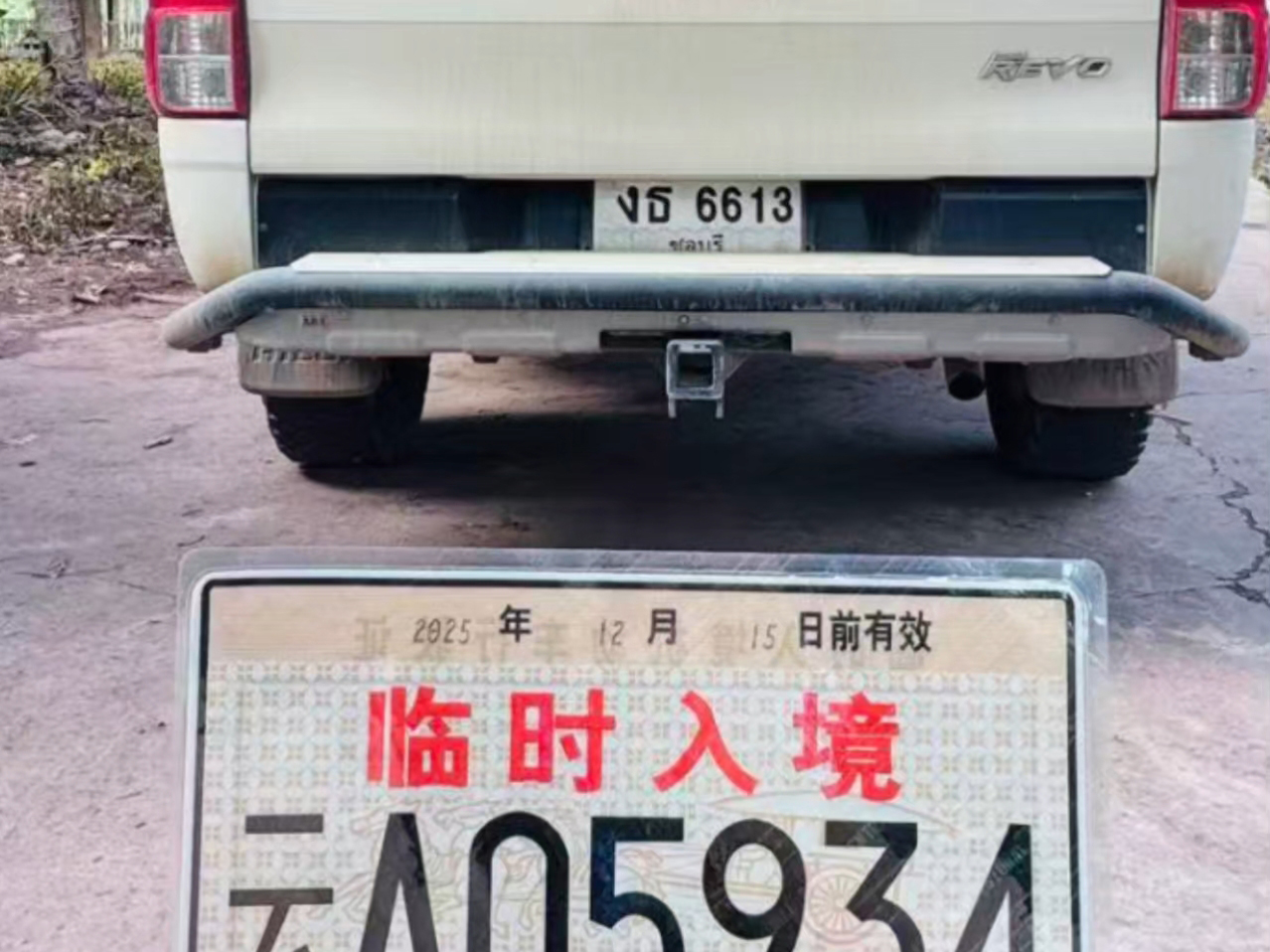
A lot of people assume their home registration is enough once they cross the border, and it is not. A foreign-registered vehicle is not permitted to simply drive around China on its original plate. As part of the entry declaration, the vehicle is issued a Chinese temporary entry plate, which must be displayed while the truck is on Chinese roads. The original Thai plate stays on the vehicle too, so you often see both together, which is exactly what the photos show.
The temporary plate carries a validity period of three months. That window is printed on the accompanying paperwork and governs how long the vehicle may remain in the country, so the route and the planned exit date need to fit inside it. This is not a formality to ignore; it is the legal basis for the vehicle being here at all, and riding or driving beyond it creates serious problems at checkpoints and at the exit crossing.
2. The licence that goes with the plate
The plate is only half of what the driver needs. China does not rely on an international driving permit in the way many visitors expect, so a foreign driver also needs a Chinese temporary driving licence for the correct class of vehicle. For a pickup that means a licence covering light goods vehicles, arranged alongside the plate through the same entry process. The driver's home licence and the supporting documents are used to prepare it, and it needs to be in hand before the truck leaves the border area.
It is worth sorting the documents well before the trip rather than hoping to manage it on arrival. The translation requirements alone can catch people out, because the supporting paperwork needs Chinese versions, and a missing or incorrectly formatted document can hold up the whole declaration.
3. Why a licensed agency sits behind the whole process
This is the part that surprises independent travellers most, because a foreign vehicle cannot be self-declared at the border. The entry has to be handled by a licensed travel agency with the proper outbound-tourism qualifications and the required quality deposit lodged with the authorities. The agency acts as the guarantor for the vehicle while it is in China, prepares the customs declaration, and arranges the temporary plate and the temporary licence.
The reason is straightforward. Customs need a responsible party on the Chinese side who can account for the vehicle and confirm it leaves again when it should. An individual turning up without that arrangement in place will simply be turned away, no matter how good the vehicle is. A competent agency also knows the current format of every document, which is genuinely valuable when the rules around a specific port shift.
4. Deposit, insurance and the costs worth understanding
The money side is where confusion usually builds, so it helps to separate the pieces.
The customs deposit is a refundable guarantee rather than a fee. In practice the owner pays a fixed deposit of 10,000 yuan into the agency's corporate account, and it needs to have arrived at least three days before the crossing so the declaration can proceed. Once the vehicle has left the country on time with no outstanding issues, the deposit is returned in full, normally within three to five working days. Keeping the proof of payment is essential.
Insurance is the other requirement. The compulsory traffic cover has to be in place before the temporary plate can be issued, because the truck cannot legally be driven without it. The agency arranges this ahead of entry and the owner pays the actual cost rather than an inflated figure. Additional third-party cover is available for those who want more protection on a long journey.
There are smaller fixed costs too. A vehicle inspection fee of around 200 yuan applies across the board, and document translation may add a little. The service fee itself covers the customs declaration, immigration steps, temporary licence, temporary plate, route filing and the on-the-ground handling at the port. Fuel, tolls, food and accommodation remain the owner's own running costs.
5. Taking the Hilux on Chinese roads
Once the formalities are complete, the Hilux is in its element. The national highways are well surfaced and the service areas are frequent, which suits a loaded pickup well. The main adjustment for a Thai driver is simply remembering that traffic keeps to the right, and allowing for the extra stopping distance that a fully loaded truck needs, especially on the long downhill sections in the mountains.
Checkpoints are routine, especially away from the big cities, and they are nothing to worry about when the paperwork is in order. Officers check that the driver matches the temporary licence and that the plate and documents line up. Staying calm and handing over the folder is usually the whole interaction, and the agency can be contacted remotely if anything needs confirming.
For anyone heading into the more remote western regions, a little planning goes a long way. Some border areas and restricted zones are not open to foreign visitors, and Tibet requires separate permits and a guide. Where there is no clear, current answer on a specific road, the sensible approach is to check with the agency and rely on what the printed permit actually states rather than an old online thread.
The Hilux in these photos is a reminder that the vehicle is rarely the obstacle. A reliable pickup, a correctly issued temporary plate and licence, and a properly arranged declaration are what make the trip work. Get those foundations in place before you reach the border, and the driving across China becomes the enjoyable part rather than a paperwork problem.