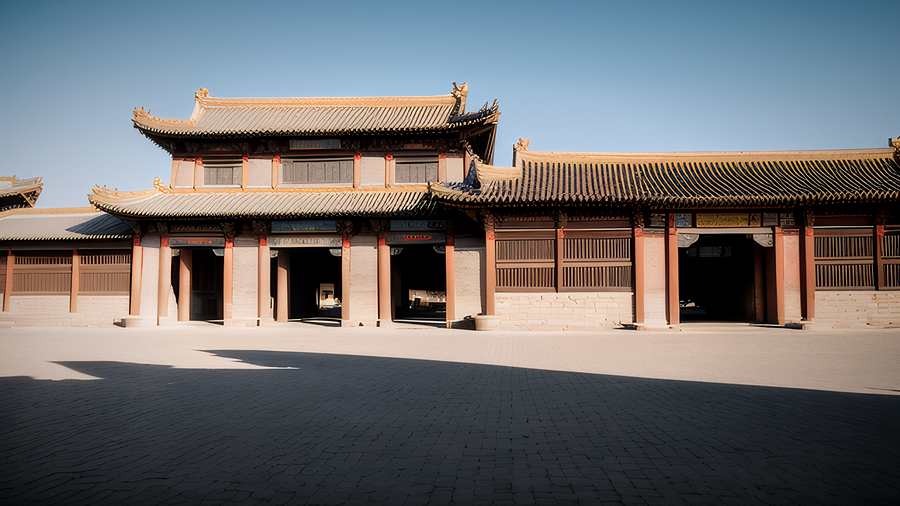
I drove this loop in the second week of October, when the loess plateau was dust-dry and the evenings already cold. Shanxi rewards a car more than most provinces: the good things are scattered between ridges, and the buses between them are slow. The route is 955 km, which sounds like a lot until you spread it over nine days; four of those days involve no driving at all. Coal trucks share the main roads, so I kept to the older parallel routes where I could, and I stopped early each afternoon rather than drive in the dark. What follows is the day-by-day record: road surfaces, what I saw, what I ate and where I slept.
Trip overview
- D1 Taiyuan to Xinzhou, 75 km, Yu Wang Cave and the Diao Chan birthplace
- D2 Xinzhou to Yangquan, 120 km, Niangzi Pass and Cangshan
- D3 Yangquan to Pingyao, 175 km, the old city walls
- D4 A full day inside Pingyao on foot, 0 km
- D5 Pingyao to Qikou, 120 km, Lijiashan and the Yellow River gallery
- D6 A full day at Qikou, 0 km
- D7 Qikou to Linfen, 200 km, the Yao temple and the Iron Buddha temple
- D8 A full day in Linfen, 0 km
- D9 Linfen back to Taiyuan, 265 km, motorway all the way
955 km in total, with the two heaviest days at 200 and 265 km and both of those on fast roads. The mountain sections are short: the climb to Cangshan and the descent to Qikou. Coal traffic is the thing to plan around, not distance. Fuel is available in every town; the stretch between Qikou and Linfen has long gaps, so fill up before leaving the river.
D1、Taiyuan–Xinzhou 75KM
Road
Out of Taiyuan on the north ring, then the G55 for fifty kilometres and a provincial road for the last stretch; the surface is good, the traffic is heavy with lorries until the city boundary and then thins out.
Sights
Yu Wang Cave sits in a limestone hill an hour south of Xinzhou, a karst system with a long lit corridor and a chamber where the rock has been worn into columns; it is cold inside even in summer and the walk takes about an hour. The Diao Chan birthplace is a small walled village nearby, with a stage, a well and a lane of old houses; the story attached to it is more interesting than the buildings, and the caretaker will tell it if asked.
Food
Xinzhou is wheat country: knife-cut noodles with a tomato and egg sauce, and a steamed buckwheat roll eaten with vinegar and garlic.
Where to stay
A hotel near the old city gate, with parking in a yard behind; rooms are plain, the water is hot and the street outside is quiet by nine.
D2、Xinzhou–Yangquan 120KM
Road
East over the ridge on a two-lane road that climbs for twenty kilometres, then a long descent into the coal basin; the bends are tight and the lorries take them wide, so overtaking needs patience.
Sights
Niangzi Pass is a Ming pass squeezed into a gorge, with a gatehouse, a stretch of wall along the cliff and a stone road polished by carts; the river below runs through a slot in the rock and the whole position makes sense once you stand in it. Cangshan is a wooded mountain with a temple complex on the shoulder and a cave shrine halfway up; the walk from the car park is an hour and the view from the upper terrace covers the whole basin.
Food
Yangquan does a braised donkey meat that is sliced thin and eaten with flatbread, and a vinegar-pepper potato dish that is hotter than it looks.
Where to stay
A business hotel in the city centre, the sort with a car park at the front and a noodle shop next door; good value and easy to leave from in the morning.
D3、Yangquan–Pingyao 175KM
Road
South on the G5 for most of the way, with one stretch of provincial road where the motorway is under repair; 175 km takes about two and a half hours with a stop.
Sights
Pingyao shows itself from the road: a walled town on flat ground, the ramparts continuous and the gates still in use. I walked the wall in the late afternoon, from the south gate round to the east, looking down into the courtyards where the roofs are all grey tile and the lanes run straight. Inside, the old exchange houses are open as small museums, with the abacus rooms and the ledgers laid out.
Food
Pingyao beef is braised until it slices like butter, and the local way with noodles is to cut them with a knife straight into the pot.
Where to stay
A courtyard guesthouse inside the wall, in a converted merchant house with a raised brick platform for a bed; ask for a room away from the main lane, which stays busy until late.
D4、Pingyao on foot 0KM
Road
No driving. The car stays outside the wall, since private cars are not allowed in during the day.
Sights
A morning on the wall again, this time the northern half, then down into the temple of the city god with its painted beams and its rows of clay figures. The Rishengchang exchange house is the one to see properly: three courtyards, the counting room, the strongroom and the letters of credit on display. In the afternoon I walked the lanes away from the main street, where people still live in the old houses and the doorways are hung with drying maize.
Food
A bowl of noodles with mutton and a plate of stir-fried tofu with chives, eaten in a courtyard restaurant off the lane.
Where to stay
Same courtyard guesthouse, second night.
D5、Pingyao–Qikou 120KM
Road
West on provincial roads through loess villages, then a descent into the river valley on a road with hairpins and no barriers; 120 km but allow three hours, and do not attempt it after rain.
Sights
Lijiashan is a village built into a slope in tiers of cave houses, twenty or more layers of arched dwellings stacked up the hill, with stone steps between them and a lane at the top that looks straight down the valley. The Yellow River gallery is the cliff face along the road below Qikou, where the current has cut the rock into ribs and shelves; the light at four in the afternoon turns the whole wall orange.
Food
River fish stewed with vinegar and chilli, and a coarse millet cake steamed in a cloth, eaten with pickles.
Where to stay
A cave-house guesthouse in Qikou old town, with a kang heated in the evening; the rooms are simple and the view over the river is the reason to stay.
D6、Qikou on foot 0KM
Road
No driving. The old town is small and the paths to the viewpoints are walked.
Sights
Qikou was a river port, and the old street still has the shops and the warehouses, with the stone quay below and the ferry steps cut into the mud. I climbed to the temple above the town in the morning, then walked the upper lane behind the roofs, where the courtyards open onto the valley. In the afternoon a boat took me out to the sandbar in the middle of the river; the water there is fast and brown and the boatman reads it like a road.
Food
A bowl of noodles with braised pork and a plate of fried river shrimp, at a stall on the old street with three tables.
Where to stay
Same cave-house guesthouse, second night.
D7、Qikou–Linfen 200KM
Road
Back up the valley road, then east on a fast provincial highway; 200 km with a long empty stretch in the middle where the only buildings are brick kilns.
Sights
The Yao temple in Linfen is a walled complex with a main hall on a high platform and a courtyard of old pines; the carvings on the beams are the thing to look at, and the stone tablets along the wall record centuries of repairs. The Iron Buddha temple nearby has a stupa with a cast iron head, standing in a yard behind a low wall; it is a ten-minute visit, but the ironwork is remarkable.
Food
Linfen beef noodles come in a bowl of dark broth with chilli oil floated on top, and the local cold noodle dish is eaten with sesame paste.
Where to stay
A hotel on the east side of the city with a car park and a laundry service; convenient for the motorway in the morning.
D8、Linfen on foot 0KM
Road
No driving. Taxis cover the two temples and the city centre is walkable.
Sights
The morning went to the Huamen gate, a modern structure on a huge scale with a courtyard of bronze animals and a platform that looks back over the city. Then the old drum tower and the streets around it, where the shops sell vinegar by the litre and the noodle stalls set up at eleven. In the afternoon I went back to the Yao temple to see the courtyards without the morning groups, and sat on the terrace wall for an hour.
Food
A bowl of mutton soup with a flatbread broken into it, and a plate of stir-fried millet noodles.
Where to stay
Same hotel, second night.
D9、Linfen–Taiyuan 265KM
Road
The G5 north all the way, 265 km of motorway with two service areas; the traffic is steady and the only slow part is the approach to the Taiyuan ring at the end.
Sights
Nothing planned. The drive north runs through a wide valley with terraced hills on both sides; a stop at the second service area gives a view over the river and the railway line that follows it.
Food
Noodles at the service area are ordinary; the city has better, so I waited.
Where to stay
A hotel near the airport road if flying out early, otherwise the same place in the city centre.
Practical tips
- Coal lorries dominate the main roads on weekdays; driving before eight in the morning or after seven in the evening is much easier.
- The descent into Qikou should not be driven in rain or after dark; the surface is loose in places and there are no barriers on the outer bends.
- Pingyao charges an entry fee for the walled town and the museums are covered by one ticket; keep it, since it is checked at each door.
- Cave-house guesthouses at Qikou are cold at night in October; ask whether the kang is heated before booking.
- Fuel between Qikou and Linfen is sparse for about eighty kilometres, so fill the tank at the river.
- Foreign Car Entry Self-Drive across Shanxi is mostly motorway, and Renting a Car in China as a Foreigner only needs the temporary licence, the passport and the vehicle registration kept in the car.
About this route
Nine days, 955 km, five bases: Xinzhou, Yangquan, Pingyao, Qikou and Linfen. Best in late April to June, or September to October. Two long motorway days, one mountain pass, and one river-valley descent that needs daylight.
Distances, road surfaces and opening arrangements were checked on the ground in October. For documents, customs formalities and vehicle papers, the Shanxi traffic management office in Taiyuan and the counters at the airport answer enquiries directly.
Route notes by Zara, Yunnan Province International Travel Agency (Group) Co., Ltd.