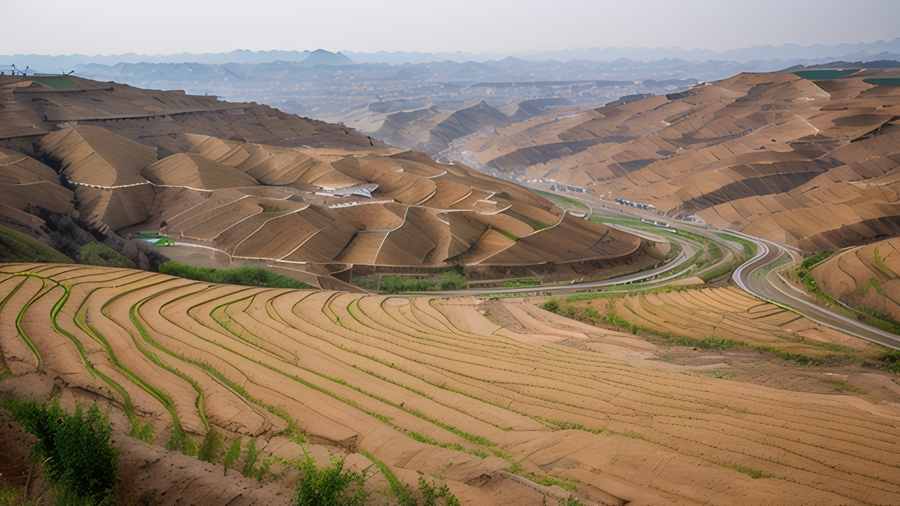
There are two ways to drive in China. One is foreign car entry self-drive: the car is declared at a land port such as Mohan or Khorgos and gets a temporary plate. The other is renting a car in China as a foreigner: you fly in, pick up a car in Taiyuan, and carry a passport, your home licence and a Chinese temporary licence. This Shanxi route suits both; only where the car comes from changes.
Trip overview
- D1: Taiyuan–Jiexiu 135 km — Mian Shan, Zhang Bi Gu Bao
- D2: Jiexiu–Qikou 105 km — Qi Kou Gu Zhen, Li Jia Shan
- D4: Qikou–Pingyao 120 km — Ri Sheng Chang, Ping Yao Gu Cheng
- D6: Pingyao–Linfen 165 km — Yao Miao, Tie Fo Si
- D8: Linfen–Jincheng 165 km — Huang Cheng Xiang Fu, Mang He
- D9: Jincheng–Taiyuan 325 km — return leg
Total 1015 km over 9 days, about 113 km a day: a moderate pace for a first self-drive trip in China.
D1: Taiyuan–Jiexiu, 135 km
Road
From Taiyuan to Jiexiu, 135 km. An expressway leg followed by a mountain road: watch the trucks on the fast section, then take the curves steady, keep the speed down and use a low gear on the long descent. The first leg is the warm-up for a foreign car entry self-drive trip: get used to the traffic before the long days.
Places
The main sights around Jiexiu sit in a line rather than a loop, so the order below avoids backtracking. Mian Shan is a mountain worth an hour: walk in, read the panels, and park at the gate. Zhang Bi Gu Bao is a local sight worth an hour: walk in, read the panels, and park at the gate. Driving between stops takes under twenty minutes; tickets and parking are paid at the entrance, and there is no need to rush the last stop.
Food
Skip the restaurants right at the ticket gate, walk two streets into town: cheaper, better, and you can see what locals order.
Where to stay
Small hotels in the old quarter are good value: rooms are older, hot water and wifi fine, car parked at the lane entrance.
D2: Jiexiu–Qikou, 105 km
Road
From Jiexiu to Qikou, 105 km. An expressway leg followed by a mountain road: watch the trucks on the fast section, then take the curves steady, keep the speed down and use a low gear on the long descent.
Places
The main sights around Qikou sit in a line rather than a loop, so the order below avoids backtracking. Qi Kou Gu Zhen is a old town worth an hour: walk in, read the panels, and park at the gate. Li Jia Shan is a mountain worth an hour: walk in, read the panels, and park at the gate. Driving between stops takes under twenty minutes; tickets and parking are paid at the entrance, and there is no need to rush the last stop.
Food
For dinner pick an old family place with two or three dishes and a soup: slow eating beats rushing between stops.
Where to stay
Chain hotels in the new district are predictable and quiet, good for families, though it is a fifteen-minute walk to the old street.
D4: Qikou–Pingyao, 120 km
Road
From Qikou to Pingyao, 120 km. An expressway leg followed by a mountain road: watch the trucks on the fast section, then take the curves steady, keep the speed down and use a low gear on the long descent.
Places
The main sights around Pingyao sit in a line rather than a loop, so the order below avoids backtracking. Ri Sheng Chang is a local sight worth an hour: walk in, read the panels, and park at the gate. Ping Yao Gu Cheng is a old town worth an hour: walk in, read the panels, and park at the gate. Driving between stops takes under twenty minutes; tickets and parking are paid at the entrance, and there is no need to rush the last stop.
Food
Street snacks are worth trying if they are made in front of you; skip anything that has been sitting.
Where to stay
Town rooms are limited: pick the best-rated place, look at the room before paying, and ask about hot-water hours.
D6: Pingyao–Linfen, 165 km
Road
From Pingyao to Linfen, 165 km. An expressway leg followed by a mountain road: watch the trucks on the fast section, then take the curves steady, keep the speed down and use a low gear on the long descent.
Places
The main sights around Linfen sit in a line rather than a loop, so the order below avoids backtracking. Yao Miao is a temple worth an hour: walk in, read the panels, and park at the gate. Tie Fo Si is a temple worth an hour: walk in, read the panels, and park at the gate. Driving between stops takes under twenty minutes; tickets and parking are paid at the entrance, and there is no need to rush the last stop.
Food
Breakfast at a small street shop: join the local queue, order something hot, and the day starts well.
Where to stay
A guesthouse just outside the scenic area: small but clean rooms, and the owner knows the roads and will tell you what to do tomorrow.
D8: Linfen–Jincheng, 165 km
Road
From Linfen to Jincheng, 165 km. An expressway leg followed by a mountain road: watch the trucks on the fast section, then take the curves steady, keep the speed down and use a low gear on the long descent.
Places
The main sights around Jincheng sit in a line rather than a loop, so the order below avoids backtracking. Huang Cheng Xiang Fu is a local sight worth an hour: walk in, read the panels, and park at the gate. Mang He is a local sight worth an hour: walk in, read the panels, and park at the gate. Driving between stops takes under twenty minutes; tickets and parking are paid at the entrance, and there is no need to rush the last stop.
Food
For dinner pick an old family place with two or three dishes and a soup: slow eating beats rushing between stops.
Where to stay
Chain hotels in the new district are predictable and quiet, good for families, though it is a fifteen-minute walk to the old street.
D9: Jincheng–Taiyuan, 325 km
Road
Back to Taiyuan, 325 km, mostly expressway: stop once at a service area, refuel before the airport or the border, and check the car over before handover.
Places
The main sights around Taiyuan sit in a line rather than a loop, so the order below avoids backtracking. Driving between stops takes under twenty minutes; tickets and parking are paid at the entrance, and there is no need to rush the last stop.
Food
The local taste runs salty and savoury; ask for less salt and most kitchens will oblige.
Practical tips
- Carry the papers together: passport, home licence and the Chinese temporary licence are all checked at pickup.
- Fuel stations are sparse in the hills; fill up at half a tank rather than waiting for the warning light.
- Scenic-area tickets and shuttle buses are charged separately; booking online with a passport saves queueing.
- Bring your own dash cam and phone mount, and download offline maps before leaving the city.
- At checkpoints slow down and hand over the papers; cooperation is the fastest way through.
- This route is made for foreign car entry self-drive: road conditions and fuel stops are planned around that.
About this route
Distances here come from the route plan; check them in a navigation app before you drive. Opening hours, tickets and room rates change with the season, and shuttle buses, cable cars and ferries are usually charged separately. Mountain roads can close temporarily in rain or snow.
There is no need to hurry: keep the daily drive manageable, and the markets, old houses and a slow dinner are what you remember.