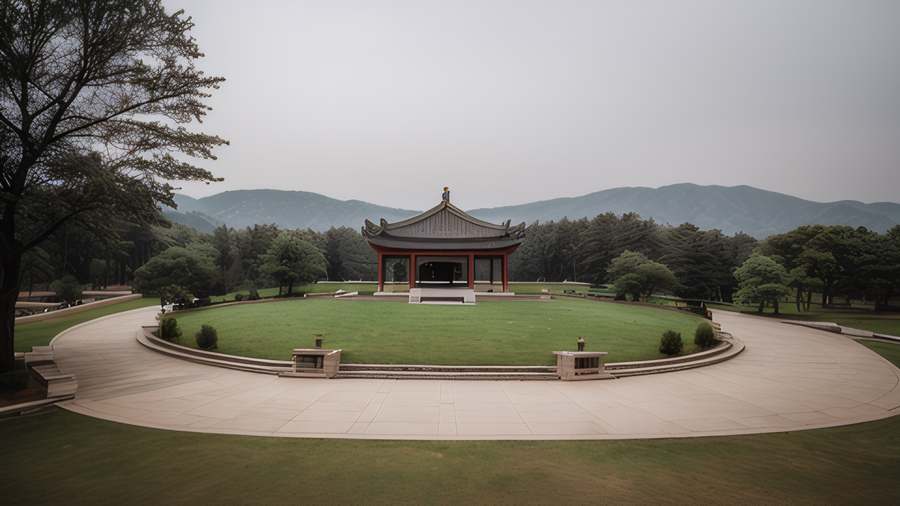
There are two ways to drive in China. One is foreign car entry self-drive: your own vehicle is cleared through a land border such as Mohan or Khorgos, gets a temporary plate, and the paperwork is finished at the crossing. The other is renting a car in China as a foreigner: you fly in, collect a car in Tai yuan, and you only need your passport, your home licence and a Chinese temporary driving permit. This Shanxi route suits both — the only difference is where the car comes from.
Route at a glance
- D1 Tai yuan–Zuo quan, 140 km: Matianbalujunzongbu, Longquangongyuan
- D2 Zuo quan, a day here: Matianbalujunzongbu, Longquangongyuan
- D3 Zuo quan–Yang quan, 110 km: Niangziguan, Cangshan
- D4 Yang quan, a day here: Niangziguan, Cangshan
- D5 Yang quan–Wu tai shan, 155 km: Xiantongsi, Pusading
- D6 Wu tai shan, a day here: Xiantongsi, Tayuansi, Pusading
- D7 Wu tai shan–Ying xian, 85 km: Yingxianmuta, Jingtusi
- D8 Ying xian, a day here: Yingxianmuta, Jingtusi
- D9 Ying xian–Hun yuan, 55 km: Xuankongsi, Beiyuehengshan
- D10 Hun yuan–Da tong, 65 km: Datongguchengqiang, Jiulongbi
- D11 Da tong, a day here: Huayansi, Jiulongbi, Datongguchengqiang
- D12 Da tong–Dai xian, 145 km: Yanmenguan, Bianjinglou
- D13 Dai xian–Shuo zhou, 65 km: Chongfusi, Mayihanmu
- D14 Shuo zhou–Xin zhou, 125 km: Yuwangdong, Diaochanguli
- D15 Xin zhou–Tai yuan, 75 km
1020 km over 15 days, about 68 km a day, and the rest of the time goes to sights and food. It starts and finishes in Tai yuan, so there is no backtracking.
D1 Tai yuan–Zuo quan, 140 km
The road
140 km from Tai yuan to Zuo quan, one of the longer days, with expressway for most of it and three hours including the city edges. The road alternates between loess plateau and Taihang ridges, with deep valleys between. Do not start too late; stop for lunch at a service area and drive in the afternoon rather than at midday. On a long run, break every two hours and get out of the car. Parking at the site is charged by the day and fills in season, so arrive early. If you are on a foreign car entry self-drive trip, note that toll booths on this stretch all take a staffed lane — easiest with a temporary plate.
What you see
Matianbalujunzongbu tells the local history: cases start with early objects and run through to the people and events of the last century, with photographs, artefacts and clear labels. An hour covers it, two if you read. A few key pieces draw a crowd, so go early if you want a proper look. Outside there is a planted park, flat and easy, and some quiet memorial areas where voices should stay low and photos are not appropriate. Most museums close on Mondays — check before you go; there is a security check at the door. Parking is usually on site and full at weekends. Longquangongyuan is where people in Tai yuan actually spend their evenings: runners and tai chi in the morning, families after work, an easy atmosphere. Lawns, water and paths join up into a loop of an hour or two, flat enough for a stroller, with coffee, bookshops and snacks around the edges. Holidays are crowded and parking is scarce; a taxi or the metro is simpler. After dark the lighting makes it better than by day — good for a walk after dinner.
Food
Local plates to look for in Shanxi: knife-cut noodles, oat rolls, Pingyao braised beef and guo you rou. In Tai yuan the good places are the small ones with local cars parked outside and a full table — fair prices, steady cooking. Ask the price before ordering anything sold by weight, and skip seafood that does not look fresh that day.
Where to stay
Stay near the site at Tai yuan so you do not drive back the next morning, or return to town where food and supplies are easier. Conversions have character but thin walls — light sleepers should pick a newer building.
D2 Zuo quan, a day here
The road
A day around Zuo quan, with little driving; leave the car at the guesthouse and walk or take a taxi. Roads here are short hops and two or three sights fit comfortably in a day — do not spend it all in the car.
What you see
Matianbalujunzongbu tells the local history: cases start with early objects and run through to the people and events of the last century, with photographs, artefacts and clear labels. An hour covers it, two if you read. A few key pieces draw a crowd, so go early if you want a proper look. Outside there is a planted park, flat and easy, and some quiet memorial areas where voices should stay low and photos are not appropriate. Most museums close on Mondays — check before you go; there is a security check at the door. Parking is usually on site and full at weekends. Longquangongyuan is where people in Zuo quan actually spend their evenings: runners and tai chi in the morning, families after work, an easy atmosphere. Lawns, water and paths join up into a loop of an hour or two, flat enough for a stroller, with coffee, bookshops and snacks around the edges. Holidays are crowded and parking is scarce; a taxi or the metro is simpler. After dark the lighting makes it better than by day — good for a walk after dinner.
Food
Local plates to look for in Shanxi: knife-cut noodles, oat rolls, Pingyao braised beef and guo you rou. In Zuo quan the good places are the small ones with local cars parked outside and a full table — fair prices, steady cooking. Ask the price before ordering anything sold by weight, and skip seafood that does not look fresh that day.
Where to stay
Tonight is in the Zuo quan area; nothing fancy is needed, just clean with parking. If tomorrow is a long drive, take the side facing the road out of town and save half an hour in the morning.
D3 Zuo quan–Yang quan, 110 km
The road
110 km from Zuo quan to Yang quan, mostly expressway plus a stretch of county road — an hour and a half to two hours. The road alternates between loess plateau and Taihang ridges, with deep valleys between. Traffic is light but there are plenty of trucks, so do not sit close behind one; the last section off the expressway is narrow and you will need to yield. Fuel is available along the way, but fill up before the mountains. Town car parks are easier than street parking and charge by the hour.
What you see
Niangziguan is the old fortification of this stretch, walls following the ridge, brick weathered grey, crenellations and corner towers still readable. The climb has ramps and steps and a full circuit takes about an hour; several towers can be entered and give the clearest view of the streets inside and the hills beyond. Wind on the wall is stronger than in town — pleasant in summer, biting in winter. Restored sections walk easily; unrestored stretches grow grass and scrub and should not be climbed. Old streets below have food and tea, so eat when you come down. At dusk the lights pick out the outline, worth an extra hour. Cangshan is the most representative peak in this part of Shanxi: dense forest at the bottom, scrub and bare rock higher up. The trail is well built with wide steps and several rest platforms, and a cable car covers the lower half if you want to save your legs. From the top the view runs for miles, and when cloud sits low the whole mountain seems to float. It is a few degrees cooler than town, so bring a layer; stone steps are slippery after rain, so wear grippy shoes. Sunset is good from the pavilions on the shoulder, but do not descend in full dark as the trail is unlit. Three to four hours up and down, with water and a snack.
Food
Local plates to look for in Shanxi: knife-cut noodles, oat rolls, Pingyao braised beef and guo you rou. In Zuo quan the good places are the small ones with local cars parked outside and a full table — fair prices, steady cooking. Ask the price before ordering anything sold by weight, and skip seafood that does not look fresh that day.
Where to stay
Rooms in Zuo quan are mostly county hotels and guesthouses. The chain hotels in town have parking and clean rooms at lower rates than the sites; guesthouses near the gate have bigger courtyards and suit families. Rates jump at weekends and in season, so book ahead.
D4 Yang quan, a day here
The road
A day around Yang quan, with little driving; leave the car at the guesthouse and walk or take a taxi. Roads here are short hops and two or three sights fit comfortably in a day — do not spend it all in the car.
What you see
Niangziguan is the old fortification of this stretch, walls following the ridge, brick weathered grey, crenellations and corner towers still readable. The climb has ramps and steps and a full circuit takes about an hour; several towers can be entered and give the clearest view of the streets inside and the hills beyond. Wind on the wall is stronger than in town — pleasant in summer, biting in winter. Restored sections walk easily; unrestored stretches grow grass and scrub and should not be climbed. Old streets below have food and tea, so eat when you come down. At dusk the lights pick out the outline, worth an extra hour. Cangshan is the most representative peak in this part of Shanxi: dense forest at the bottom, scrub and bare rock higher up. The trail is well built with wide steps and several rest platforms, and a cable car covers the lower half if you want to save your legs. From the top the view runs for miles, and when cloud sits low the whole mountain seems to float. It is a few degrees cooler than town, so bring a layer; stone steps are slippery after rain, so wear grippy shoes. Sunset is good from the pavilions on the shoulder, but do not descend in full dark as the trail is unlit. Three to four hours up and down, with water and a snack.
Food
Local plates to look for in Shanxi: knife-cut noodles, oat rolls, Pingyao braised beef and guo you rou. In Yang quan the good places are the small ones with local cars parked outside and a full table — fair prices, steady cooking. Ask the price before ordering anything sold by weight, and skip seafood that does not look fresh that day.
Where to stay
Stay near the site at Yang quan so you do not drive back the next morning, or return to town where food and supplies are easier. Conversions have character but thin walls — light sleepers should pick a newer building.
D5 Yang quan–Wu tai shan, 155 km
The road
155 km from Yang quan to Wu tai shan, one of the longer days, with expressway for most of it and three hours including the city edges. The road alternates between loess plateau and Taihang ridges, with deep valleys between. Do not start too late; stop for lunch at a service area and drive in the afternoon rather than at midday. On a long run, break every two hours and get out of the car. Parking at the site is charged by the day and fills in season, so arrive early.
What you see
Xiantongsi is the busiest religious site around Yang quan: worn stone steps at the gate, a first courtyard, then the main hall with its layered beams and painted brackets still in their old form. Locals come on the first and fifteenth of the lunar month; on an ordinary morning it is quiet enough to hear the wind bells under the eaves. Behind the hall there is usually a raised terrace with a view over the rooftops and the ridge beyond, the best place for a photo. Old trees shade the courtyard and in summer it is hard to leave. Keep voices down inside, check the signs before photographing, and buy incense at the gate. Allow forty minutes, an hour if you read the couplets and steles. Pusading is the busiest religious site around Yang quan: worn stone steps at the gate, a first courtyard, then the main hall with its layered beams and painted brackets still in their old form. Locals come on the first and fifteenth of the lunar month; on an ordinary morning it is quiet enough to hear the wind bells under the eaves. Behind the hall there is usually a raised terrace with a view over the rooftops and the ridge beyond, the best place for a photo. Old trees shade the courtyard and in summer it is hard to leave. Keep voices down inside, check the signs before photographing, and buy incense at the gate. Allow forty minutes, an hour if you read the couplets and steles.
Food
Local plates to look for in Shanxi: knife-cut noodles, oat rolls, Pingyao braised beef and guo you rou. In Yang quan the good places are the small ones with local cars parked outside and a full table — fair prices, steady cooking. Ask the price before ordering anything sold by weight, and skip seafood that does not look fresh that day.
Where to stay
Tonight is in the Yang quan area; nothing fancy is needed, just clean with parking. If tomorrow is a long drive, take the side facing the road out of town and save half an hour in the morning.
D6 Wu tai shan, a day here
The road
A day around Wu tai shan, with little driving; leave the car at the guesthouse and walk or take a taxi. Roads here are short hops and two or three sights fit comfortably in a day — do not spend it all in the car.
What you see
Xiantongsi is the busiest religious site around Wu tai shan: worn stone steps at the gate, a first courtyard, then the main hall with its layered beams and painted brackets still in their old form. Locals come on the first and fifteenth of the lunar month; on an ordinary morning it is quiet enough to hear the wind bells under the eaves. Behind the hall there is usually a raised terrace with a view over the rooftops and the ridge beyond, the best place for a photo. Old trees shade the courtyard and in summer it is hard to leave. Keep voices down inside, check the signs before photographing, and buy incense at the gate. Allow forty minutes, an hour if you read the couplets and steles. Tayuansi is the busiest religious site around Wu tai shan: worn stone steps at the gate, a first courtyard, then the main hall with its layered beams and painted brackets still in their old form. Locals come on the first and fifteenth of the lunar month; on an ordinary morning it is quiet enough to hear the wind bells under the eaves. Behind the hall there is usually a raised terrace with a view over the rooftops and the ridge beyond, the best place for a photo. Old trees shade the courtyard and in summer it is hard to leave. Keep voices down inside, check the signs before photographing, and buy incense at the gate. Allow forty minutes, an hour if you read the couplets and steles. Pusading is the busiest religious site around Wu tai shan: worn stone steps at the gate, a first courtyard, then the main hall with its layered beams and painted brackets still in their old form. Locals come on the first and fifteenth of the lunar month; on an ordinary morning it is quiet enough to hear the wind bells under the eaves. Behind the hall there is usually a raised terrace with a view over the rooftops and the ridge beyond, the best place for a photo. Old trees shade the courtyard and in summer it is hard to leave. Keep voices down inside, check the signs before photographing, and buy incense at the gate. Allow forty minutes, an hour if you read the couplets and steles.
Food
Local plates to look for in Shanxi: knife-cut noodles, oat rolls, Pingyao braised beef and guo you rou. In Wu tai shan the good places are the small ones with local cars parked outside and a full table — fair prices, steady cooking. Ask the price before ordering anything sold by weight, and skip seafood that does not look fresh that day.
Where to stay
Rooms in Wu tai shan are mostly county hotels and guesthouses. The chain hotels in town have parking and clean rooms at lower rates than the sites; guesthouses near the gate have bigger courtyards and suit families. Rates jump at weekends and in season, so book ahead.
D7 Wu tai shan–Ying xian, 85 km
The road
85 km from Wu tai shan to Ying xian, mostly expressway plus a stretch of county road — an hour and a half to two hours. The road alternates between loess plateau and Taihang ridges, with deep valleys between. Traffic is light but there are plenty of trucks, so do not sit close behind one; the last section off the expressway is narrow and you will need to yield. Fuel is available along the way, but fill up before the mountains. Town car parks are easier than street parking and charge by the hour.
What you see
Yingxianmuta is among the oldest structures in Wu tai shan and the construction repays a close look: the stonework, the timber joints, the carvings worn smooth. You can usually walk around the base, and some allow you up inside for the best view of town and water; expect a queue and narrow stairs. Courtyards, steles and columns hold details no photograph catches. Opening hours shift with the season and closing comes earlier than you expect, so go in the morning or early afternoon. Snack streets nearby make an easy meal afterwards. Early and late light suit the building best; at noon the shadows crush the detail. Jingtusi is the busiest religious site around Wu tai shan: worn stone steps at the gate, a first courtyard, then the main hall with its layered beams and painted brackets still in their old form. Locals come on the first and fifteenth of the lunar month; on an ordinary morning it is quiet enough to hear the wind bells under the eaves. Behind the hall there is usually a raised terrace with a view over the rooftops and the ridge beyond, the best place for a photo. Old trees shade the courtyard and in summer it is hard to leave. Keep voices down inside, check the signs before photographing, and buy incense at the gate. Allow forty minutes, an hour if you read the couplets and steles.
Food
Local plates to look for in Shanxi: knife-cut noodles, oat rolls, Pingyao braised beef and guo you rou. In Wu tai shan the good places are the small ones with local cars parked outside and a full table — fair prices, steady cooking. Ask the price before ordering anything sold by weight, and skip seafood that does not look fresh that day.
Where to stay
Stay near the site at Wu tai shan so you do not drive back the next morning, or return to town where food and supplies are easier. Conversions have character but thin walls — light sleepers should pick a newer building.
D8 Ying xian, a day here
The road
A day around Ying xian, with little driving; leave the car at the guesthouse and walk or take a taxi. Roads here are short hops and two or three sights fit comfortably in a day — do not spend it all in the car.
What you see
Yingxianmuta is among the oldest structures in Ying xian and the construction repays a close look: the stonework, the timber joints, the carvings worn smooth. You can usually walk around the base, and some allow you up inside for the best view of town and water; expect a queue and narrow stairs. Courtyards, steles and columns hold details no photograph catches. Opening hours shift with the season and closing comes earlier than you expect, so go in the morning or early afternoon. Snack streets nearby make an easy meal afterwards. Early and late light suit the building best; at noon the shadows crush the detail. Jingtusi is the busiest religious site around Ying xian: worn stone steps at the gate, a first courtyard, then the main hall with its layered beams and painted brackets still in their old form. Locals come on the first and fifteenth of the lunar month; on an ordinary morning it is quiet enough to hear the wind bells under the eaves. Behind the hall there is usually a raised terrace with a view over the rooftops and the ridge beyond, the best place for a photo. Old trees shade the courtyard and in summer it is hard to leave. Keep voices down inside, check the signs before photographing, and buy incense at the gate. Allow forty minutes, an hour if you read the couplets and steles.
Food
Local plates to look for in Shanxi: knife-cut noodles, oat rolls, Pingyao braised beef and guo you rou. In Ying xian the good places are the small ones with local cars parked outside and a full table — fair prices, steady cooking. Ask the price before ordering anything sold by weight, and skip seafood that does not look fresh that day.
Where to stay
Tonight is in the Ying xian area; nothing fancy is needed, just clean with parking. If tomorrow is a long drive, take the side facing the road out of town and save half an hour in the morning.
D9 Ying xian–Hun yuan, 55 km
The road
It is under 55 km from Ying xian to Hun yuan, on intercity roads and county lanes where junctions and villages keep the speed down. The road alternates between loess plateau and Taihang ridges, with deep valleys between. Follow the main road out of town and let the satnav route you around roadworks; watch the limit signs through the villages, where scooters and pedestrians appear without warning. Parking at the site is charged by the day and fills in season, so arrive early.
What you see
Xuankongsi is the busiest religious site around Ying xian: worn stone steps at the gate, a first courtyard, then the main hall with its layered beams and painted brackets still in their old form. Locals come on the first and fifteenth of the lunar month; on an ordinary morning it is quiet enough to hear the wind bells under the eaves. Behind the hall there is usually a raised terrace with a view over the rooftops and the ridge beyond, the best place for a photo. Old trees shade the courtyard and in summer it is hard to leave. Keep voices down inside, check the signs before photographing, and buy incense at the gate. Allow forty minutes, an hour if you read the couplets and steles. Beiyuehengshan is the most representative peak in this part of Shanxi: dense forest at the bottom, scrub and bare rock higher up. The trail is well built with wide steps and several rest platforms, and a cable car covers the lower half if you want to save your legs. From the top the view runs for miles, and when cloud sits low the whole mountain seems to float. It is a few degrees cooler than town, so bring a layer; stone steps are slippery after rain, so wear grippy shoes. Sunset is good from the pavilions on the shoulder, but do not descend in full dark as the trail is unlit. Three to four hours up and down, with water and a snack.
Food
Local plates to look for in Shanxi: knife-cut noodles, oat rolls, Pingyao braised beef and guo you rou. In Ying xian the good places are the small ones with local cars parked outside and a full table — fair prices, steady cooking. Ask the price before ordering anything sold by weight, and skip seafood that does not look fresh that day.
Where to stay
Rooms in Ying xian are mostly county hotels and guesthouses. The chain hotels in town have parking and clean rooms at lower rates than the sites; guesthouses near the gate have bigger courtyards and suit families. Rates jump at weekends and in season, so book ahead.
D10 Hun yuan–Da tong, 65 km
The road
65 km from Hun yuan to Da tong, mostly expressway plus a stretch of county road — an hour and a half to two hours. The road alternates between loess plateau and Taihang ridges, with deep valleys between. Traffic is light but there are plenty of trucks, so do not sit close behind one; the last section off the expressway is narrow and you will need to yield. Fuel is available along the way, but fill up before the mountains. Use the site car park rather than the roadside; tow trucks are quick here.
What you see
Datongguchengqiang is the old fortification of this stretch, walls following the ridge, brick weathered grey, crenellations and corner towers still readable. The climb has ramps and steps and a full circuit takes about an hour; several towers can be entered and give the clearest view of the streets inside and the hills beyond. Wind on the wall is stronger than in town — pleasant in summer, biting in winter. Restored sections walk easily; unrestored stretches grow grass and scrub and should not be climbed. Old streets below have food and tea, so eat when you come down. At dusk the lights pick out the outline, worth an extra hour. Jiulongbi is an easy stop on this leg out of Hun yuan, small enough to walk in half an hour. The point is not to rush: park, look around, let the pace of the last few days drop. Signs and roads are clear and it is hard to get lost. Quiet out of season and good for photos and a rest; in season parking fills, so arrive early. Local restaurants nearby cook plain food at fair prices. An hour here is enough before you get back on the road.
Food
Local plates to look for in Shanxi: knife-cut noodles, oat rolls, Pingyao braised beef and guo you rou. In Hun yuan the good places are the small ones with local cars parked outside and a full table — fair prices, steady cooking. Ask the price before ordering anything sold by weight, and skip seafood that does not look fresh that day.
Where to stay
Stay near the site at Hun yuan so you do not drive back the next morning, or return to town where food and supplies are easier. Conversions have character but thin walls — light sleepers should pick a newer building.
D11 Da tong, a day here
The road
A day around Da tong, with little driving; leave the car at the guesthouse and walk or take a taxi. Roads here are short hops and two or three sights fit comfortably in a day — do not spend it all in the car.
What you see
Huayansi is the busiest religious site around Da tong: worn stone steps at the gate, a first courtyard, then the main hall with its layered beams and painted brackets still in their old form. Locals come on the first and fifteenth of the lunar month; on an ordinary morning it is quiet enough to hear the wind bells under the eaves. Behind the hall there is usually a raised terrace with a view over the rooftops and the ridge beyond, the best place for a photo. Old trees shade the courtyard and in summer it is hard to leave. Keep voices down inside, check the signs before photographing, and buy incense at the gate. Allow forty minutes, an hour if you read the couplets and steles. Jiulongbi is an easy stop on this leg out of Da tong, small enough to walk in half an hour. The point is not to rush: park, look around, let the pace of the last few days drop. Signs and roads are clear and it is hard to get lost. Quiet out of season and good for photos and a rest; in season parking fills, so arrive early. Local restaurants nearby cook plain food at fair prices. An hour here is enough before you get back on the road. Datongguchengqiang is the old fortification of this stretch, walls following the ridge, brick weathered grey, crenellations and corner towers still readable. The climb has ramps and steps and a full circuit takes about an hour; several towers can be entered and give the clearest view of the streets inside and the hills beyond. Wind on the wall is stronger than in town — pleasant in summer, biting in winter. Restored sections walk easily; unrestored stretches grow grass and scrub and should not be climbed. Old streets below have food and tea, so eat when you come down. At dusk the lights pick out the outline, worth an extra hour.
Food
Local plates to look for in Shanxi: knife-cut noodles, oat rolls, Pingyao braised beef and guo you rou. In Da tong the good places are the small ones with local cars parked outside and a full table — fair prices, steady cooking. Ask the price before ordering anything sold by weight, and skip seafood that does not look fresh that day.
Where to stay
Tonight is in the Da tong area; nothing fancy is needed, just clean with parking. If tomorrow is a long drive, take the side facing the road out of town and save half an hour in the morning.
D12 Da tong–Dai xian, 145 km
The road
145 km from Da tong to Dai xian, one of the longer days, with expressway for most of it and three hours including the city edges. The road alternates between loess plateau and Taihang ridges, with deep valleys between. Do not start too late; stop for lunch at a service area and drive in the afternoon rather than at midday. On a long run, break every two hours and get out of the car. Park first, then buy tickets; attendants direct you near the gate.
What you see
Yanmenguan is the old fortification of this stretch, walls following the ridge, brick weathered grey, crenellations and corner towers still readable. The climb has ramps and steps and a full circuit takes about an hour; several towers can be entered and give the clearest view of the streets inside and the hills beyond. Wind on the wall is stronger than in town — pleasant in summer, biting in winter. Restored sections walk easily; unrestored stretches grow grass and scrub and should not be climbed. Old streets below have food and tea, so eat when you come down. At dusk the lights pick out the outline, worth an extra hour. Bianjinglou is among the oldest structures in Da tong and the construction repays a close look: the stonework, the timber joints, the carvings worn smooth. You can usually walk around the base, and some allow you up inside for the best view of town and water; expect a queue and narrow stairs. Courtyards, steles and columns hold details no photograph catches. Opening hours shift with the season and closing comes earlier than you expect, so go in the morning or early afternoon. Snack streets nearby make an easy meal afterwards. Early and late light suit the building best; at noon the shadows crush the detail.
Food
Local plates to look for in Shanxi: knife-cut noodles, oat rolls, Pingyao braised beef and guo you rou. In Da tong the good places are the small ones with local cars parked outside and a full table — fair prices, steady cooking. Ask the price before ordering anything sold by weight, and skip seafood that does not look fresh that day.
Where to stay
Rooms in Da tong are mostly county hotels and guesthouses. The chain hotels in town have parking and clean rooms at lower rates than the sites; guesthouses near the gate have bigger courtyards and suit families. Rates jump at weekends and in season, so book ahead.
D13 Dai xian–Shuo zhou, 65 km
The road
65 km from Dai xian to Shuo zhou, mostly expressway plus a stretch of county road — an hour and a half to two hours. The road alternates between loess plateau and Taihang ridges, with deep valleys between. Traffic is light but there are plenty of trucks, so do not sit close behind one; the last section off the expressway is narrow and you will need to yield. Fuel is available along the way, but fill up before the mountains. Parking at the site is charged by the day and fills in season, so arrive early.
What you see
Chongfusi is the busiest religious site around Dai xian: worn stone steps at the gate, a first courtyard, then the main hall with its layered beams and painted brackets still in their old form. Locals come on the first and fifteenth of the lunar month; on an ordinary morning it is quiet enough to hear the wind bells under the eaves. Behind the hall there is usually a raised terrace with a view over the rooftops and the ridge beyond, the best place for a photo. Old trees shade the courtyard and in summer it is hard to leave. Keep voices down inside, check the signs before photographing, and buy incense at the gate. Allow forty minutes, an hour if you read the couplets and steles. Mayihanmu tells the local history: cases start with early objects and run through to the people and events of the last century, with photographs, artefacts and clear labels. An hour covers it, two if you read. A few key pieces draw a crowd, so go early if you want a proper look. Outside there is a planted park, flat and easy, and some quiet memorial areas where voices should stay low and photos are not appropriate. Most museums close on Mondays — check before you go; there is a security check at the door. Parking is usually on site and full at weekends.
Food
Local plates to look for in Shanxi: knife-cut noodles, oat rolls, Pingyao braised beef and guo you rou. In Dai xian the good places are the small ones with local cars parked outside and a full table — fair prices, steady cooking. Ask the price before ordering anything sold by weight, and skip seafood that does not look fresh that day.
Where to stay
Stay near the site at Dai xian so you do not drive back the next morning, or return to town where food and supplies are easier. Conversions have character but thin walls — light sleepers should pick a newer building.
D14 Shuo zhou–Xin zhou, 125 km
The road
125 km from Shuo zhou to Xin zhou, mostly expressway plus a stretch of county road — an hour and a half to two hours. The road alternates between loess plateau and Taihang ridges, with deep valleys between. Traffic is light but there are plenty of trucks, so do not sit close behind one; the last section off the expressway is narrow and you will need to yield. Fuel is available along the way, but fill up before the mountains. Use the site car park rather than the roadside; tow trucks are quick here.
What you see
Yuwangdong is a gorge cut by water, with a big drop from the stream bed to the rims. The path follows the creek on stone and boardwalk, and in places you sidestep through gaps with your shoulders nearly touching rock. It is cold inside year round and wet, so grip matters. Halfway the valley opens and you see the whole line of the gorge and the ridge beyond — the best viewpoint of the walk. Some sections are lit, stalactites and pillars shapes have their own names, follow the markers and do not touch the walls. One to two hours, with rest platforms, a kiosk at the mouth selling water and rain capes. Diaochanguli tells the local history: cases start with early objects and run through to the people and events of the last century, with photographs, artefacts and clear labels. An hour covers it, two if you read. A few key pieces draw a crowd, so go early if you want a proper look. Outside there is a planted park, flat and easy, and some quiet memorial areas where voices should stay low and photos are not appropriate. Most museums close on Mondays — check before you go; there is a security check at the door. Parking is usually on site and full at weekends.
Food
Local plates to look for in Shanxi: knife-cut noodles, oat rolls, Pingyao braised beef and guo you rou. In Shuo zhou the good places are the small ones with local cars parked outside and a full table — fair prices, steady cooking. Ask the price before ordering anything sold by weight, and skip seafood that does not look fresh that day.
Where to stay
Tonight is in the Shuo zhou area; nothing fancy is needed, just clean with parking. If tomorrow is a long drive, take the side facing the road out of town and save half an hour in the morning.
D15 Xin zhou–Tai yuan, 75 km
The road
75 km from Xin zhou to Tai yuan, mostly expressway plus a stretch of county road — an hour and a half to two hours. The road alternates between loess plateau and Taihang ridges, with deep valleys between. Traffic is light but there are plenty of trucks, so do not sit close behind one; the last section off the expressway is narrow and you will need to yield. Fuel is available along the way, but fill up before the mountains. Town car parks are easier than street parking and charge by the hour.
What you see
Most of today's scenery is out of the window: the road runs from Xin zhou toward Tai yuan, hills, fields and villages changing section by section, and there is always somewhere to pull over. The road alternates between loess plateau and Taihang ridges, with deep valleys between. Nothing here needs a ticket, which suits a slower pace and a plain lunch in a small shop. Do not run this in the dark; the junctions into town are busy and the satnav will reroute you.
Food
Local plates to look for in Shanxi: knife-cut noodles, oat rolls, Pingyao braised beef and guo you rou. In Xin zhou the good places are the small ones with local cars parked outside and a full table — fair prices, steady cooking. Ask the price before ordering anything sold by weight, and skip seafood that does not look fresh that day.
Where to stay
Rooms in Xin zhou are mostly county hotels and guesthouses. The chain hotels in town have parking and clean rooms at lower rates than the sites; guesthouses near the gate have bigger courtyards and suit families. Rates jump at weekends and in season, so book ahead.
Trip notes
- Documents: carry your passport — hotels and ticket desks ask for it. China does not accept the IDP, so a home licence needs a Chinese translation and a temporary permit.
- Install WeChat and Amap before you fly; fuel, parking and tickets are almost all QR-paid, cash only at small stalls.
- Tolls: charged by section on inter-provincial runs; card or QR both work. Holiday free periods bring traffic, so time your drive around them.
- Weather: big temperature swings in the hills and by the lakes, so pack a layer even in summer; in the rainy season take long descents in a low gear instead of riding the brakes.
- Driving habits: slow through villages, never overtake on a blind bend; cross-winds on bridges and the coast need both hands on the wheel and room around trucks.
- However you plan it, foreign car entry self-drive and picking up a rental car use the same roads; an ordinary sedan is enough, and leave rear space if you have luggage.
About this route
Distances are estimates; trust your navigation. Room rates and opening hours shift with the season, so confirm before you set off. Most stops sell tickets at the gate, but a few popular ones need advance booking and queues at holidays.
15 days of this loop is neither hard nor tiring: the daily runs are short, the sights sit either side of the road, and you can start early for more or sit longer in town. Park the car, and walk.