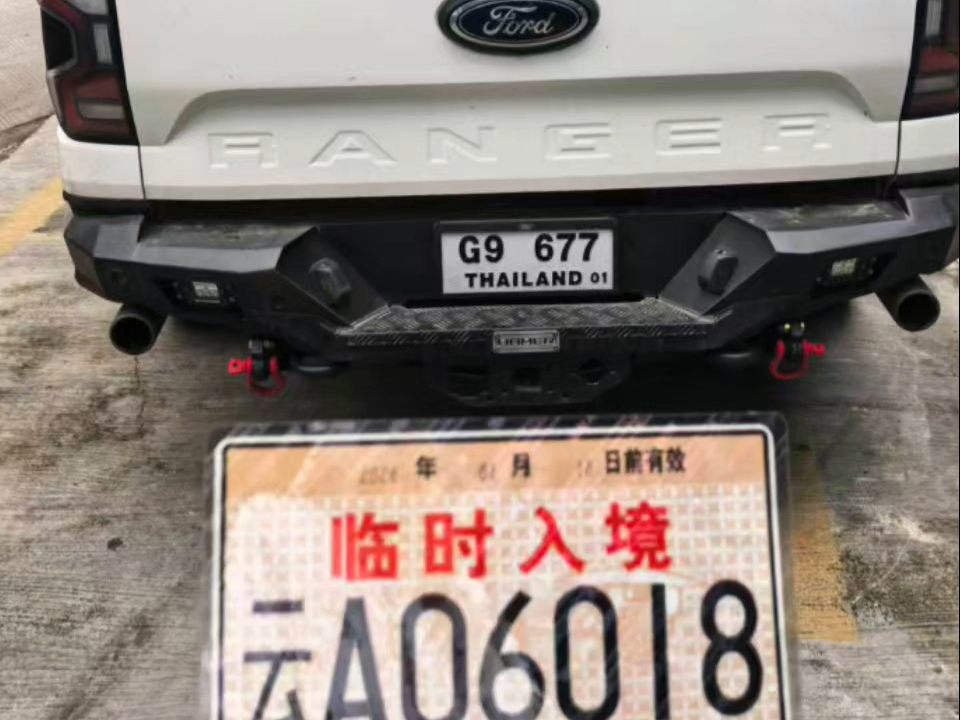
The vehicle in this photograph is a modified Thai-registered Ford Ranger, now displaying a Chinese temporary entry plate, and it raises a question that owners of accessorised four-wheel-drives ask more than most: what happens to all the extra gear when the truck goes through customs? Modified pickups are common in the overland scene, with added bars, upgraded suspension, larger tyres and a long list of practical extras, but bringing one into China works well when the modifications are understood and documented rather than assumed to be harmless. This piece looks at how a modified Ranger is declared, what the temporary plate means, and where owners need to take care.
The good news is that a properly prepared, well-documented modified truck can enter like any other vehicle. The Ranger in the photo has completed that process and carries the plate that legally allows it onto the Chinese road network. The key is that the declaration is built around the vehicle as it actually is, with the paperwork matching what the inspectors see in front of them.
1. Why documentation matters more with a modified vehicle
The single most important principle is that the vehicle and its registration documents need to agree. The customs and vehicle checks pay close attention to identification numbers and the recorded specification, and a truck that has been altered in ways not reflected in its paperwork invites questions. This is why owners should make sure any modifications were properly recorded in the vehicle's home documentation before setting off.
The particular areas that attract scrutiny are the things that change the identity or specification of the vehicle. A chassis or frame number that does not match the certificate, or shows signs of alteration, is a serious problem, and an engine that has been swapped without the change being officially registered is another. These are not items that can be explained away at the border; they are reasons a vehicle can be refused. Accessories that sit on top of an otherwise standard, correctly documented truck are far less problematic than undocumented changes to its core identity.
2. The temporary entry plate
As with every foreign vehicle, the Thai registration alone does not permit the Ranger to drive inside China. Once the customs declaration is completed, the truck is issued a Chinese temporary entry plate, which is displayed while the vehicle is in the country. The original Thai plate remains on the car as well, so the two appear together as they do in the photograph.
The temporary plate is issued with a validity of three months, and the dates on the accompanying paperwork define how long the vehicle may remain. The route and the planned exit need to fit within that window. The fact that the truck is modified does not change the three-month rule; the same temporary plate applies as long as the declaration is in order.
3. The temporary driving licence
The driver needs a Chinese temporary driving licence for the correct vehicle class, because China does not rely on an international driving permit in the way many visitors assume. The Thai home licence is used as a supporting document, together with a Chinese translation, but the temporary licence is the actual authority to drive during the visit.
It is arranged alongside the plate through the same entry process, so the two are treated as a package. Both need to be in hand before the truck leaves the border area, and preparing the documents and translations in advance keeps the crossing calm, especially when the vehicle has a long list of accessories to account for.
4. Why a licensed agency is particularly helpful here
A foreign vehicle cannot be self-declared at the gate, and for a modified truck the licensed agency's experience is especially valuable. The entry has to run through an agency with the proper outbound-tourism qualifications and the required quality deposit. The agency acts as the guarantor for the vehicle, prepares the customs declaration and arranges the temporary plate and temporary licence.
A competent agency will advise an owner in advance about how the modifications will be viewed and what documentation should accompany them, which helps avoid a surprise at the inspection. From the customs point of view, the agency is the responsible party on the Chinese side who can account for the vehicle and confirm it leaves again on schedule. Sorting this out early is the reliable way to bring a modified truck through.
5. The deposit, insurance and costs
The financial side follows the standard structure. The customs deposit is refundable: the owner pays a fixed 10,000 yuan into the agency's corporate account, and it must have cleared at least three days before the crossing so the declaration can proceed. Once the vehicle leaves on time and with no outstanding issues, the deposit is returned in full, usually within three to five working days.
Insurance is compulsory and has to be in place before the temporary plate is issued, with the agency arranging it ahead of entry and the owner paying the actual cost. A vehicle inspection fee of around 200 yuan applies across the board, and translation costs may add a little. The service fee covers the declaration, the immigration steps, the temporary licence and plate, the route filing and the handling at the port.
6. Driving the modified Ranger on Chinese roads
Once the formalities are done, the truck is well suited to the journey. The added suspension and practical accessories can be genuinely useful on long highway stages and the occasional rough section, and a Ranger carries both luggage and equipment with ease. The main discipline is simply driving to the conditions, respecting the extra size and weight that some modifications bring, and remembering that a loaded pickup needs longer stopping distances.
Checkpoints are a routine part of travel away from the cities, and they are nothing to worry about when the paperwork is in order and matches the vehicle. Officers check that the driver matches the temporary licence and that the truck matches the plate and declaration. A calm handover of the folder is usually the whole interaction, with the agency available remotely if anything needs confirming.
For owners heading into the western plateau, the usual restricted-area rules apply. Some border zones are not open to foreign visitors, and Tibet needs separate permits and a guide. The modifications do not grant access to areas that are otherwise restricted, and where there is no clear current answer, the agency and the printed permits are the reliable source rather than an old online thread.
The modified Ford Ranger in this photograph is a reminder that accessorised vehicles are welcome as long as the core rule is respected: the truck and its documents must agree, and the essential identity and specification must be correctly recorded. Practical extras are fine; undocumented changes to the engine or identification numbers are not. With a licensed agency preparing the declaration, a three-month temporary plate and a matching temporary licence, an owner can bring a properly documented modified pickup into China and enjoy the kind of journey the truck was built for.