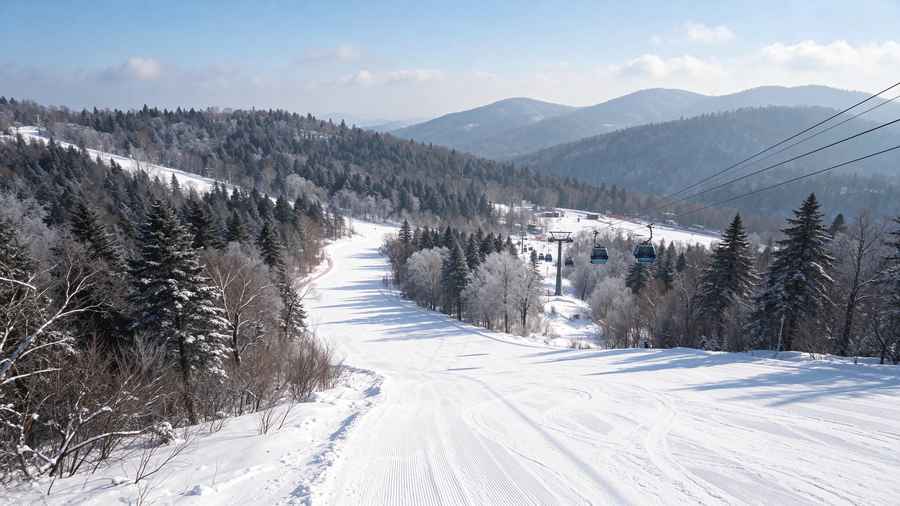
There are two ways to drive in China. One is foreign car entry self-drive: your own vehicle is cleared at a land border such as Mohan or Khorgos, gets a temporary plate, and the paperwork is done at the crossing. The other is renting a car in China as a foreigner: fly in, collect a car, and you need only your passport, your home licence and a Chinese temporary permit. This Heilongjiang route suits both — the only difference is where the car comes from.
Route at a glance
- D1 HaErBin–ShangZhi 160 km: MaoErShan, YaBuLiHuaXueChang
- D2 A day at ShangZhi: MaoErShan, YaBuLiHuaXueChang
- D3 ShangZhi–MuDanJiang 185 km: BeiShanGongYuan, BaNvTouJiangJiNianGuan
- D4 A day at MuDanJiang: BeiShanGongYuan, BaNvTouJiangJiNianGuan
- D5 MuDanJiang–XueXiang 75 km: ShuangFengXueXiang, YangCaoShan
- D6 A day at XueXiang: ShuangFengXueXiang, YangCaoShan
- D7 XueXiang–YaBuLi 45 km: YaBuLiXueChang, QingYunXiaoZhen
- D8 A day at YaBuLi: YaBuLiXueChang, QingYunXiaoZhen
- D9 YaBuLi–JingPoHu 100 km: JingPoHu, DiaoShuiLouPuBu
- D10 A day at JingPoHu: JingPoHu, DiaoShuiLouPuBu
- D11 JingPoHu–JiaMuSi 415 km: YanJiangGongYuan, SongHuaJiang
- D12 JiaMuSi–JiXi 210 km: HengShanGuoJiaKuangShanGongYuan, XingKaiHu
- D13 JiXi–YiChun 385 km: WuYingGuoJiaSenLinGongYuan, TangWangHeShiLin
- D14 YiChun–HaErBin 340 km: scenery en route
1915 km in total, about 137 km a day; the rest of the time goes to sights and food. For travellers with time to see a lot.
D1 HaErBin–ShangZhi, 160 km
The road
160 km from HaErBin to ShangZhi, about 2.0 hours. Traffic thins once you leave town; watch for scooters and farm vehicles where the road passes through villages. If you brought your own vehicle in on a foreign car entry self-drive trip, keep the temporary plate and insurance papers in the car.
What you see
MaoErShan is where locals go at weekends. Parking is at the roadside, entry is free or a small ticket, and the light is best before ten in the morning. YaBuLiHuaXueChang is a quiet stretch worth an hour: marked paths, a viewpoint partway up, and the kind of detail — stone steps, old trees, a walled courtyard — that rewards walking slowly. Take the stops in that order — furthest first, hills before villages — and leave time for lunch. Tickets are modest and paid on site; park on the open ground at the gate.
Food
Local food in Heilongjiang: try 冻梨、黏豆包, and 锅包肉、杀猪菜 — pick the shop with local cars parked outside and prices on the wall; for anything sold by weight, ask first.
Where to stay
A guesthouse near ShangZhi: big courtyards, the car at the gate. Avoid the cheapest old blocks — the walls are thin.
D2 A day at ShangZhi
The road
A day around ShangZhi: short hops between town and the sights, so leave the car parked and walk or take a taxi — easier than hunting for a space.
What you see
MaoErShan is a quiet stretch worth an hour: marked paths, a viewpoint partway up, and the kind of detail — stone steps, old trees, a walled courtyard — that rewards walking slowly. YaBuLiHuaXueChang is where locals go at weekends. Parking is at the roadside, entry is free or a small ticket, and the light is best before ten in the morning. Take the stops in that order — furthest first, hills before villages — and leave time for lunch. Tickets are modest and paid on site; park on the open ground at the gate.
Food
Local food in Heilongjiang: try 锅包肉、杀猪菜, and 红肠、格瓦斯 — pick the shop with local cars parked outside and prices on the wall; for anything sold by weight, ask first.
Where to stay
Two choices in ShangZhi: by the sight for an early start, or in town for food — the drive between them is short.
D3 ShangZhi–MuDanJiang, 185 km
The road
185 km from ShangZhi to MuDanJiang, about 2.3 hours. Traffic thins once you leave town; watch for scooters and farm vehicles where the road passes through villages.
What you see
BeiShanGongYuan is where locals go at weekends. Parking is at the roadside, entry is free or a small ticket, and the light is best before ten in the morning. BaNvTouJiangJiNianGuan is a quiet stretch worth an hour: marked paths, a viewpoint partway up, and the kind of detail — stone steps, old trees, a walled courtyard — that rewards walking slowly. Take the stops in that order — furthest first, hills before villages — and leave time for lunch. Tickets are modest and paid on site; park on the open ground at the gate.
Food
Local food in Heilongjiang: try 红肠、格瓦斯, and 铁锅炖鱼 — pick the shop with local cars parked outside and prices on the wall; for anything sold by weight, ask first.
Where to stay
Stay in MuDanJiang town: a hotel with parking makes dinner and the morning exit easy. Book ahead in season.
D4 A day at MuDanJiang
The road
A day around MuDanJiang: short hops between town and the sights, so leave the car parked and walk or take a taxi — easier than hunting for a space.
What you see
BeiShanGongYuan is a quiet stretch worth an hour: marked paths, a viewpoint partway up, and the kind of detail — stone steps, old trees, a walled courtyard — that rewards walking slowly. BaNvTouJiangJiNianGuan is where locals go at weekends. Parking is at the roadside, entry is free or a small ticket, and the light is best before ten in the morning. Take the stops in that order — furthest first, hills before villages — and leave time for lunch. Tickets are modest and paid on site; park on the open ground at the gate.
Food
Local food in Heilongjiang: try 铁锅炖鱼, and 冻梨、黏豆包 — pick the shop with local cars parked outside and prices on the wall; for anything sold by weight, ask first.
Where to stay
A guesthouse near MuDanJiang: big courtyards, the car at the gate. Avoid the cheapest old blocks — the walls are thin.
D5 MuDanJiang–XueXiang, 75 km
The road
Only 75 km from MuDanJiang to XueXiang, under an hour on the road — an easy day. Country roads, narrow in places: stop whenever the view is worth it instead of rushing.
What you see
ShuangFengXueXiang is where locals go at weekends. Parking is at the roadside, entry is free or a small ticket, and the light is best before ten in the morning. YangCaoShan is a quiet stretch worth an hour: marked paths, a viewpoint partway up, and the kind of detail — stone steps, old trees, a walled courtyard — that rewards walking slowly. Take the stops in that order — furthest first, hills before villages — and leave time for lunch. Tickets are modest and paid on site; park on the open ground at the gate.
Food
Local food in Heilongjiang: try 冻梨、黏豆包, and 锅包肉、杀猪菜 — pick the shop with local cars parked outside and prices on the wall; for anything sold by weight, ask first.
Where to stay
Two choices in XueXiang: by the sight for an early start, or in town for food — the drive between them is short.
D6 A day at XueXiang
The road
A day around XueXiang: short hops between town and the sights, so leave the car parked and walk or take a taxi — easier than hunting for a space.
What you see
ShuangFengXueXiang is a quiet stretch worth an hour: marked paths, a viewpoint partway up, and the kind of detail — stone steps, old trees, a walled courtyard — that rewards walking slowly. YangCaoShan is where locals go at weekends. Parking is at the roadside, entry is free or a small ticket, and the light is best before ten in the morning. Take the stops in that order — furthest first, hills before villages — and leave time for lunch. Tickets are modest and paid on site; park on the open ground at the gate.
Food
Local food in Heilongjiang: try 锅包肉、杀猪菜, and 红肠、格瓦斯 — pick the shop with local cars parked outside and prices on the wall; for anything sold by weight, ask first.
Where to stay
Stay in XueXiang town: a hotel with parking makes dinner and the morning exit easy. Book ahead in season.
D7 XueXiang–YaBuLi, 45 km
The road
Only 45 km from XueXiang to YaBuLi, under an hour on the road — an easy day. Country roads, narrow in places: stop whenever the view is worth it instead of rushing.
What you see
YaBuLiXueChang is where locals go at weekends. Parking is at the roadside, entry is free or a small ticket, and the light is best before ten in the morning. QingYunXiaoZhen is a quiet stretch worth an hour: marked paths, a viewpoint partway up, and the kind of detail — stone steps, old trees, a walled courtyard — that rewards walking slowly. Take the stops in that order — furthest first, hills before villages — and leave time for lunch. Tickets are modest and paid on site; park on the open ground at the gate.
Food
Local food in Heilongjiang: try 红肠、格瓦斯, and 铁锅炖鱼 — pick the shop with local cars parked outside and prices on the wall; for anything sold by weight, ask first.
Where to stay
A guesthouse near YaBuLi: big courtyards, the car at the gate. Avoid the cheapest old blocks — the walls are thin.
D8 A day at YaBuLi
The road
A day around YaBuLi: short hops between town and the sights, so leave the car parked and walk or take a taxi — easier than hunting for a space.
What you see
YaBuLiXueChang is a quiet stretch worth an hour: marked paths, a viewpoint partway up, and the kind of detail — stone steps, old trees, a walled courtyard — that rewards walking slowly. QingYunXiaoZhen is where locals go at weekends. Parking is at the roadside, entry is free or a small ticket, and the light is best before ten in the morning. Take the stops in that order — furthest first, hills before villages — and leave time for lunch. Tickets are modest and paid on site; park on the open ground at the gate.
Food
Local food in Heilongjiang: try 铁锅炖鱼, and 冻梨、黏豆包 — pick the shop with local cars parked outside and prices on the wall; for anything sold by weight, ask first.
Where to stay
Two choices in YaBuLi: by the sight for an early start, or in town for food — the drive between them is short.
D9 YaBuLi–JingPoHu, 100 km
The road
100 km from YaBuLi to JingPoHu, about 1.2 hours. Traffic thins once you leave town; watch for scooters and farm vehicles where the road passes through villages.
What you see
JingPoHu is where locals go at weekends. Parking is at the roadside, entry is free or a small ticket, and the light is best before ten in the morning. DiaoShuiLouPuBu is a quiet stretch worth an hour: marked paths, a viewpoint partway up, and the kind of detail — stone steps, old trees, a walled courtyard — that rewards walking slowly. Take the stops in that order — furthest first, hills before villages — and leave time for lunch. Tickets are modest and paid on site; park on the open ground at the gate.
Food
Local food in Heilongjiang: try 冻梨、黏豆包, and 锅包肉、杀猪菜 — pick the shop with local cars parked outside and prices on the wall; for anything sold by weight, ask first.
Where to stay
Stay in JingPoHu town: a hotel with parking makes dinner and the morning exit easy. Book ahead in season.
D10 A day at JingPoHu
The road
A day around JingPoHu: short hops between town and the sights, so leave the car parked and walk or take a taxi — easier than hunting for a space.
What you see
JingPoHu is a quiet stretch worth an hour: marked paths, a viewpoint partway up, and the kind of detail — stone steps, old trees, a walled courtyard — that rewards walking slowly. DiaoShuiLouPuBu is where locals go at weekends. Parking is at the roadside, entry is free or a small ticket, and the light is best before ten in the morning. Take the stops in that order — furthest first, hills before villages — and leave time for lunch. Tickets are modest and paid on site; park on the open ground at the gate.
Food
Local food in Heilongjiang: try 锅包肉、杀猪菜, and 红肠、格瓦斯 — pick the shop with local cars parked outside and prices on the wall; for anything sold by weight, ask first.
Where to stay
A guesthouse near JingPoHu: big courtyards, the car at the gate. Avoid the cheapest old blocks — the walls are thin.
D11 JingPoHu–JiaMuSi, 415 km
The road
JingPoHu to JiaMuSi, 415 km, roughly 5.2 hours at posted limits; take a break at a service area. Mostly expressway and national road, and the long straight stretches get monotonous — share the driving or stop every two hours.
What you see
YanJiangGongYuan is where locals go at weekends. Parking is at the roadside, entry is free or a small ticket, and the light is best before ten in the morning. SongHuaJiang is a quiet stretch worth an hour: marked paths, a viewpoint partway up, and the kind of detail — stone steps, old trees, a walled courtyard — that rewards walking slowly. Take the stops in that order — furthest first, hills before villages — and leave time for lunch. Tickets are modest and paid on site; park on the open ground at the gate.
Food
Local food in Heilongjiang: try 红肠、格瓦斯, and 铁锅炖鱼 — pick the shop with local cars parked outside and prices on the wall; for anything sold by weight, ask first.
Where to stay
Two choices in JiaMuSi: by the sight for an early start, or in town for food — the drive between them is short.
D12 JiaMuSi–JiXi, 210 km
The road
JiaMuSi to JiXi, 210 km, roughly 2.6 hours at posted limits; take a break at a service area. Mostly expressway and national road, and the long straight stretches get monotonous — share the driving or stop every two hours.
What you see
HengShanGuoJiaKuangShanGongYuan is a quiet stretch worth an hour: marked paths, a viewpoint partway up, and the kind of detail — stone steps, old trees, a walled courtyard — that rewards walking slowly. XingKaiHu is where locals go at weekends. Parking is at the roadside, entry is free or a small ticket, and the light is best before ten in the morning. Take the stops in that order — furthest first, hills before villages — and leave time for lunch. Tickets are modest and paid on site; park on the open ground at the gate.
Food
Local food in Heilongjiang: try 铁锅炖鱼, and 冻梨、黏豆包 — pick the shop with local cars parked outside and prices on the wall; for anything sold by weight, ask first.
Where to stay
Stay in JiXi town: a hotel with parking makes dinner and the morning exit easy. Book ahead in season.
D13 JiXi–YiChun, 385 km
The road
JiXi to YiChun, 385 km, roughly 4.8 hours at posted limits; take a break at a service area. Mostly expressway and national road, and the long straight stretches get monotonous — share the driving or stop every two hours.
What you see
WuYingGuoJiaSenLinGongYuan is where locals go at weekends. Parking is at the roadside, entry is free or a small ticket, and the light is best before ten in the morning. TangWangHeShiLin is a quiet stretch worth an hour: marked paths, a viewpoint partway up, and the kind of detail — stone steps, old trees, a walled courtyard — that rewards walking slowly. Take the stops in that order — furthest first, hills before villages — and leave time for lunch. Tickets are modest and paid on site; park on the open ground at the gate.
Food
Local food in Heilongjiang: try 冻梨、黏豆包, and 锅包肉、杀猪菜 — pick the shop with local cars parked outside and prices on the wall; for anything sold by weight, ask first.
Where to stay
A guesthouse near YiChun: big courtyards, the car at the gate. Avoid the cheapest old blocks — the walls are thin.
D14 YiChun–HaErBin, 340 km
The road
YiChun to HaErBin, 340 km, roughly 4.2 hours at posted limits; take a break at a service area. Mostly expressway and national road, and the long straight stretches get monotonous — share the driving or stop every two hours.
What you see
A run home today, no stops planned. Use the service areas: hot water, toilets, fuel. If your own car has to clear a border, leave the evening free for it.
Food
Local food in Heilongjiang: try 锅包肉、杀猪菜, and 红肠、格瓦斯 — pick the shop with local cars parked outside and prices on the wall; for anything sold by weight, ask first.
Trip notes
- Documents: carry your passport — hotels and ticket desks ask for it. China does not accept the IDP, so a home licence needs a Chinese translation and a temporary permit.
- Install WeChat and Amap before you fly; fuel, parking and tickets are mostly QR-paid, cash only for small stalls.
- Fuel: fill up before the mountains; every county town has a station and rural ones may close early.
- Parking: open ground at the sights usually works; in old towns use the outer car park and walk in.
- Weather: 三江平原与大兴安岭,路直路远,林区弯道多 — check the forecast, slow down on wet mountain roads, use fog lights in mist.
- Whether it is foreign car entry self-drive or picking up a rental car after landing, the whole route is asphalt: an ordinary sedan is enough, no 4x4 needed.
About this route
Distances are estimates; trust your navigation. Room rates and opening hours shift with the season, so confirm before you set off. Most stops need no advance booking; popular ones queue in high season — arrive early.
By the end, Heilongjiang stays with you — not the kind of place that stuns at first sight, but one that grows on you. Park the car, and walk.