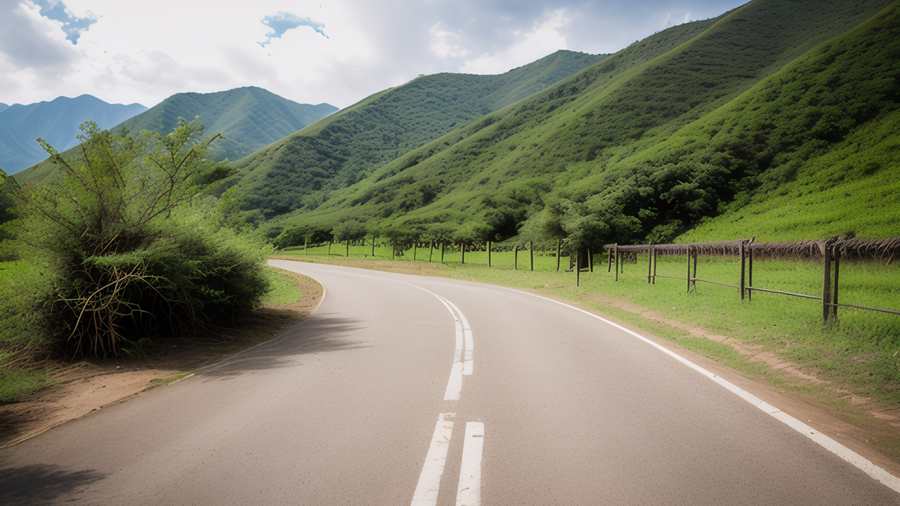
There are two ways to drive in China. One is foreign car entry self-drive: the car is declared at a land port such as Mohan or Khorgos and gets a temporary plate. The other is renting a car in China as a foreigner: you fly in, pick up a car in Shijiazhuang, and carry a passport, your home licence and a Chinese temporary licence. This Hebei route suits both; only where the car comes from changes.
Trip overview
- D1: Shijiazhuang–Pingshan 45 km — Xi Bai Po, Tuo Liang
- D3: Pingshan–Zhaoxian 95 km — Zhao Zhou Qiao, Bo Lin Chan Si
- D5: Zhaoxian–Zhengding 55 km — Zheng Ding Gu Cheng Qiang, Rong Guo Fu
- D7: Zhengding–Xingtai 145 km — Xing Tai Da Xia Gu, Kai Yuan Si
- D9: Xingtai–Shexian 110 km — Wa Huang Gong, 129 Shi Si Ling Bu Jiu Zhi
- D10: Shexian–Laiyuan 395 km — Bai Shi Shan, Shi Pu Xia
- D11: Laiyuan–Shijiazhuang 180 km — return leg
Total 1025 km over 11 days, about 93 km a day: a moderate pace for a first self-drive trip in China.
D1: Shijiazhuang–Pingshan, 45 km
Road
From Shijiazhuang to Pingshan, 45 km. A short hop on provincial and county roads: smooth surface, low speed limits through villages, and plenty of scooters pulling out. If the navigation app tries to send you down a village lane, back out and stay on the main road. The first leg is the warm-up for a foreign car entry self-drive trip: get used to the traffic before the long days.
Places
The main sights around Pingshan sit in a line rather than a loop, so the order below avoids backtracking. Xi Bai Po is a local sight worth an hour: walk in, read the panels, and park at the gate. Tuo Liang is a local sight worth an hour: walk in, read the panels, and park at the gate. Driving between stops takes under twenty minutes; tickets and parking are paid at the entrance, and there is no need to rush the last stop.
Food
Skip the restaurants right at the ticket gate, walk two streets into town: cheaper, better, and you can see what locals order.
Where to stay
Small hotels in the old quarter are good value: rooms are older, hot water and wifi fine, car parked at the lane entrance.
D3: Pingshan–Zhaoxian, 95 km
Road
From Pingshan to Zhaoxian, 95 km. A short hop on provincial and county roads: smooth surface, low speed limits through villages, and plenty of scooters pulling out. If the navigation app tries to send you down a village lane, back out and stay on the main road.
Places
The main sights around Zhaoxian sit in a line rather than a loop, so the order below avoids backtracking. Zhao Zhou Qiao is a stone bridge worth an hour: walk in, read the panels, and park at the gate. Bo Lin Chan Si is a temple worth an hour: walk in, read the panels, and park at the gate. Driving between stops takes under twenty minutes; tickets and parking are paid at the entrance, and there is no need to rush the last stop.
Food
The local taste runs salty and savoury; ask for less salt and most kitchens will oblige.
Where to stay
Lakeside or hillside resorts are more comfortable and prices swing with the season, so book early in peak weeks.
D5: Zhaoxian–Zhengding, 55 km
Road
From Zhaoxian to Zhengding, 55 km. A short hop on provincial and county roads: smooth surface, low speed limits through villages, and plenty of scooters pulling out. If the navigation app tries to send you down a village lane, back out and stay on the main road.
Places
The main sights around Zhengding sit in a line rather than a loop, so the order below avoids backtracking. Zheng Ding Gu Cheng Qiang is a old town worth an hour: walk in, read the panels, and park at the gate. Rong Guo Fu is a local sight worth an hour: walk in, read the panels, and park at the gate. Driving between stops takes under twenty minutes; tickets and parking are paid at the entrance, and there is no need to rush the last stop.
Food
Locals eat breakfast early; by seven or eight the street is busy, so get up before the tour groups.
Where to stay
Stay in the county town centre: supermarket and noodle shop downstairs, car park under the building, easy to walk out at night.
D7: Zhengding–Xingtai, 145 km
Road
From Zhengding to Xingtai, 145 km. An expressway leg followed by a mountain road: watch the trucks on the fast section, then take the curves steady, keep the speed down and use a low gear on the long descent.
Places
The main sights around Xingtai sit in a line rather than a loop, so the order below avoids backtracking. Xing Tai Da Xia Gu is a viewpoint worth an hour: walk in, read the panels, and park at the gate. Kai Yuan Si is a temple worth an hour: walk in, read the panels, and park at the gate. Driving between stops takes under twenty minutes; tickets and parking are paid at the entrance, and there is no need to rush the last stop.
Food
Skip the restaurants right at the ticket gate, walk two streets into town: cheaper, better, and you can see what locals order.
Where to stay
Small hotels in the old quarter are good value: rooms are older, hot water and wifi fine, car parked at the lane entrance.
D9: Xingtai–Shexian, 110 km
Road
From Xingtai to Shexian, 110 km. An expressway leg followed by a mountain road: watch the trucks on the fast section, then take the curves steady, keep the speed down and use a low gear on the long descent.
Places
The main sights around Shexian sit in a line rather than a loop, so the order below avoids backtracking. Wa Huang Gong is a temple worth an hour: walk in, read the panels, and park at the gate. 129 Shi Si Ling Bu Jiu Zhi is a local sight worth an hour: walk in, read the panels, and park at the gate. Driving between stops takes under twenty minutes; tickets and parking are paid at the entrance, and there is no need to rush the last stop.
Food
The local taste runs salty and savoury; ask for less salt and most kitchens will oblige.
Where to stay
Lakeside or hillside resorts are more comfortable and prices swing with the season, so book early in peak weeks.
D10: Shexian–Laiyuan, 395 km
Road
From Shexian to Laiyuan, 395 km. Over four hundred kilometres, essentially a driving day: leave early, share the wheel if you can, and avoid entering an unfamiliar mountain town after dark.
Places
The main sights around Laiyuan sit in a line rather than a loop, so the order below avoids backtracking. Bai Shi Shan is a mountain worth an hour: walk in, read the panels, and park at the gate. Shi Pu Xia is a canyon worth an hour: walk in, read the panels, and park at the gate. Driving between stops takes under twenty minutes; tickets and parking are paid at the entrance, and there is no need to rush the last stop.
Food
Street snacks are worth trying if they are made in front of you; skip anything that has been sitting.
Where to stay
Town rooms are limited: pick the best-rated place, look at the room before paying, and ask about hot-water hours.
D11: Laiyuan–Shijiazhuang, 180 km
Road
Back to Shijiazhuang, 180 km, mostly expressway: stop once at a service area, refuel before the airport or the border, and check the car over before handover.
Places
The main sights around Shijiazhuang sit in a line rather than a loop, so the order below avoids backtracking. Driving between stops takes under twenty minutes; tickets and parking are paid at the entrance, and there is no need to rush the last stop.
Food
Locals eat breakfast early; by seven or eight the street is busy, so get up before the tour groups.
Practical tips
- Carry the papers together: passport, home licence and the Chinese temporary licence are all checked at pickup.
- Fuel stations are sparse in the hills; fill up at half a tank rather than waiting for the warning light.
- Scenic-area tickets and shuttle buses are charged separately; booking online with a passport saves queueing.
- Bring your own dash cam and phone mount, and download offline maps before leaving the city.
- At checkpoints slow down and hand over the papers; cooperation is the fastest way through.
- This route is made for foreign car entry self-drive: road conditions and fuel stops are planned around that.
About this route
Distances here come from the route plan; check them in a navigation app before you drive. Opening hours, tickets and room rates change with the season, and shuttle buses, cable cars and ferries are usually charged separately. Mountain roads can close temporarily in rain or snow.
There is no need to hurry: keep the daily drive manageable, and the markets, old houses and a slow dinner are what you remember.