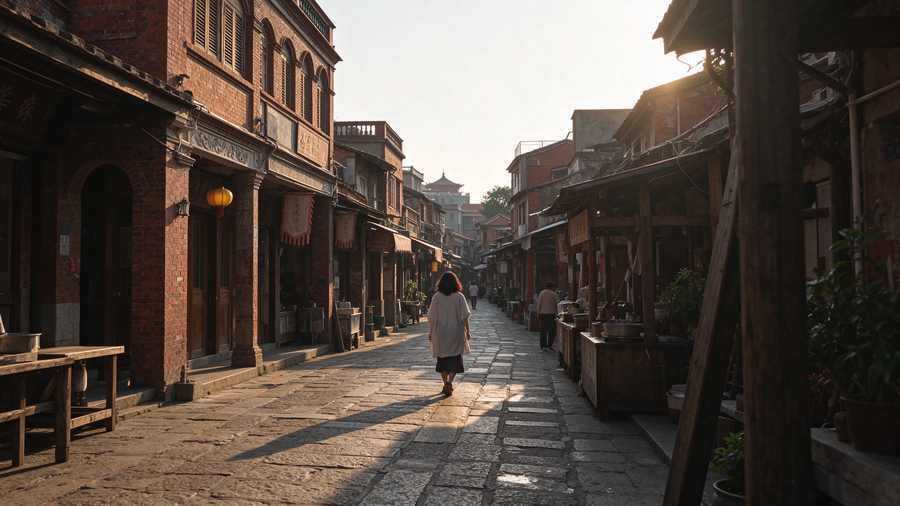
There are two ways to drive in China. One is foreign car entry self-drive: your own vehicle is cleared through a land border such as Mohan or Khorgos, gets a temporary plate, and the paperwork is finished at the crossing. The other is renting a car in China as a foreigner: you fly in, collect a car in Fuzhou, and you only need your passport, your home licence and a Chinese temporary driving permit. This Fujian route suits both — the only difference is where the car comes from.
Route at a glance
- D1 Fuzhou–Pingtan 100 km: Tan Nan Bay, Beigang village, Xianren Well
- D2 A day on Pingtan: island road, sunrise on the beach, fishing villages at night
- D3 Pingtan–Meizhou Island 95 km: Mazu temple, Golden Beach
- D4 Meizhou Island–Quanzhou 85 km: Kaiyuan Temple, West Street, Qingyuan Hill
- D5 Quanzhou–Fuzhou 180 km: a relaxed run home
460 km in total, under 100 km on an average day; the rest of the time goes to sights and food. Good for families and for anyone driving in China for the first time.
D1 Fuzhou–Pingtan, 100 km
The road
Leave Fuzhou on the G3 expressway, cross the Pingtan Strait road-rail bridge and you are on the island — about ninety minutes. Cross-winds on the bridge are strong, so keep both hands on the wheel and watch the speed signs. On the island the ring road is wide and smooth, but the wind is constant and scooters appear out of village lanes without warning. If you are on a foreign car entry self-drive trip, note that there are two toll gates on this stretch: cards and QR both work, and a temporary plate is easiest through the staffed lane.
What you see
Tan Nan Bay is the longest beach on the island: fine sand, a gentle slope, and at low tide you can wade out for tens of metres. It faces away from the prevailing wind, so on a windy day it is the calmest place around. Beigang is a village of granite houses, each stone laid by hand with rocks weighted on the roof to hold them down in typhoons; the lanes now hold a row of guesthouses and coffee shops, and half an hour covers it — best at dusk when the lights come on. Xianren Well is a sea-eroded shaft over fifty metres across that drops straight to the water; at high tide the swell surges up the shaft and slams the walls, and at low tide black rock is exposed below and the natural stone arch on either side is the photo spot. The three sit within twenty kilometres, an easy afternoon.
Food
Pingtan's oyster omelette uses small local oysters — heavy on egg, soft inside. Shilai Yunzhuan is a sweet potato starch ball filled with seaweed, dried shrimp and peanut, once a New Year dish and now sold all year. For dinner head to the seafood stalls, order boiled prawns and clams by weight, and ask the price first.
Where to stay
Stone houses in Beigang have the most character: small rooms, sea out of the window. For comfort, the Longfengtou beachfront hotels have parking and lifts and put you close to sunrise. Weekend rates jump, so book ahead.
D2 A day on Pingtan
The road
A day on the island; the ring road is about 60 km of smooth asphalt and the satnav will loop you around it. Shared bikes and scooters exist, but with wind and hills a car is easier. With a car at hand, this is the day to leave it at the guesthouse and take a scooter through the lanes.
What you see
Get up for sunrise on the east side of Tan Nan Bay — the horizon sits at the end of the sand and on a clear day the sun comes straight out of the water. Work north along the ring road past wind turbines, reefs and empty beaches; stop wherever a bay looks good. Back at Beigang in the afternoon, the stone lanes reward slow walking and a couple of cafés sit in old houses with a view you can lose half a day to. Between April and June, on a southerly wind, the water can glow with "blue tears" — noctiluca algae that light up when the swell breaks. Keep torches off, stand in the dark for a few minutes and let your eyes adjust. The villages are quiet after eight, so drive slowly back.
Food
Seafood noodles in the morning, the broth cooked down from small fish and shrimp; seaweed rice with stir-fried clams at noon; barbecue and cold beer in town at night, where the stalls stay open late. Pick the shop with scooters parked outside and a full table — that is usually the right one.
Where to stay
Same guesthouse, no luggage to move; or shift to a seafront room by Tan Nan Bay so sunrise needs no driving.
D3 Pingtan–Meizhou Island, 95 km
The road
Off the island over the bridge, then the Shenhai expressway toward Putian, exit at Wenjia pier: about ninety minutes. Important: Meizhou Island does not admit outside vehicles. Leave the car in the pier car park and cross by ferry — a ten-minute ride, and you need to know the last sailing time before you go, or you will be stuck overnight. Parking is charged by the day and fills up in high season, so arrive early. For your own car this car park is the safest option: it is attended, and a temporary plate needs no extra formalities.
What you see
Meizhou is the ancestral home of Mazu, the sea goddess. The temple climbs the hill: steps from the gate to the main hall, incense never out, people kneeling in front of the image. From the upper terrace the whole bay opens up. Around the goddess's birthday in the third lunar month the island is packed and rooms vanish. Golden Beach lies on the south-east side: gold-toned sand, clearer water than Pingtan, and a reef at the far end you can walk to at low tide. There is no industry on the island, so at night there is nothing but surf — walk the ring road and you will not pass a soul.
Food
Mazu noodles are thin noodles with seaweed, dried shrimp and peanut in a clear broth — what islanders eat for breakfast. Seaweed braised with oysters uses first-cut seaweed and fat local oysters, and the sea is right there in the bowl. Seafood on the island costs a little more than on the mainland: ask before you order.
Where to stay
Guesthouses, mostly. Near the temple you can walk to morning prayers; near Golden Beach the courtyards are bigger and better for children. Rooms are limited, so book a week ahead in season. Leave the big suitcase in the car and take one night's bag across.
D4 Meizhou Island–Quanzhou, 85 km
The road
Ferry back, collect the car at Wenjia pier, then the Shenhai expressway to Quanzhou: 85 km, one hour. The city centre is busy with scooters and the old lanes are narrow; there is almost nowhere to park around West Street, so use the car park at Yuanhe 1916 or near the clock tower and walk. Watch the one-way streets in the old town — the satnav will reroute you, so do not force a turn.
What you see
Kaiyuan Temple is the weightiest temple in Quanzhou: the twin stone pagodas date from the Southern Song and have stood through decades of typhoons, and behind the main hall an ancient banyan shades half the courtyard. West Street is the old quarter, arcaded shophouses and colonial villas, with snack stalls, incense shops and a Nanyin music club tucked into the lanes — walk it and you will hear the pipa. Qingyuan Hill sits north of the city and the Old Jun Rock is a Song-dynasty carving cut from a single boulder, over five metres tall, the city's emblem. All three fit one unhurried day, and you are back on West Street for dinner.
Food
Few cities pack snacks this densely: misua soup with fried dough stick for breakfast, jellyfish-like "tu sun" jelly dipped in garlic vinegar, ginger duck served in its clay pot, beef soup with salted rice, and four-fruits sweet soup to finish. Around West Street and Tumen Street just walk in — queue where the locals queue.
Where to stay
A guesthouse near West Street puts the old town at the door and is quiet at night; for more comfort, the newer hotels around Yuanhe 1916 have parking and quick access to the expressway.
D5 Quanzhou–Fuzhou, 180 km
The road
All Shenhai expressway, about two hours, good surface and frequent service areas — stop in Putian for lunch if you are not in a hurry. If your own car has to leave through a border crossing, do not start this late in the day: leave time for clearance. If you are returning a rental, hand it back at Fuzhou airport or a city branch, fill the tank first and check the mileage against the contract.
What you see
On the way, turn off for Luoyang Bridge: a Northern Song stone sea bridge, long slabs on "raft" foundations, still in use after a thousand years — stand in the middle and watch the Luoyang river meet the sea. With time to spare, Chongwu Old Town has a Ming-dynasty anti-piracy wall with grass in the joints and the sea directly outside it.
Food
Quick stir-fried pork in Putian on the road, or back in Fuzhou for guobianhu — rice batter poured around the rim of a hot wok and scraped into the broth with shrimp oil and clams.
Trip notes
- Documents: carry your passport — hotels and ticket desks ask for it. China does not accept the IDP, so a home licence needs a Chinese translation and a temporary permit.
- Install WeChat and Amap (Gaode) before you fly; fuel, parking and tickets are mostly QR-paid, cash only for small stalls.
- Ferry and parking: no outside cars on Meizhou Island, the Wenjia pier car park charges by the day, check the last sailing time.
- Weather: rain April to June, typhoon season July and August can close the ferries — keep a spare day; the blue tears only appear on a southerly wind, and it is fine to miss them.
- Driving habits: Fujian mountain roads curve constantly, slow down through villages, hold the wheel in cross-winds, no overtaking on bridges.
- Whether it is foreign car entry self-drive or renting a car in China as a foreigner, the whole loop is asphalt — an ordinary sedan is enough, no 4x4 needed.
About this route
Distances are estimates; trust your navigation. Guesthouse rates and ferry times shift with the season, so confirm before you set off. None of the stops need advance booking except Kaiyuan Temple and Qingyuan Hill, where tickets are cheap and queues short outside holidays.
By the end of the loop you notice that Fujian's sea is not the kind that stuns you at first sight; it grows on you — stone houses, a sea goddess, and an old town that feeds you all day, all inside 500 kilometres. Park the car, and walk.