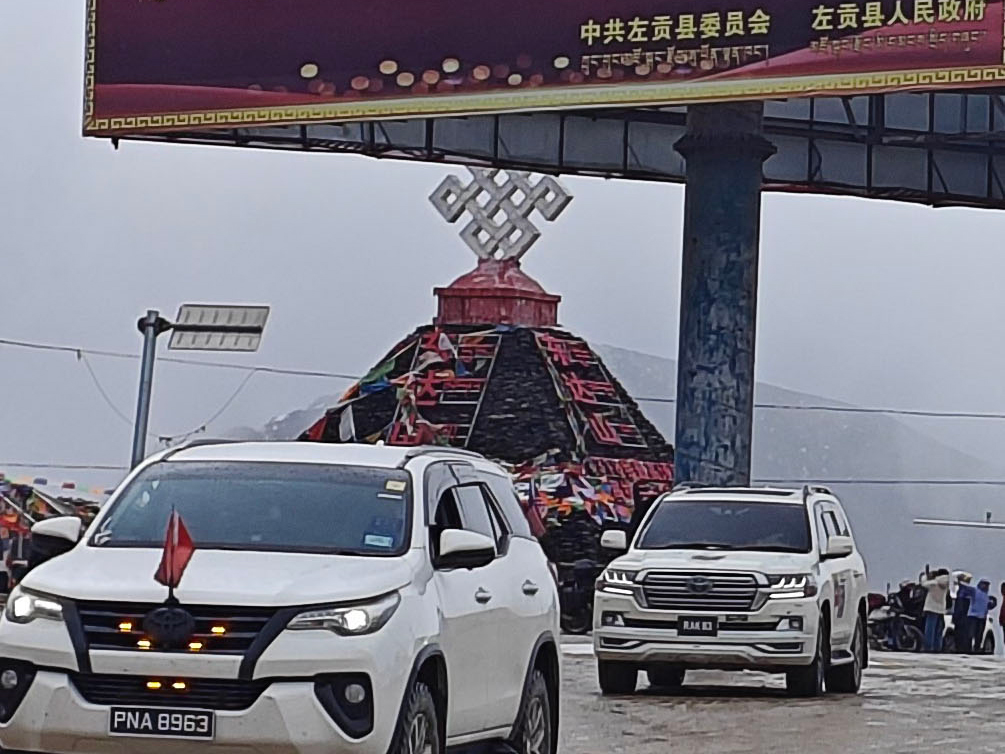
The photograph has a quiet, muffled feel to it. A convoy of foreign SUVs is working its way through fog in Zuogong, a county in the eastern part of Tibet that sits on one of the main routes climbing onto the plateau. The low cloud, the thin air and the long mountain road all point to a different kind of driving from the warmer, lower provinces the vehicles came through. Taking a foreign car into Tibet is a separate proposition from the rest of a China road trip, and this foggy scene is a good way to explain what is involved, both on paper and behind the wheel.
Zuogong lies along the road that winds up from the Yunnan and Sichuan edges into the plateau, a route popular with overland drivers who want to reach the high country without flying in. It is spectacular, but it makes real demands on vehicles and drivers alike. The formalities for Tibet are stricter than elsewhere, and the driving needs patience and a little respect for the altitude and the weather. Let us start with the paperwork, because that is where Tibet most clearly differs.
1. The Tibet permit and the guide requirement
A foreign visitor cannot simply drive into Tibet because the rest of the paperwork is in order. Entering the region requires a separate Tibet permit, arranged in advance, and foreign travellers are required to have a guide throughout the time they are there. This is not something that can be sorted at the last checkpoint, and turning up without it means the convoy will not be allowed through regardless of the temporary plates.
For a group in SUVs, the permit and the guiding are coordinated through the licensed travel agency handling the entry, alongside the ordinary vehicle declaration. The route through eastern Tibet, including stops such as Zuogong, is filed as part of that plan. The guide is not merely a formality; on the plateau they help with checkpoints, local arrangements and the practical questions that arise at altitude.
2. The temporary plate still applies
Even with the Tibet permit in place, the vehicles themselves follow the usual temporary import rules. Each foreign SUV has a Chinese temporary entry plate with a validity of three months, and each driver needs a Chinese temporary driving licence for the correct vehicle class, because China does not rely on an international driving permit in the way many visitors assume. The Tibet permit sits on top of those documents rather than replacing them.
That means a complete package for a Tibet-bound car includes the temporary plate, the temporary licence, the Tibet permit and the arranged guide, with the route filed in advance. The drivers in the photo have all of that in order, which is why the convoy can be on the plateau at all rather than being turned back at the regional boundary.
3. Why a licensed agency is essential
The general requirement for a licensed agency becomes even more important with a Tibet trip. A foreign vehicle cannot be self-declared, and the entry has to run through an agency with the proper outbound-tourism qualifications and the required quality deposit. The agency acts as the guarantor for the vehicles and coordinates the extra layer of Tibet-specific permits and guiding.
The practical value is considerable. A competent agency knows the current format of the Tibet permit, the timing needed to obtain it and the way the checkpoints on the plateau operate. Drivers who try to arrange a Tibet leg independently tend to discover that the extra requirements are not optional and cannot be patched together on the road.
4. Driving at altitude
The paperwork gets you onto the plateau; the driving then needs a different approach. The air is thin, which affects people more than the cars, but it has a modest effect on engine power too, especially in older or naturally aspirated vehicles. Long climbs that would feel effortless at lower altitude can demand more patience and a lower gear, and loaded SUVs need to be driven with that in mind.
Altitude affects drivers in the form of breathlessness, headaches and poor sleep in the first few days, so a sensible itinerary climbs gradually rather than rushing straight to the highest passes. Staying hydrated, avoiding alcohol and taking the first nights quietly help the body adjust. The convoy in the photo is moving steadily rather than pressing on, which is the right instinct on the plateau.
5. Fog, mountain roads and the weather
The fog in Zuogong is a useful reminder that plateau weather can close in quickly. Visibility can drop sharply, the road can be wet or icy depending on the season, and the long climbs and descerts demand smooth, controlled driving. In fog, the sensible move is to slow down, use the appropriate lights and keep a generous gap to the vehicle ahead rather than relying on familiarity with the road.
The long downhill sections call for engine braking and restraint rather than riding the brakes, and the convoy keeps its formation so no one is isolated in the cloud. Pulling over safely to wait for the fog to lift is always preferable to pressing on when the road ahead is no longer clear. Mountain weather changes fast, and patience is usually rewarded.
6. Deposit, insurance and the costs
The financial side follows the same structure as any temporary entry, with the Tibet-specific arrangements added on. The customs deposit is refundable: a fixed 10,000 yuan per vehicle paid into the agency's corporate account and cleared at least three days before the crossing. Once the vehicles leave on time and with no outstanding issues, the deposit is returned in full, usually within three to five working days.
Insurance is compulsory and has to be in place before the temporary plates are issued, with the agency arranging it ahead of entry and the owners paying the actual cost. A vehicle inspection fee of around 200 yuan applies across the board, and translation costs may add a little. The Tibet permit and guide are additional arrangements coordinated by the agency, and a group planning a plateau trip should understand the full package rather than treating it as an ordinary provincial drive.
7. Checkpoints on the plateau
Checkpoints are more frequent in Tibet than in many other regions, and they are a routine part of the journey. Officers check the vehicles against the temporary plates and declarations, the drivers against their licences, and the Tibet permits and guiding arrangements. A well-organised convoy with the documents ready passes through calmly, and the agency can be contacted remotely if anything needs confirming.
The foggy SUV convoy in this photograph is a reminder that Tibet is the most formal and demanding part of an overland route, but also one of the most rewarding. It requires the temporary plate and licence that every foreign car needs, plus the Tibet permit, a guide and a filed route, and it calls for patient driving at altitude and in changeable weather. Get that extra layer arranged in advance through a licensed agency and take the plateau on its own terms, and the road through Zuogong becomes an experience riders and drivers remember rather than a hardship.