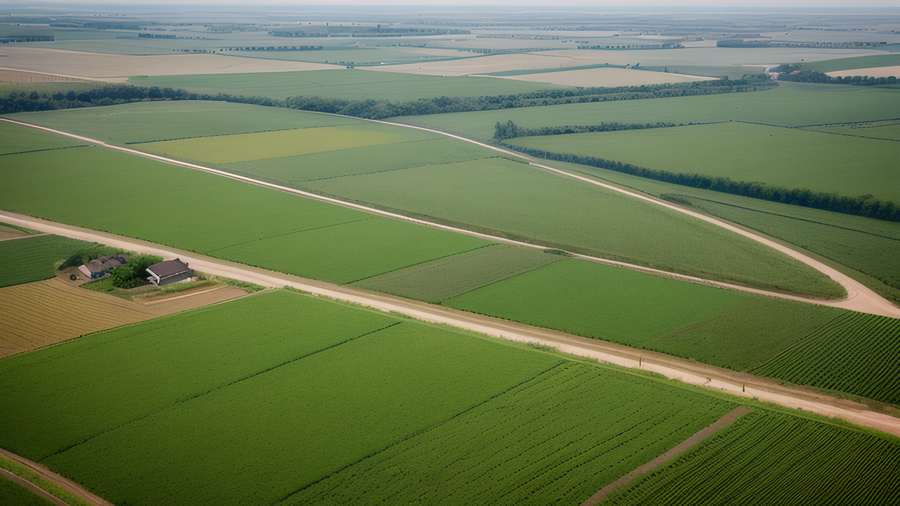
Northern Anhui gets overlooked. Visitors fly into Hefei or climb to Huangshan in the south and never see the plain counties of Huaibei, Suzhou and Fuyang, which are historically the heartland: grain country, canal country, and the ground where several of the stories in the Records of the Grand Historian actually happened. I drove this loop in four days with a rental sedan and covered 395 km — 180 km on the first day, 170 on the third and 45 on the last, with a free day in between. The roads are excellent: wide, straight provincial highways and short expressway connectors, no altitude to speak of, and light traffic away from the city edges. What you came for is water and greenery in a flat farming region — Fuyang's West Lake, where Ouyang Xiu and Su Shi both drank, the Balihe wetland park in Yingshang, and the old forest at Huangzangyu where the founding Han emperor is said to have hidden. For anyone weighing Foreign Car Entry Self-Drive against local hire, be aware the ports nearest to this region are in the north-east, and the paperwork for own-vehicle border permits is best handled by a licensed agency at the crossing; on a four-day trip in one province, Renting a Car in China as a Foreigner from Fuyang or Xuzhou airport is the cheaper and quicker answer.
Trip overview
- Day 1 – Huaibei to Fuyang, 180 km: Fuyang West Lake, then the Yuan Datou memorial quarter.
- Day 2 – Fuyang to Yingshang and back, day trip to Balihe wetland, 0 km on the loop.
- Day 3 – Fuyang to Suzhou, 170 km: Huangzangyu forest and the temple complex at its mouth.
- Day 4 – Suzhou to Huaibei, 45 km: Yu Ji's tomb at Lingbi on the way home.
Total 395 km over four days, an average of about 100 km a day, and no stage longer than two hours. Fuel stations are dense, and every site in this article has a car park at the gate.
Day 1 · Huaibei to Fuyang, 180 km
Road
Leave Huaibei on the S202 south, then a short expressway run into Fuyang. 180 km, roughly two hours, dead flat. The one hazard is the morning farm traffic on the county roads north of the city — tractors and three-wheelers with no rear lights — so set off after eight. Inside Fuyang follow the signed road out to West Lake, 12 km west; the approach is a good four-lane boulevard.
Sights
Fuyang's West Lake has nothing to do with Hangzhou's, and is the older of the two in literary terms. Ouyang Xiu was posted here as a young magistrate in 1048 and wrote the lake into his output; in 1091 his younger colleague Su Shi took the same post and added poems of his own, which is why the place carries two names in Song verse. What survives now is a reconstructed landscape on the old shoreline: a willow-fringed causeway, the Huilao hall where Ouyang Xiu received visitors after he retired, a memorial chamber with his verse cut into stone, and a set of ponds linked by bridges where the lotus in July is the reason locals come. It is a park for walking and it costs little; two hours is right. The plain around the lake is the home of flower-drum lantern dancing and of leather shadow puppetry, both of which are demonstrated on the weekend stage near the east gate. Back in the city, stop at the Fuyang Museum. Its treasures come from the tomb of the Marquis of Runyin, a Western Han noble opened at Shuanggu Dun on the edge of the city in 1977: a lacquered wooden disc marked round its rim with the twenty-eight lunar mansions, the oldest object of its kind surviving in China, and bamboo slips carrying texts that had been lost since the Han imperial catalogue.
Food
Fuyang eats wheat. The city's breakfast is gela-tiao, thick hand-pulled noodles dressed with sesame paste, chilli and bean sprouts, stirred until every strand is coated, sold from stalls with plastic stools. Lunch in the lake district is the fish pot: carp or grass carp in a shallow iron pot with ginger and scallion and a little pork fat. Then there is the pillow loaf, a foot-long steamed bread sliced and toasted, and the salted melon of Taihe county, which congee here is eaten with.
Where to stay
Stay in Fuyang city, along Qinghe Road between the train station and the lake; the hotels have courtyard car parks and you can reach West Lake in fifteen minutes by car at any hour.
Day 2 · Balihe day trip, 0 km on the loop
Road
A round trip of about 110 km to Yingshang county south-east of Fuyang, all on the S102 and county road, an hour each way on a road that is straight and boring and therefore easy. Balihe has a large paved car park at the main gate.
Sights
Balihe is the surprise of this loop: a 5A-rated wetland park built out of what used to be flood-prone shallows on the Huangqi river, where the water is clean enough to see the plant beds under it. The park runs on three parts. The first is the lake itself — reed channels, lotus, and birdlife that includes egrets and, in migration months, storks — crossed by small bridges and skiff rides. The second is a miniatures section built in the 1990s, which sounds like kitsch and is actually a competent set of scaled reproductions of Chinese landmarks, put among real trees and now quite overgrown. The third, and the interesting part, is the fishing village section where you can watch the cormorant fishermen who still work the river in the old way, birds on a perch at the bow with a ring at the throat so they bring the fish back up. The park is a five-kilometre walk at minimum and there are sightseer carts if the heat is bad; give it most of the day. On the return stop in the county seat for the tube-silk market — Yingshang makes a thin wheat noodle sold in hanks, the region's staple.
Food
Eat fish twice today. At Balihe, the lake kitchen serves a clear broth of small river fish with pepper and a fried perch whole; in the county seat, order the deep-fried whitebait, which arrives with the county's own chilli powder, and a bowl of the thin noodles in beef broth. The Yingshang speciality sold at the gate is the small crisp sesame cake, which keeps well and is the right thing to have in the car for the next morning.
Where to stay
Second night in Fuyang, same hotel, so you do not move luggage. Ask the desk to note the car number for the barrier; the courtyard fills by nine and there is an overflow lot behind the block.
Day 3 · Fuyang to Suzhou, 170 km
Road
Take the G35 north-east toward Suzhou, come off at the Xiao County exit and follow the sign for Huangzangyu. 170 km, just under two hours. The final eight kilometres are a two-lane road through farmland with a soft shoulder; keep left at the crossroads marked for the forest park rather than following the through traffic into town.
Sights
Huangzangyu, the Imperial Refuge Forest, is a ridge of old growth in the middle of a farm plain, and its name comes from the story that Liu Bang, before he became the first Han emperor, hid in these woods from a pursuing force. Whether he slept here or not, the forest is genuinely old: a stand of Chinese chestnut, celtis and catalpa, running to some 190 kinds of tree, the largest community of ancient trees recognised in China, old lime, oak and spindle growing in connected stands, lime, oak and spindle growing together down each valley with a stream at the bottom. The walk runs along eleven and a half kilometres of path. Its centre is the Ruiyun Temple, founded in the Liang dynasty in the 540s and rebuilt ever since, with two ginkgoes of some thirteen centuries in the yard, one male and one female, the male three adults wide and putting out two younger trunks from its base, which locals call three generations in one tree. A hundred metres below the temple, under a cliff, is the cave of the story: ten metres deep, flat floor, smooth walls, a boulder wedged at the mouth, and a legend that spiders webbed the gap while Liu Bang crouched inside so that the pursuit rode past. The other names on the trail belong to the same tale, the spring he struck with his sword and the spring where he watered the horse. Motor shuttles run the paved section; the upper valley is walking only. It is green and cool and a real contrast to the treeless roads of the day before. Near Suzhou's centre there is a second, entirely different stop: the museum's Han-dynasty stone reliefs, lifted from tombs in this district, carved with carriages, animal fights and gate towers.
Food
Xiao County is famous for its grapes in late summer, and for mushroom chicken, village hens stewed with the wood-eared mushrooms of these valleys until the broth thickens, eaten with a hard wheat roll. Suzhou city proper is known for a chicken that comes from the Fuji collection of China's four famous chickens — braised whole in a soy-and-spice stock until the meat pulls off the bone, sold along the Huaihai Middle Road. Ask for it cold; the hot version loses its flavour.
Where to stay
Stay in Suzhou city, on the east side near the museum, where the streets are wide enough to park without squeezing into a basement ramp. If you would rather finish the forest, the farm kitchens at the south gate have a yard to sleep the car in and beds above the dining room.
Day 4 · Suzhou back to Huaibei, 45 km
Road
A short drive. Take the S303 west through Lingbi county and you are back in Huaibei inside an hour; the road is flat and straight with long sightlines, and the only slow stretch is through the market town at the county edge on market days.
Sights
Two stops sit on this last stage. The first is Yu Ji's tomb at Lingbi, the burial place of the concubine who, in the standard telling of the Chu-Han contention, killed herself as Xiang Yu's army was surrounded at Gaixia, forty kilometres east of here. What is here is a low walled courtyard with a stele, a mound, a hall with Qing-dynasty tablets retelling the episode, and the opera scene — Farewell My Concubine — being the reason most Chinese visitors know the name; the site takes half an hour and is quiet. The second, in Huaibei itself, is Liuwei, a canal town on the old Sui-Tang Tongji Canal where a sunken Tang-era cargo boat and a row of stone embankments were excavated in 1999 and are now under a protection hall; the find is on the World Heritage list as part of the Grand Canal and it is genuinely interesting — the boat carried thousands of pieces of Changsha-ware ceramics, and the museum has laid out the cargo exactly as it was lifted. If you have an hour left, walk the Xiangshan park above the city for the temple steps and the view across the reservoir.
Food
Huaibei's claim is the sauce shop of Linfan, a market town in the county: soy-preserved vegetables, the black bean paste used on the local grilled pancake, and a cold noodle dressed with sesame and garlic. At Xiangshan the temple kitchens sell a millet-flour cake filled with brown sugar, which is the local sweet.
Where to stay
The loop closes in Huaibei. If the next leg is north toward Shangqiu or east toward Bengbu, fill up outside the ring road — city petrol is dearer than on the expressway and queues at the pump are longest around six.
Practical tips
- The three main sites — West Lake, Balihe and Huangzangyu — are all outside the city centre; buy fuel before you leave Fuyang.
- Balihe's cormorant boats run in the morning; by mid-afternoon the birds are rested and the fishermen are gone.
- The shade at Huangzangyu is real but the path is steep in places; take the shuttle up and walk down.
- Lingbi's tomb courtyard is locked at five; do the museum in Suzhou first if you are arriving late.
- Wheat-country food is heavy on sesame paste and chilli oil; say mild if you mean it, because the local mild is already hot.
- For a loop like this, Renting a Car in China as a Foreigner beats Foreign Car Entry Self-Drive: no strait crossing, no long-haul transfer of your own vehicle.
About this route
Four days is honest for northern Anhui. Two of them are spent in Fuyang, which is where the water is, and the Suzhou stage is short by design so that Huangzangyu gets a proper morning and the return day gets two quiet historical stops. The region's value is precisely that it is not scenic in the mountain-province sense — it is agrarian, level, and thick with documented stories. If you want to extend, Mangdang Shan, over the line in Henan, is ninety minutes east, the ground where the Han founder is said to have killed the snake and where the Western Han princes of Liang cut their chambers into the rock; Bozhou, home of the physician Hua Tuo, is two hours west.
Kilometre figures are the ones this drive produced, checked against exit markers. Ticket prices and opening hours were confirmed at each gate and can change for maintenance or a public holiday.
Route notes by Zara, Yunnan Province International Travel Agency (Group) Co., Ltd.