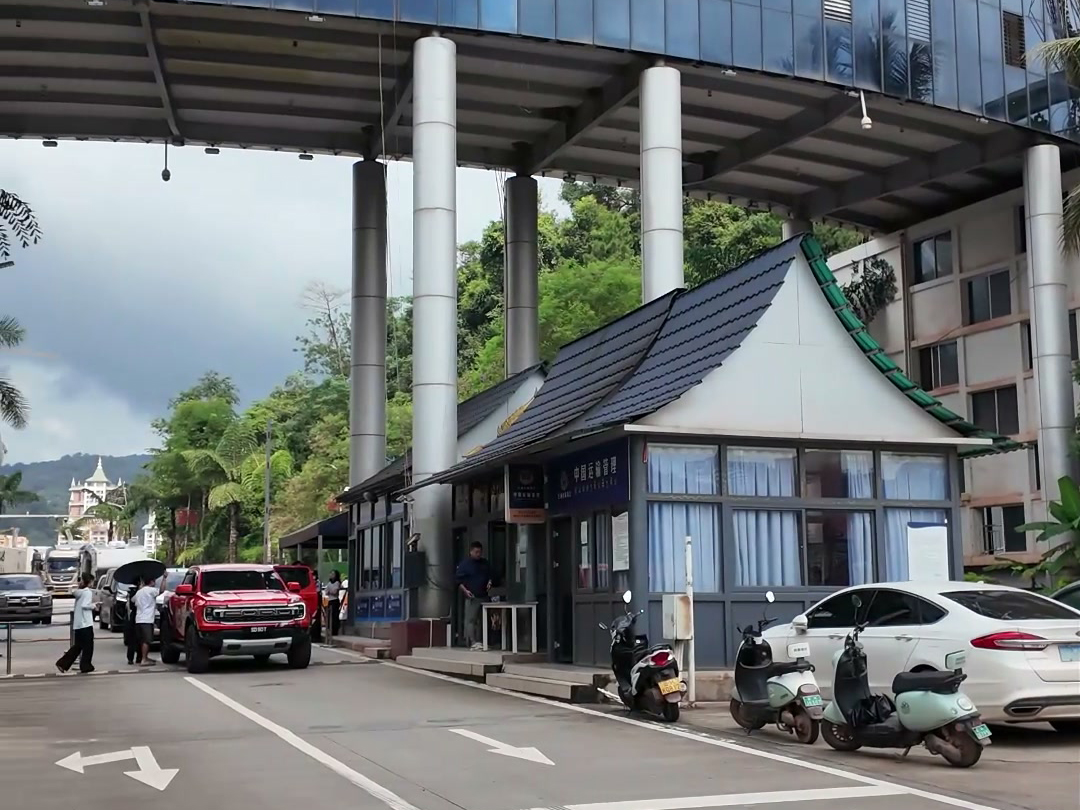
This photo shows a transport management building, a red Ford pickup, a footbridge, an electric scooter. People think entering China is just the customs stamp, but there's another part to it: the transport and vehicle administration side, and it has its own building and its own windows.
I came unstuck here on my first trip. I had the passport and the customs papers, but I'd missed a translation, and the staff at the window couldn't process it. I had to go away, get the translation sorted, and come back, which wasted a day. After that I made sure every document that needed a Chinese translation had one, and I let the travel agency check the lot before I reached the window. The people who know the process save you from the blank trips.
There's a vehicle inspection as well, costing around two hundred yuan. They check the bike is in order, the lights, the basics, and once it's done you have the paperwork you need. It isn't a large sum, and it isn't a hurdle if you're ready. I've seen riders arrive with a faulty light and have to get it fixed before they could pass, so give the bike a check beforehand and don't leave it to the window.
I have a view about all this paperwork now. When you're young it feels like a nuisance, a string of windows and stamps and forms. Later you understand that it's how the system keeps track of who and what is on the road, and that a well-run process is part of what makes the trip safe. I don't fight it; I get the papers ready and let the professionals guide me through. Doing it yourself to save a little time usually costs more in the end.
The building in the photo is plain, ordinary, the kind you'd walk past without a look. But the work done inside matters. Without the right stamps here the customs entry doesn't translate into a legal bike on the road. The temporary plate and the temporary licence both depend on this side being done properly, and the travel agency handles it.
I've learned to arrive with the documents in a folder, in the order they'll be needed, so when I reach a window I'm not searching through a bag. It sounds a small thing, but it keeps the process calm and the staff patient, and it marks you out as someone who's prepared. I've watched flustered riders hold up a queue while they hunted for a paper, and I've no wish to be one.
I've also learned to ask rather than guess. If I'm unsure which window or which form, I ask the agency or the staff, rather than assuming and getting it wrong. The people who know the process are there to guide you, and a question takes a minute; a wrong assumption takes a day.
The transport building in the photo is just one stop on the way in. Take the paperwork seriously, get the translations done, expect the two-hundred-yuan inspection, and have someone who knows the route to guide you. Then it's a quick, orderly step, and you're legal on the road, which is the whole point.