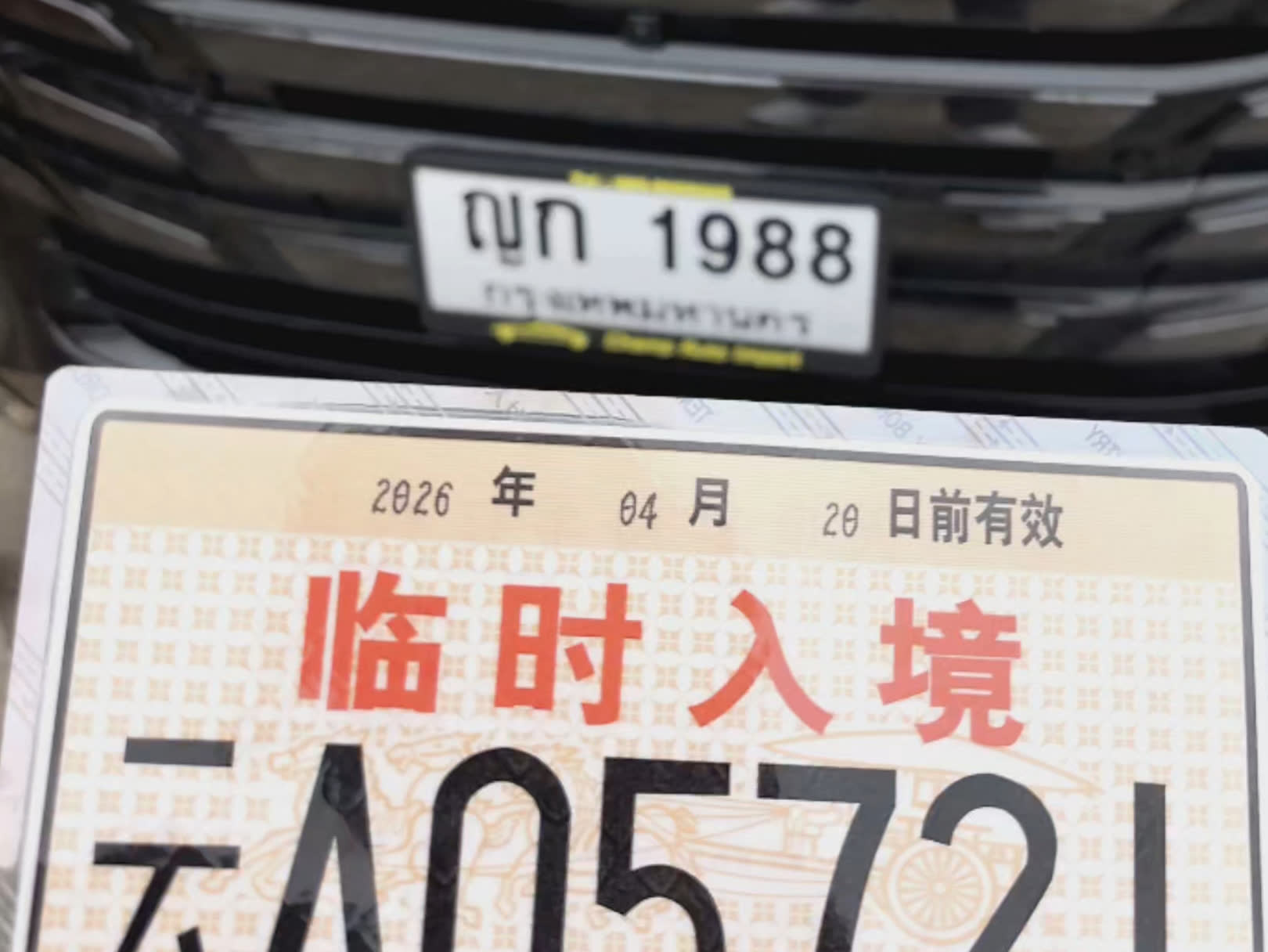
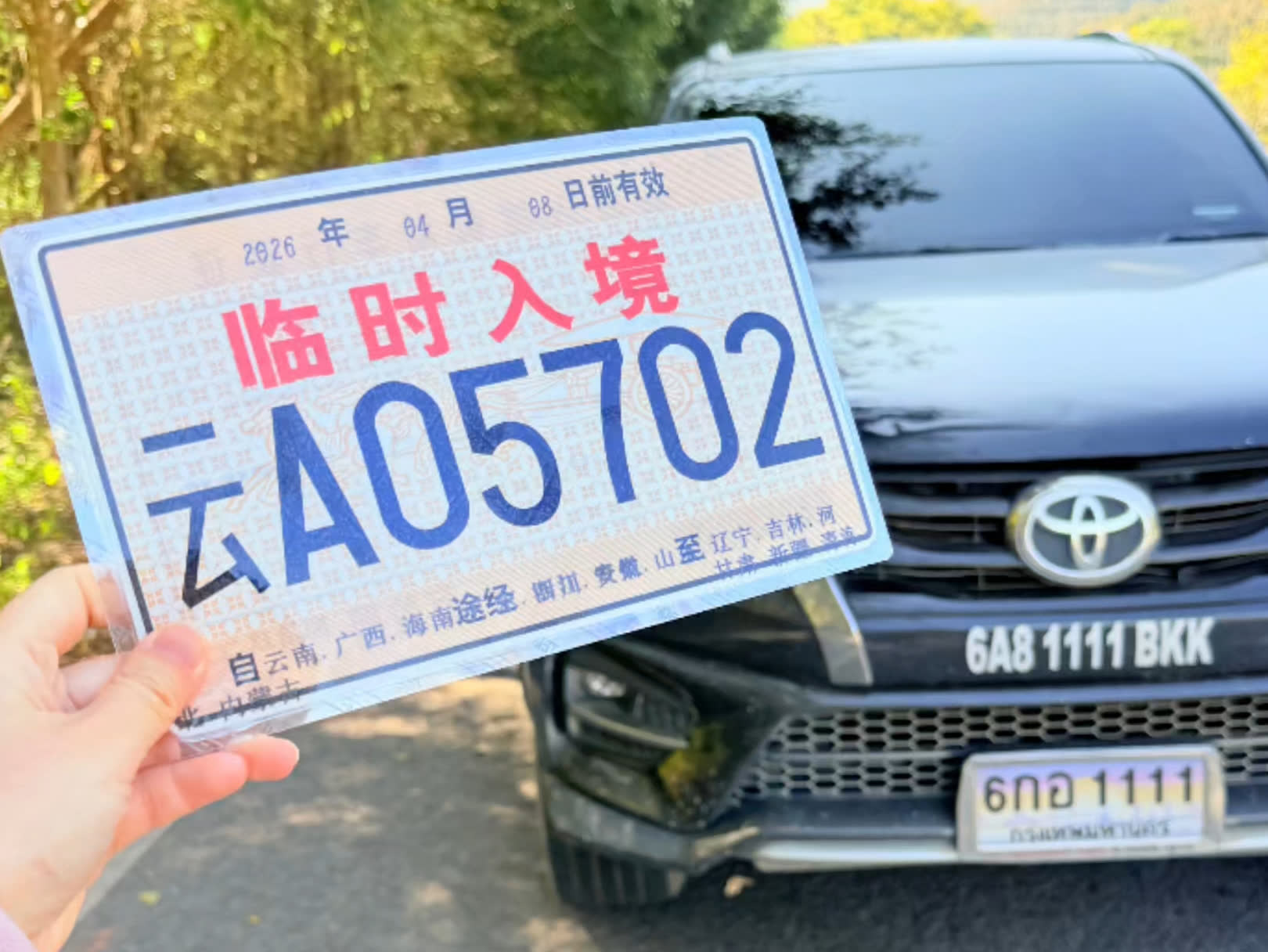
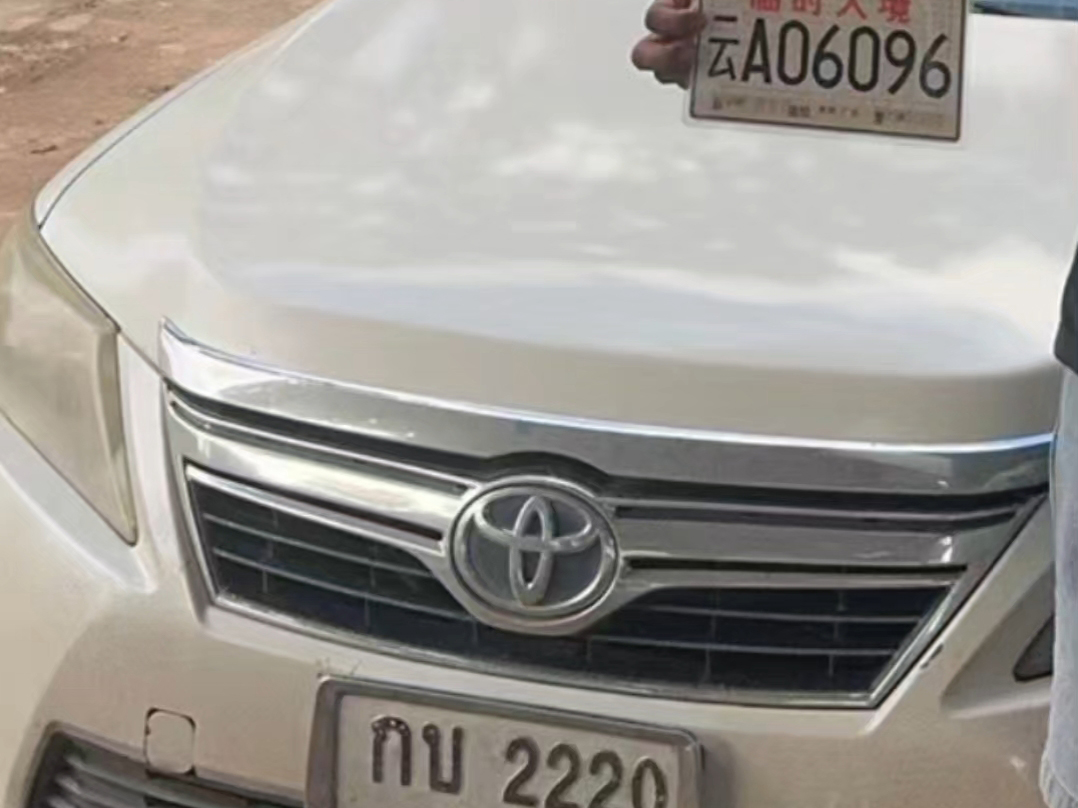
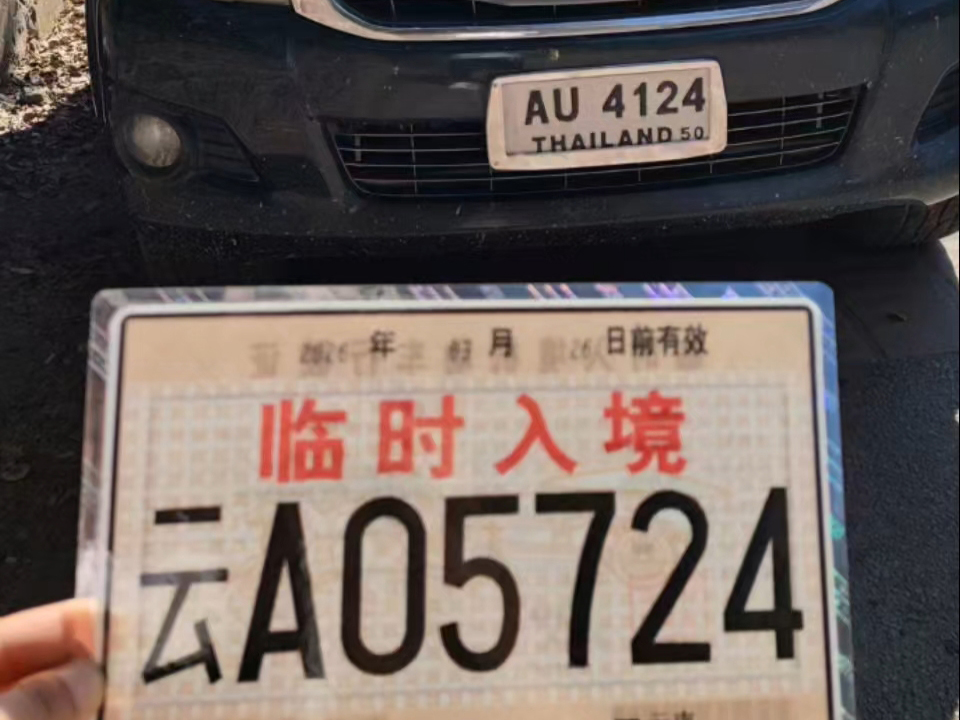
When a batch of similar vehicles comes through together, the patterns become obvious, and this set of six photographs shows a familiar one: a group of Thai-registered Toyota cars, each wearing a Yunnan temporary entry plate, processed and ready for the Chinese roads. The point of looking at several together is that it removes the sense that any one car is a special case. To the system, these are routine, well-understood entries.
Toyota dominates the crossings from Thailand for the simple reason that it dominates the roads there. Hilux pickups, Fortuners, Corollas and their relatives are common, they are reliable, and the paperwork for them is thoroughly familiar to everyone involved.
1. Each car gets its own plate
There is no shared plate for a group of vehicles. Every Toyota here is a foreign vehicle in its own right and displays its own China temporary entry plate alongside the original Thai registration, which stays on the car. The temporary plate is the authority for driving on Chinese roads during the visit.
Each plate is valid for three months, and that is the working number for every plan. Whether the cars travel together or separately once inside, their routes should be timed so each vehicle exits before its paperwork runs out.
2. The agency handles every entry
None of these cars can be brought in by its owner acting alone. A licensed travel agency makes the customs declarations and provides the guarantee for the vehicles. When several Toyotas are processed together, the agency handles the declarations as a coordinated set, which keeps the crossing orderly rather than turning it into a queue of separate, improvised attempts.
The agency meets the usual qualifying requirements, including the quality guarantee deposit and operating history, and acts as the bonded, responsible party while the cars are in the country. That structure is what allows the temporary plates to be issued.
3. The costs per vehicle
The service fee applies to each car and covers its customs declaration, the immigration processing, the temporary driving licence, the temporary plate, the route filing, the exit clearance and the practical support at the port. The customs guarantee is separate. Under the agency's guarantee, each owner lodges a fixed 10,000 yuan into the corporate account in place of the larger value-based assessment, three days before entry, with the money returned in full within a few working days after the car exits.
The compulsory insurance is arranged before each plate is issued, with the owner paying the actual premium, and the inspection fee of around 200 yuan and the translation costs apply per vehicle.
4. Driving licences for the drivers
Each driver needs a Chinese temporary driving licence, because the international permit is not recognised and the Thai licence alone is insufficient even with a translation. The agency arranges the full set. Where a car will have more than one driver sharing the journey, both names should be given at the paperwork stage rather than added later.
5. Where these cars are used
Standard, unmodified Toyotas are suited to the great majority of travel on China's expressways and provincial roads. The country is open in principle, with the usual defined exceptions. The capital needs its own entry permit. Tibet requires a full-time guide and a Tibet permit, with a longer lead time. Some border zones in Xinjiang and Gansu are restricted, and certain high-altitude roads, including parts of the G219 and the new unmanned-area route, are closed to foreign visitors. Getting from Xinjiang towards Tibet means looping back to Golmud and the Qinghai-Tibet road.
For most Thai visitors, the route stays in Yunnan and neighbouring provinces, where ordinary family cars and pickups are entirely at home.
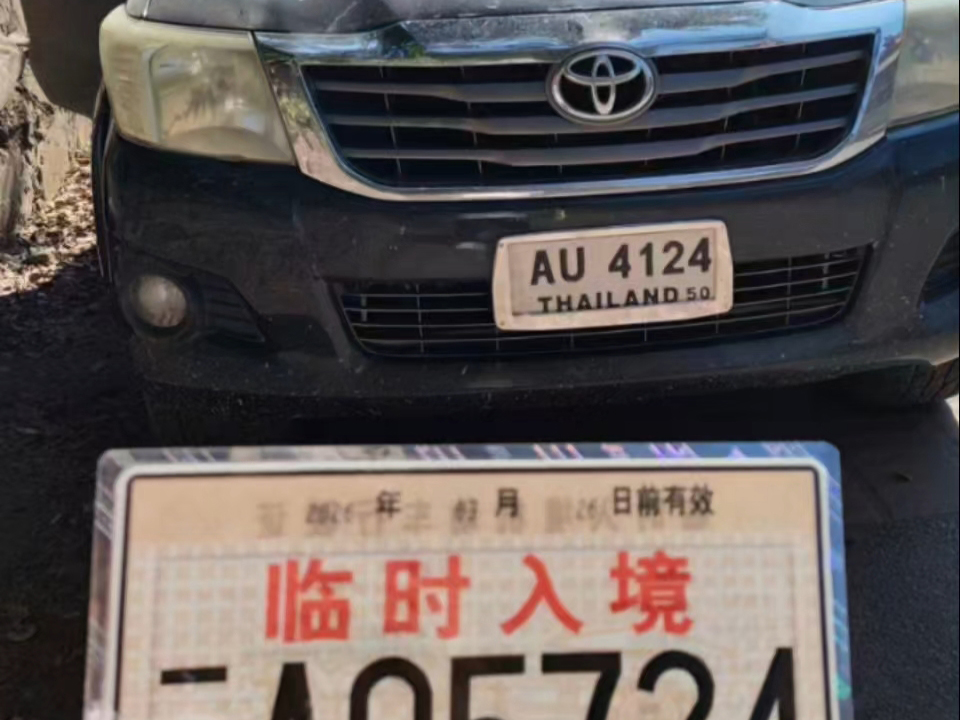
6. Right-hand drive is accepted
Thailand drives on the left, so these are right-hand-drive cars. They are accepted at every port, with the same fees and no surcharge, and the only adjustment is on the drivers, who have to remember that traffic in China keeps to the right. For a group travelling together, helping each other with that habit in the first couple of days makes it settle quickly.
7. The paperwork to prepare
Allow around twenty days, longer if Tibet is involved. For every car and driver, the agency needs passports and Chinese visas, the driving licences, white-background ID photos, the vehicle registrations and ownership papers, the engine numbers, and front, rear and side photographs. The non-Chinese documents need translations.
Before travel, check the identifying numbers on every car. A number altered, ground or welded, or one that does not match the registration, is a blocker for that vehicle. The reason these Toyotas process so smoothly is precisely that they are standard, unmodified and consistent with their paperwork.
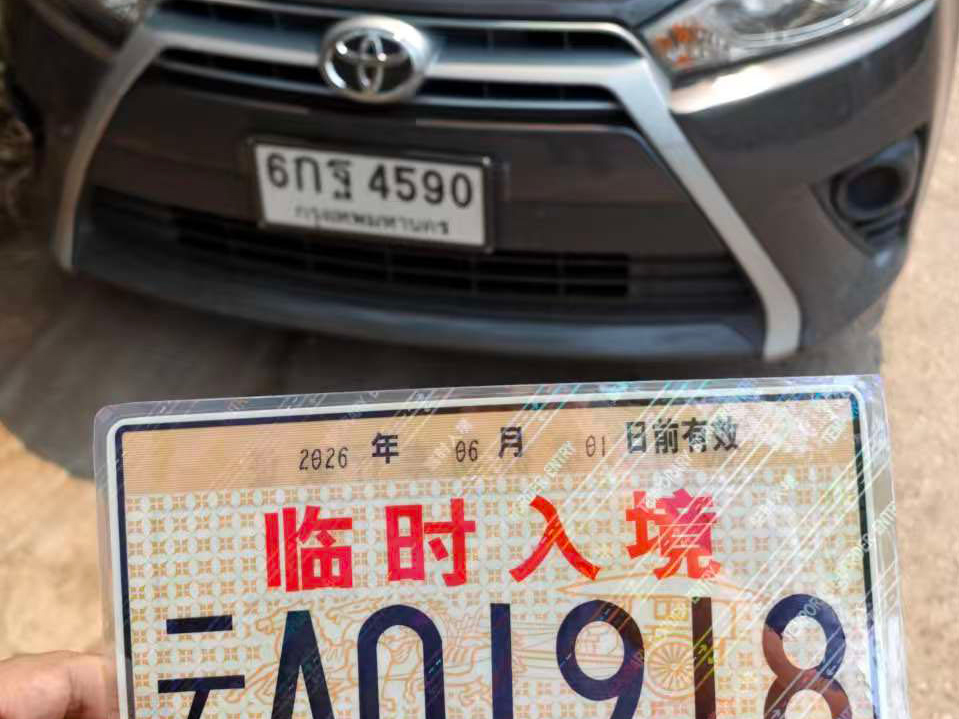
8. Why six similar pictures are useful
Seeing the same arrangement repeated across six vehicles makes the central point clearly: there is nothing unusual or precarious about a properly handled entry. Each car follows the same route through the agency, the same temporary plate, the same guarantee and the same licence, and the whole batch is unremarkable in the good sense.
If you are bringing one or more ordinary Thai vehicles and have worried that your particular car might be an awkward exception, these photographs are reassuring. Line the agency up early, move the guarantee in the three-day window, keep each trip within the three-month plate, and the cars will be treated as the routine entries they are. The border has processed a great many Toyotas, and yours will not be the one that surprises anyone.