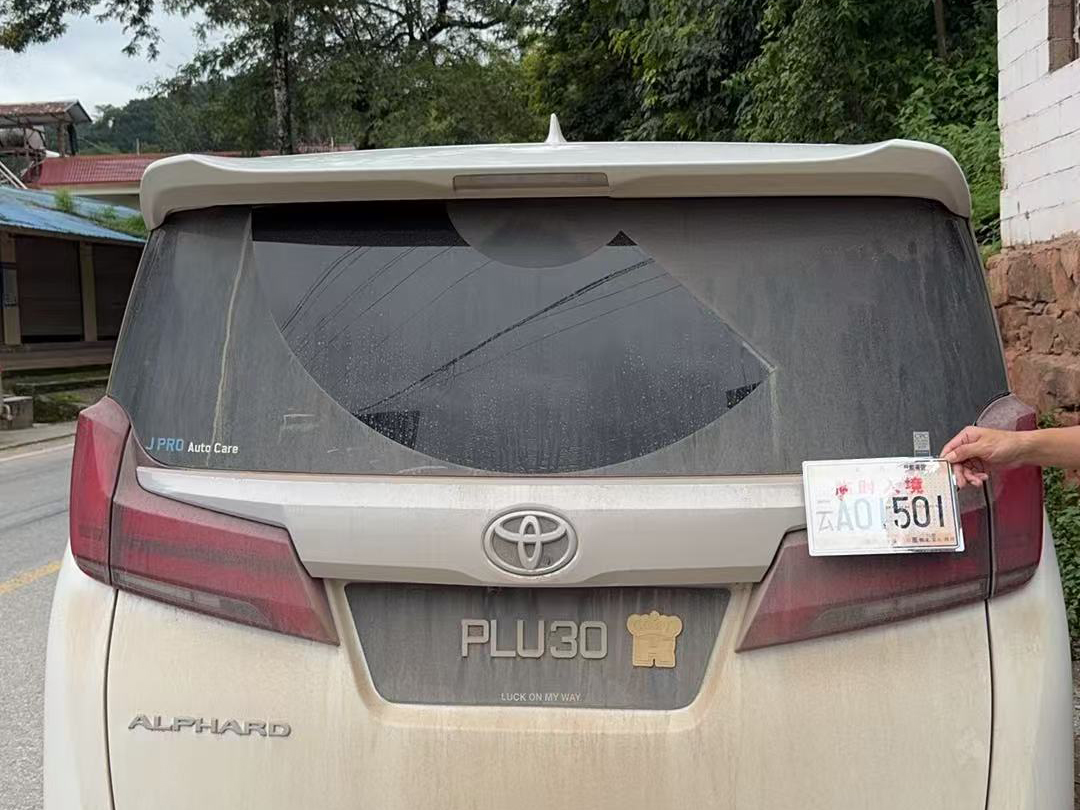
The vehicle in these photographs is a specific model worth naming properly: a Thai-registered Toyota Alphard PLU30, shown with a Chinese temporary entry plate. The PLU30 is the generation that established the Alphard's reputation as a refined and practical people-carrier, and it remains a common sight across Southeast Asia, including among owners who bring them on long trips into China. With three images to work through, this piece looks at what the PLU30 offers, why it suits a touring group, and how the temporary plate and formalities apply to it.
The reason for singling out the model is that owners tend to know exactly what they are getting. The PLU30 is valued for its roomy cabin, its smooth ride and the durability Toyota is known for, rather than for novelty. A well-kept example is fully capable of a multi-week journey, and the car in the photos has crossed the border and now carries the plate that legally allows it onto the Chinese road network.
1. Why the PLU30 works as a touring vehicle
The Alphard is built around moving people comfortably, and the PLU30 delivers that with generous seating, a quiet cabin and a soft ride that makes long highway days easy. For a family or a small group, the space means several adults can travel together without feeling cramped, and the luggage capacity handles the bags a long trip requires.
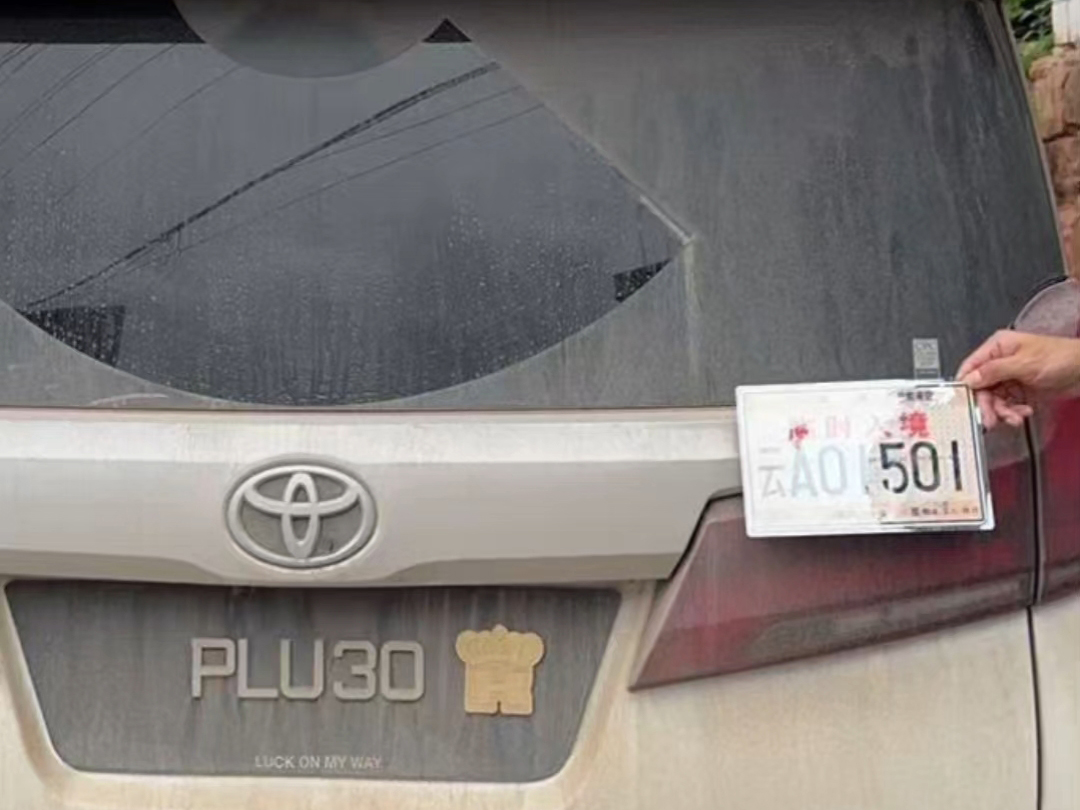
The model is also appreciated for its reliability and the ease of maintaining it, which matters on a journey far from home. Owners who choose an older, well-maintained PLU30 often do so because they trust it to keep running rather than wanting the newest vehicle on the road. The photographs show the car in real use across the journey rather than in a single posed location.
2. The temporary entry plate
As with every foreign vehicle, the Thai registration alone does not permit the car to drive inside China. Once the customs declaration is completed, the PLU30 is issued a Chinese temporary entry plate, which is displayed while the vehicle is in the country. The original Thai plate remains on the car as well, so the two appear together across the photographs.
The temporary plate is issued with a validity of three months, and the dates on the accompanying paperwork define how long the vehicle may remain. The route and the planned exit need to fit within that window. There is no model-specific rule; the same three-month temporary plate applies to the PLU30 as to any other foreign vehicle.
3. The temporary driving licence
The driver needs a Chinese temporary driving licence for the correct vehicle class, because China does not rely on an international driving permit in the way many visitors assume. The Thai home licence is used as a supporting document, together with a Chinese translation, but the temporary licence is the actual authority to drive during the visit.

It is arranged alongside the plate through the same entry process, so the two are treated as a package. Both need to be in hand before the car leaves the border area, and preparing the documents and translations in advance keeps the crossing calm rather than rushed.
4. Why a licensed agency is required
A foreign vehicle cannot be self-declared at the gate. The entry has to run through a licensed travel agency with the proper outbound-tourism qualifications and the required quality deposit lodged with the authorities. The agency acts as the guarantor for the PLU30, prepares the customs declaration and arranges the temporary plate and temporary licence.
The reason is that customs need a responsible party on the Chinese side who can account for the vehicle and confirm it leaves again on schedule. A competent agency knows the current document formats and can coordinate the timing so an owner arriving from Thailand is not held up by an avoidable technical error. For a group travelling in comfort, having the agency handle the paperwork also lets them focus on the journey.
5. The deposit, insurance and costs
The financial side follows the standard structure. The customs deposit is refundable: the owner pays a fixed 10,000 yuan into the agency's corporate account, and it must have cleared at least three days before the crossing so the declaration can proceed. Once the vehicle leaves on time and with no outstanding issues, the deposit is returned in full, usually within three to five working days.
Insurance is compulsory and has to be in place before the temporary plate is issued, with the agency arranging it ahead of entry and the owner paying the actual cost. A vehicle inspection fee of around 200 yuan applies across the board, and translation costs may add a little. The service fee covers the declaration, the immigration steps, the temporary licence and plate, the route filing and the handling at the port.
6. Travelling in the PLU30
Once the formalities are done, the car is in its element. The long highway stages pass quietly, the cabin keeps every passenger comfortable, and the practical boot handles the group's luggage. The main care needed in a vehicle of this size is in tight city streets and when parking, where a little extra patience avoids unnecessary scrapes.
Checkpoints are a routine part of travel away from the big cities, and they are nothing to worry about when the paperwork is in order. Officers check that the driver matches the temporary licence and that the car matches the plate and declaration. A calm handover of the folder is usually the whole interaction, with the agency available remotely if anything needs confirming.
For groups heading into the western plateau, the usual restricted-area rules apply. Tibet needs separate permits and a guide, and some border zones are not open to foreign visitors regardless of the vehicle. The PLU30 is capable of the altitude, but the extra permits have to be arranged in advance, and where there is no clear current answer, the agency and the printed permits are the reliable source.
The three photographs together show a dependable, comfortable vehicle being used steadily across a journey. The Alphard PLU30 proves that a familiar, well-maintained people-carrier is a sensible choice for a group that values comfort and plans to stay on the main roads. With a correctly issued three-month temporary plate and licence and a declaration arranged through a licensed agency, the car can carry its passengers across China in a relaxed and reliable way.