Toyota may dominate the southern crossings, but it is far from the only make that comes through, and this photograph shows a Thai-registered Hyundai wearing its Yunnan temporary entry plate. The point worth making is that the brand of the car does not alter the process in the slightest. A Hyundai is handled under exactly the same temporary entry rules as any other foreign vehicle, and that consistency is helpful to understand.
Hyundai has a strong presence in the Thai market, with a range of saloons and SUVs that suit family and business use. An owner bringing one north into Yunnan is making the same kind of touring decision as any other driver, and the formalities are the familiar, well-rehearsed set.
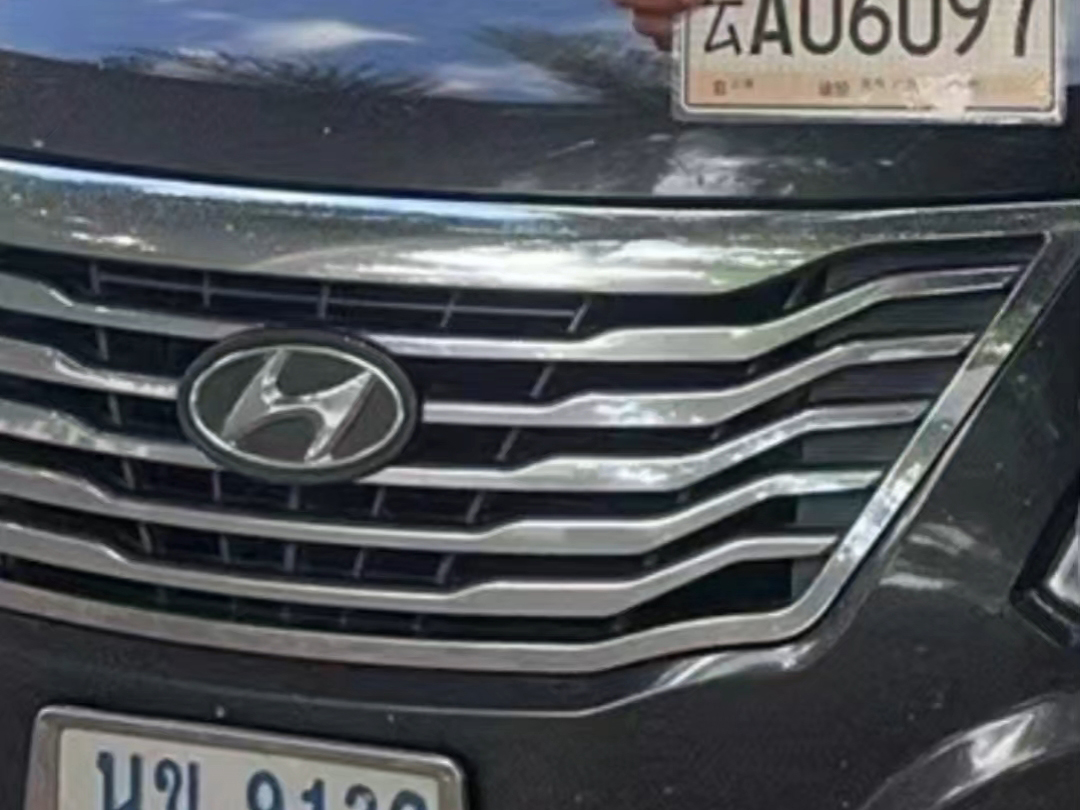
1. The temporary plate on the car
The plate at the front is a China temporary entry plate issued under the temporary entry arrangement. It does not replace the original Thai registration, which stays on the vehicle, and it is the authority for driving on Chinese roads during the visit.
It is valid for three months, and that is the figure to build the trip around. The route should be timed so the car exits before the date on the paperwork, which keeps the end of the tour free of complications.
2. Why the agency is required
The owner cannot bring the car through alone. A licensed travel agency makes the customs declaration and provides the guarantee, just as it would for any other make. There is no brand-specific route, and the fact that the vehicle is a Hyundai rather than a Toyota makes no difference to the requirement.
The agency meets the usual qualifying bar, including a quality guarantee deposit and an operating history, and stands as the bonded, responsible party for the car while it is in the country. That structure is what allows the temporary plate to be issued.
3. The costs explained
The service fee covers the customs declaration, the immigration processing, the temporary driving licence, the temporary plate, the route filing, the exit clearance and the support at the port. The customs guarantee is separate. Under the agency's guarantee, the owner lodges a fixed 10,000 yuan into the corporate account in place of the larger value-based assessment, three days before entry, with the money returned in full within a few working days after the car leaves.
The compulsory insurance is arranged before the plate is issued, with the owner paying the actual premium, and the inspection fee of around 200 yuan and the translation costs apply. Fuel, tolls, hotels and meals remain the traveller's own.
4. The driving licence
The international driving permit is not recognised in China, so the Thai licence alone is not enough even with a translation. A Chinese temporary driving licence is arranged through the agency. If a second driver will share the journey, name them at the paperwork stage rather than trying to add them later.
5. Where the car is used
A standard Hyundai saloon or SUV is suited to the expressways and provincial roads that carry most of the touring traffic, and those roads are generally in good condition. Most of China is open in principle, with the usual defined exceptions. The capital needs its own entry permit. Tibet requires a full-time guide and a Tibet permit, with a longer lead time. Some border zones in Xinjiang and Gansu are restricted, and certain high-altitude roads, including parts of the G219 and the new unmanned-area route, are closed to foreign visitors. Getting from Xinjiang towards Tibet means looping back to Golmud and the Qinghai-Tibet road.
For the typical Thai visitor, the route stays in Yunnan and the neighbouring provinces, where an ordinary family car is entirely at home.
6. Right-hand drive
Thailand drives on the left, so this is a right-hand-drive car. It is accepted at every port with the same fees and no surcharge, and the only adjustment is on the driver, who has to remember that traffic in China keeps to the right. With a little conscious attention at junctions in the first couple of days, that becomes second nature.
7. The documents to prepare
Allow around twenty days, longer if Tibet is involved. The agency needs the passports and Chinese visas, the driving licences, white-background ID photos, the registration and ownership papers, the engine number, and front, rear and side photographs of the vehicle. The non-Chinese documents need translations.
Check the identifying numbers before travel. Any frame number altered, ground or welded, or not matching the registration, is a genuine blocker. A standard, unmodified Hyundai with consistent paperwork is an easy, routine case.
8. Why the make does not matter
The photograph is a useful reminder that the entry system is built around the vehicle's status as foreign and the paperwork behind it, not the badge on the grille. Whether the car is a Toyota, a Hyundai or something else, the same temporary plate, the same guarantee and the same licence apply, and the process is no harder for a less common make.
If you own a non-Toyota Thai vehicle and have wondered whether it will be treated differently, the answer is no. Arrange the agency early, move the guarantee in the three-day window, keep the trip within the three-month plate, and the car will be processed as the ordinary, familiar entry it is.
One practical point for a less common make is to have the vehicle serviced before the trip and to note where the brand's service points are along the intended route. A modern Hyundai is thoroughly dependable, but knowing in advance where a genuine part or a familiar diagnostic system can be found saves time if anything needs attention far from home. It is also worth keeping the handbook and a record of the service history with the travel documents, since an inspector or a mechanic who can see a well-maintained vehicle with consistent paperwork will treat it as the routine case it is. Carry the agency's number in the glove box as well, so any question at a roadside check can be resolved with a single call.