A Lao plate, a wet border, and the question everyone asks
The rain at Mohan (磨憨) starts the way it means to carry on: warm, heavy, and without asking your opinion. I was there in late July, watching a dark-green Thai-registered pickup and a Malaysian motorhome queue near the China-Laos border. The driver of the pickup leaned out and asked the question I hear constantly from overlanders coming up from Southeast Asia: "Can a right-hand-drive car really do a China road trip, or do they turn it around at the gate?"
Fair question. China drives on the right. Most of Southeast Asia drives on the left. If you have just spent three months in Laos or Thailand, your vehicle is right-hand drive, your windscreen wipers and indicator stalk muscle memory is backwards, and Chinese border paperwork sounds, from a distance, like a rumour designed to spoil a trip.
The short answer is yes. Both left- and right-hand-drive vehicles are accepted at every open port on the scheme, for the same fees, with no surcharge for being right-hand drive. The longer answer involves a guarantor agency, a customs deposit, a Temporary China Licence, and accepting that you cannot simply wander up to Chinese customs as an individual and sort it out yourself.
Why you cannot just drive your own car into China
This is the part that catches Europeans, because we are raised on borders where, most of the time, you hand over a passport and a vehicle document and hope the officer likes your face. Foreign vehicle China entry does not work like that.
A foreign vehicle must be declared through a qualified travel agency acting as guarantor. Individuals have no standing to declare and cannot clear customs on their own. The agency I dealt with was Yunnan Province International Travel Agency (Group) Co., Ltd; the contact was Zara, reachable on WeChat and WhatsApp at +86 13759155671, WeChat ID qxzj7557, or by email at [email protected].
The qualification matters. It requires a tourism quality deposit of RMB 1.6 million plus three years of operation. That is not paperwork theatre; it is the financial backing behind the guarantee that lets a foreign vehicle enter and leave on schedule.
I watched a Belgian couple in a left-hand-drive camper arrive at Mohan a few years ago assuming they could negotiate directly at customs. Polite people, proper documents, no agency. They spent a long, educational day drinking instant coffee in a corridor before they understood the issue. Nothing wrong with their van. The declaration route simply did not exist without the guarantor.
Mohan, and the other ways in
For a Southeast Asian overlander, Mohan is the natural crossing from Laos. There are four land ports available on this arrangement:
- Mohan (磨憨)
- Khorgos (霍尔果斯), China-Kazakhstan
- Gyirong (吉隆), China-Nepal
- Erenhot (二连浩特), China-Mongolia
There are also three sea ports: Dalian, Guangzhou and Shenzhen. Sea entry is a different financial conversation, useful if you are shipping a motorhome from Europe rather than driving overland from Southeast Asia.
What it costs
The service fee is charged per vehicle, and cars, motorhomes and motorcycles are the same price. It is not a daily charge; one month or three months costs the same.
- Mohan entry: RMB 5,000-6,000, and Laos-registered vehicles pay RMB 4,000
- Khorgos entry: RMB 6,000-9,000
- Cross-through package, Khorgos in and Mohan out or the reverse: RMB 8,000
- Erenhot entry: RMB 8,500
- Guangzhou sea entry: RMB 22,000, ocean freight not included
- Dalian sea entry: RMB 18,000, ocean freight not included
That fee covers customs declaration, immigration formalities, the Temporary China Licence, the temporary plate, exit clearance, route filing and on-site port assistance. It does not cover the customs deposit, vehicle insurance, document translation, vehicle inspection, fuel, tolls, food, accommodation or a guide.
The vehicle inspection runs to about RMB 200. Not a drama, but budget for it rather than discovering it in the car park.
The RMB 10,000 deposit, and why timing matters
With the agency's guarantee, the customs deposit the owner pays is RMB 10,000. It goes into the company's corporate account, never a personal one. If anyone ever asks you to send a deposit to a personal account, stop typing.
The money must arrive three days before entry. If it is late, the declaration is cancelled and the service fee is not refunded. That sounds stern until you picture the customs system: filings, timings, guaranteed entry. A late transfer is not a small administrative inconvenience; it unwinds the arrangement.
After exit, the deposit is refunded by the same route within 3-5 working days, provided you leave on time without overstaying, have no outstanding traffic fines, and leave no unpaid fees or unfinished customs matters. In other words, behave, drive the filed route, and the money comes back.
The licence question: forget the IDP assumption
Here is where European and British drivers need to reset. China is not party to the UN road convention and does not recognise the International Driving Permit. Your home licence still matters as a supporting document, but to drive legally in China you need a Temporary China Licence, arranged through the agency.
I have seen travellers argue this point at borders with the weary confidence of someone who has read a forum post from 2014. Do not be that person. The Temporary China Licence is valid nationwide. There is no separate Tibet driving licence; Tibet's extra requirements are a full-time guide and a Tibet permit, which is a different matter entirely.
The temporary plate is valid for three months. Plan the China road trip around that window from the start.
For documents, get them to the agency 20 days before entry; for a Tibet itinerary, allow a month. You will need your passport, Chinese visa, driving licence, a white-background ID photo, vehicle licence, registration certificate, engine number, and one photo each of the front, rear and side of the vehicle. Anything that is not a Chinese licence needs a Chinese translation, which the agency arranges.
If your vehicle is over six years old, it must pass an inspection at the vehicle management office after entry, and some ports also require a valid home-country annual inspection certificate. I would rather find that out in an email three weeks early than in a Chinese inspection lane with rain dripping off my sleeves.
Insurance, and the right-hand-drive adjustment
Compulsory traffic insurance is mandatory; without it, a temporary plate cannot be issued. Commercial third-party cover from RMB 500,000 is optional. The agency purchases insurance before entry and the client pays the actual cost.
Then there is the driving itself.
China drives on the right. In a right-hand-drive car, your first overtaking judgement on a Chinese national road feels faintly ridiculous, because your body is sitting on the wrong side for the sightline. I learned this years ago on a wet stretch in Yunnan, drifting a little too wide before a left-hand bend because my brain was still running the Southeast Asian script. Nothing dramatic. Just a small, cold reminder that the vehicle does not adapt; you do.
Give yourself half a day to settle in. Keep your speed calm. Use a passenger or mirrors carefully before overtaking. Lorries, tunnels, toll booths and night-time glare all feel different from the right-hand seat.
Ports are not open 24 hours, either. Arrive with time in hand, not at dusk with a dramatic story already forming.
Where you can actually go
The filed route can run nationwide, but there are restrictions worth understanding before you draw a line across a map.
Tibet requires a full-time guide and a Tibet permit. Beijing requires a capital entry permit. Some border-restricted areas in Xinjiang and Gansu are off limits. The G219 Dahongliutan section is closed to foreigners, as is the Kashgar/Yecheng to Ritu section near Pangong Lake. The new Minfeng no-man's-land highway is also closed to foreigners.
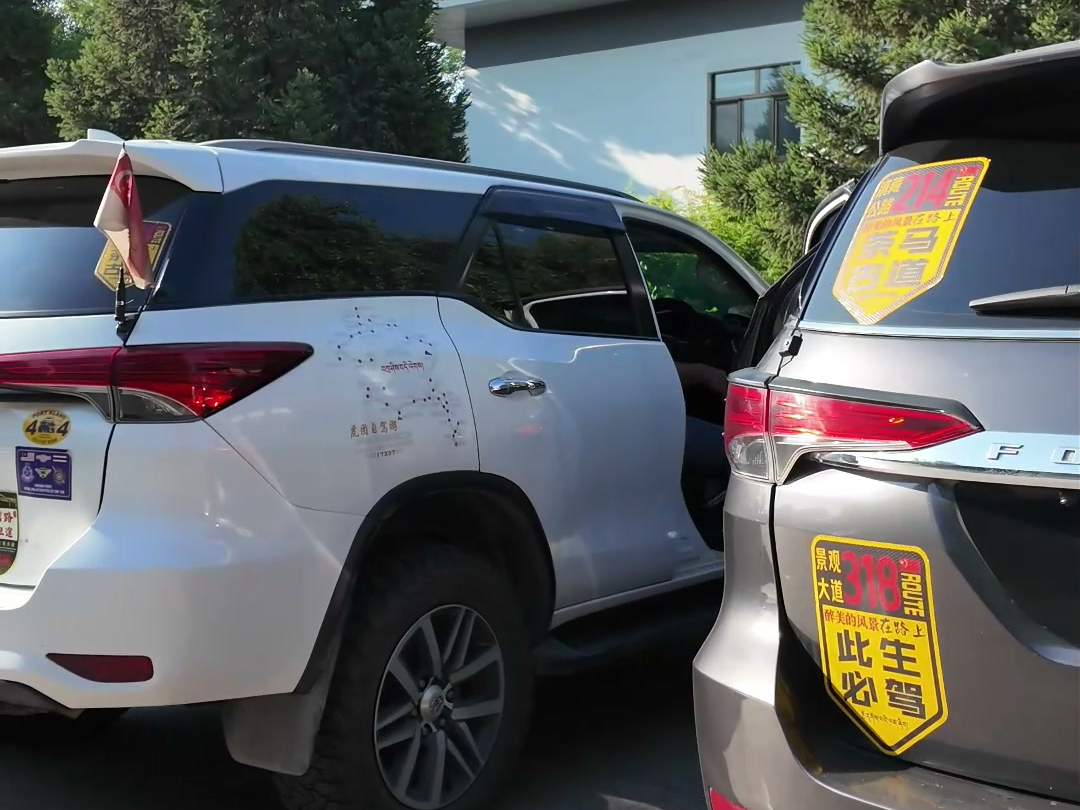
If your dream is Xinjiang into Tibet, the direct high-altitude fantasy is not available; you must detour via Golmud on the G109. Legal highways into Tibet are the G109, G318 and G214. I have a soft preference for the G318 in autumn, but that is a conversation for another article and a longer mug of tea.
You do not need an escort or lead vehicle on the ordinary route, apart from the mandatory Tibet guide. Drive the filed route. At checkpoints or police stops, the agency supports you remotely with the documents. Do not improvise a "small unmarked road" because it looks shorter on a satellite image. It rarely is.
Visa timing
China offers 30-day visa-free entry, which may suit a short Yunnan loop. If you want a longer journey, the agency can issue an invitation letter to help with a longer tourist visa. Sort that around your travel plans rather than treating it as a border-day decision.
So can the Southeast Asian car finish the trip?
Yes, provided the paperwork is built properly before the wheels reach Mohan. The right-hand drive itself is not the obstacle. The obstacle is usually the traveller's assumption that China works like a quieter European border or a relaxed Southeast Asian crossing.
Use a qualified guarantor, send the RMB 10,000 deposit to the corporate account three days early, gather the documents 20 days ahead, get the Temporary China Licence and compulsory insurance arranged, and respect the filed route and the three-month plate.
Then, when the rain stops and the road opens north through Yunnan, the only real problem is the one every overlander secretly enjoys: remembering which side of the vehicle you are sitting on.
Zara
Yunnan Province International Travel Agency (Group) Co., Ltd
WeChat/WhatsApp: +86 13759155671
WeChat ID: qxzj7557
Email: [email protected]