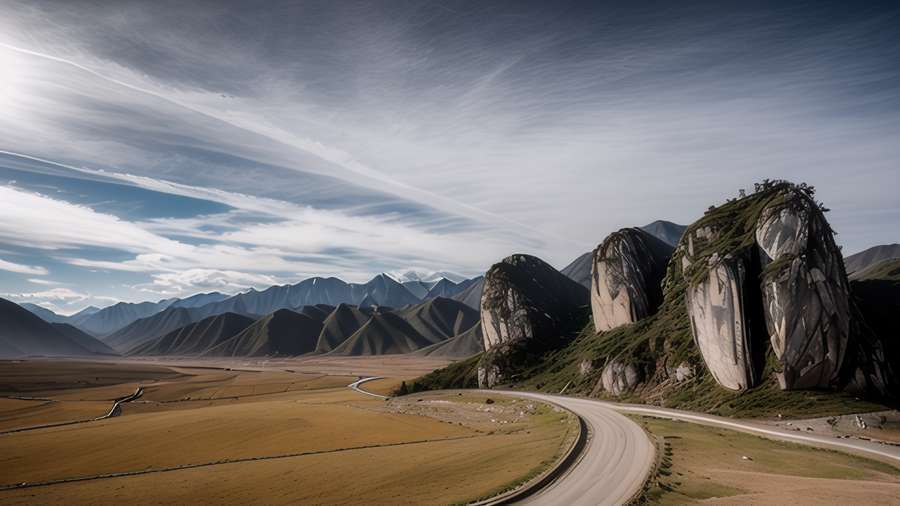
There are two ways to drive in China. One is Foreign Car Entry Self-Drive: your own vehicle is cleared through a land border such as Mohan or Khorgos, gets a temporary plate and the paperwork is finished at the crossing. The other is Renting a Car in China as a Foreigner: you fly in, collect a car in Xi Ning, and you need only your passport, your home licence and a Chinese temporary driving permit. Both work on this Qinghai route; the only difference is where the car comes from.
Trip overview
- Day 1: Xi Ning to Huang Zhong, 30 km: Ta Er Si, Lian Hua Shan
- Day 2: around Huang Zhong: Ta Er Si, Lian Hua Shan
- Day 3: Huang Zhong to Long Yang Xia, 110 km: Long Yang Xia Da Ba, Tu Lin
- Day 4: around Long Yang Xia: Long Yang Xia Da Ba, Tu Lin
- Day 5: Long Yang Xia to Hei Ma He, 110 km: Hei Ma He Ri Chu, Hu An Zhang Peng
- Day 6: around Hei Ma He: Hei Ma He Ri Chu, Hu An Zhang Peng
- Day 7: Hei Ma He to Qing Hai Hu, 80 km: Er Lang Jian, Huan Hu Xi Lu
- Day 8: Qing Hai Hu to Xi Ning, 140 km, return leg
Total distance is 470 km, about 58 km a day, leaving the rest of the time for sights and food. A good fit for families and for a first self-drive in China.
Day 1: Xi Ning to Huang Zhong, 30 km
Road
From Xi Ning to Huang Zhong is 30 km on city and suburban roads, many junctions and low limits. Leave outside the rush hour and fill up before you set out. The same road suits a foreign car entry self-drive car: junctions and attraction car parks are wide enough, and a temporary plate is easiest through the staffed toll lane.
Sights
The Ta Er Si sits in a fold of the hills, ten minutes on foot from the car park. The main hall holds the locally most revered deity, with an incense burner that never goes cold, and the side halls keep old stone inscriptions worn smooth by hands. The Lian Hua Shan is one of the highest peaks in the area. The road climbs in bends but is not steep, fine for an ordinary sedan. A platform halfway up looks over the valley, and fifteen minutes more on foot brings you to the top.
Food
Food here is plain and generous. hand-held mutton is the local breakfast or lunch standby; yak yogurt is better shared, recipes varying from shop to shop; liangpi cold noodles works as a snack on the move. Check the price board first.
Where to stay
Stay in Huang Zhong town for the simplest night: ground-level parking, steady hot water and a quick exit onto the motorway next morning. Guesthouses near the attraction have more character but few rooms, so book ahead in season.
Day 2: around Huang Zhong
Road
Today is about 40 km of local driving around Huang Zhong, no rush and no long legs. Attraction car parks charge per entry and fill early on holidays. high plateau with long climbs, passes and fast-changing weather.
Sights
The Ta Er Si sits in a fold of the hills, ten minutes on foot from the car park. The main hall holds the locally most revered deity, with an incense burner that never goes cold, and the side halls keep old stone inscriptions worn smooth by hands. The Lian Hua Shan is one of the highest peaks in the area. The road climbs in bends but is not steep, fine for an ordinary sedan. A platform halfway up looks over the valley, and fifteen minutes more on foot brings you to the top.
Food
In Huang Zhong, join the queue where locals queue. hand-held mutton is made to order and eaten at once; yak yogurt loses half its texture cold; liangpi cold noodles travels well as a small gift. Dinner is cheaper in the old streets and markets than at the attraction gate.
Where to stay
This night suits the edge of Huang Zhong, easy in and out with dinner close by. Chain hotels usually park free; ask a guesthouse whether the space is on the street. Families do better on the ground floor or with a lift.
Day 3: Huang Zhong to Long Yang Xia, 110 km
Road
From Huang Zhong to Long Yang Xia is 110 km, motorway first then provincial road, about two hours. high plateau with long climbs, passes and fast-changing weather. Bends cluster at the passes: lift off before the corner, never overtake inside it.
Sights
The Long Yang Xia Da Ba is narrow enough that only a strip of sky shows overhead. Rock strata stack from grey to red, and the sound of water stays with you. Some boardwalk sections hug the cliff with a long drop outside the railing. The Tu Lin is a small local landmark, half an hour to walk round, with parking and a kiosk nearby and normal road access for an ordinary car. The old pieces in the courtyard carry clear labels, and it fills up on market days.
Food
Food here is plain and generous. hand-held mutton is the local breakfast or lunch standby; yak yogurt is better shared, recipes varying from shop to shop; liangpi cold noodles works as a snack on the move. Check the price board first.
Where to stay
Stay in Long Yang Xia town for the simplest night: ground-level parking, steady hot water and a quick exit onto the motorway next morning. Guesthouses near the attraction have more character but few rooms, so book ahead in season.
Day 4: around Long Yang Xia
Road
Today is about 40 km of local driving around Long Yang Xia, no rush and no long legs. Attraction car parks charge per entry and fill early on holidays. high plateau with long climbs, passes and fast-changing weather.
Sights
The Long Yang Xia Da Ba is narrow enough that only a strip of sky shows overhead. Rock strata stack from grey to red, and the sound of water stays with you. Some boardwalk sections hug the cliff with a long drop outside the railing. The Tu Lin is not a big sight but locals all have something to say about it. It is quiet and shaded, a good place to stop and drink water between two driving legs. Signage at the turn-off is poor, so follow the map to the village and ask once.
Food
In Long Yang Xia, join the queue where locals queue. hand-held mutton is made to order and eaten at once; yak yogurt loses half its texture cold; liangpi cold noodles travels well as a small gift. Dinner is cheaper in the old streets and markets than at the attraction gate.
Where to stay
This night suits the edge of Long Yang Xia, easy in and out with dinner close by. Chain hotels usually park free; ask a guesthouse whether the space is on the street. Families do better on the ground floor or with a lift.
Day 5: Long Yang Xia to Hei Ma He, 110 km
Road
From Long Yang Xia to Hei Ma He is 110 km, motorway first then provincial road, about two hours. high plateau with long climbs, passes and fast-changing weather. Bends cluster at the passes: lift off before the corner, never overtake inside it.
Sights
The Hei Ma He Ri Chu is a small local landmark, half an hour to walk round, with parking and a kiosk nearby and normal road access for an ordinary car. The old pieces in the courtyard carry clear labels, and it fills up on market days. The Hu An Zhang Peng is the biggest sheet of water around, with the road hugging the shore. Colour shifts with the weather, grey under cloud and blue in sun. Fishing boats come in at dawn from the small harbour.
Food
Food here is plain and generous. hand-held mutton is the local breakfast or lunch standby; yak yogurt is better shared, recipes varying from shop to shop; liangpi cold noodles works as a snack on the move. Check the price board first.
Where to stay
Stay in Hei Ma He town for the simplest night: ground-level parking, steady hot water and a quick exit onto the motorway next morning. Guesthouses near the attraction have more character but few rooms, so book ahead in season.
Day 6: around Hei Ma He
Road
Today is about 40 km of local driving around Hei Ma He, no rush and no long legs. Attraction car parks charge per entry and fill early on holidays. high plateau with long climbs, passes and fast-changing weather.
Sights
The Hei Ma He Ri Chu is a small local landmark, half an hour to walk round, with parking and a kiosk nearby and normal road access for an ordinary car. The old pieces in the courtyard carry clear labels, and it fills up on market days. The Hu An Zhang Peng is wide open water with a ring road of several dozen kilometres and plenty of places to stop. The shoreline is grass slope and gravel beach; wind is strong and the light changes fast at sunrise and sunset. Some sections are narrow, so find a wide spot early when meeting traffic.
Food
In Hei Ma He, join the queue where locals queue. hand-held mutton is made to order and eaten at once; yak yogurt loses half its texture cold; liangpi cold noodles travels well as a small gift. Dinner is cheaper in the old streets and markets than at the attraction gate.
Where to stay
This night suits the edge of Hei Ma He, easy in and out with dinner close by. Chain hotels usually park free; ask a guesthouse whether the space is on the street. Families do better on the ground floor or with a lift.
Day 7: Hei Ma He to Qing Hai Hu, 80 km
Road
From Hei Ma He to Qing Hai Hu is 80 km, motorway first then provincial road, about two hours. high plateau with long climbs, passes and fast-changing weather. Bends cluster at the passes: lift off before the corner, never overtake inside it.
Sights
The Er Lang Jian is a small local landmark, half an hour to walk round, with parking and a kiosk nearby and normal road access for an ordinary car. The old pieces in the courtyard carry clear labels, and it fills up on market days. The Huan Hu Xi Lu is wide open water with a ring road of several dozen kilometres and plenty of places to stop. The shoreline is grass slope and gravel beach; wind is strong and the light changes fast at sunrise and sunset. Some sections are narrow, so find a wide spot early when meeting traffic.
Food
Food here is plain and generous. hand-held mutton is the local breakfast or lunch standby; yak yogurt is better shared, recipes varying from shop to shop; liangpi cold noodles works as a snack on the move. Check the price board first.
Where to stay
Stay in Qing Hai Hu town for the simplest night: ground-level parking, steady hot water and a quick exit onto the motorway next morning. Guesthouses near the attraction have more character but few rooms, so book ahead in season.
Day 8: Qing Hai Hu to Xi Ning, 140 km (return leg)
Road
The return leg is 140 km, mostly motorway, so budget generously. Refuel before handing the car back, check mileage and condition against the contract and photograph any scratch; if you are taking your own car out through a border port, do not leave it to late afternoon and allow one to two hours for clearance and inspection.
Sights
No sightseeing is planned on the return leg; stop wherever it looks worth it and budget the time generously. Refuel before handing the car back, photograph any scratch, return keys and contract together and keep the receipt for the deposit the rental company holds. If you are taking your own car out through a border port, allow one to two hours for clearance and inspection and do not leave it to late afternoon; queue length varies, so have your luggage and vehicle inventory list ready. Stop every two hours, and avoid provincial roads after dark, when glare and bend judgment are both worse. At the hotel, look over tomorrow's route and note where fuel and breakfast are.
Food
In Xi Ning, join the queue where locals queue. hand-held mutton is made to order and eaten at once; yak yogurt loses half its texture cold; liangpi cold noodles travels well as a small gift. Dinner is cheaper in the old streets and markets than at the attraction gate.
Practical tips
- Documents: carry your passport, needed at hotel desks and ticket windows; China does not recognise an international driving permit, so a foreign licence needs a Chinese translation plus a temporary Chinese licence.
- Phone: install WeChat and a Chinese map app. Fuel, parking and tickets are mostly paid by QR code; a few hundred yuan in cash covers village stalls.
- Fuel: service areas all have stations, but in mountains and grazing country two stations can be a hundred kilometres apart, so fill up at half a tank.
- Weather: high plateau with long climbs, passes and fast-changing weather, and conditions change fast; keep a jacket and rain gear in the car all year.
- Driving habits: slow down through villages and towns, never overtake in a bend, avoid provincial roads at night, and stop every two hours on a long day.
- Whether this is a foreign car entry self-drive trip or a rental picked up after landing, the whole route is paved and an ordinary sedan is enough; no 4x4 needed.
About this route
Distances here are map estimates, so treat them as guidance and check live conditions on the day. Opening hours and accommodation change with the season, so confirm the night before. Most tickets can be bought on site; for busy attractions book online a day ahead and enter your passport number exactly as printed. If you meet roadworks or a closure, follow the signs and detour rather than push through.
What this road gives you is places as they actually are: steam over a morning market, wind at a pass, lights at a village gate by dusk. Slow down and most of the good things are already at the roadside.