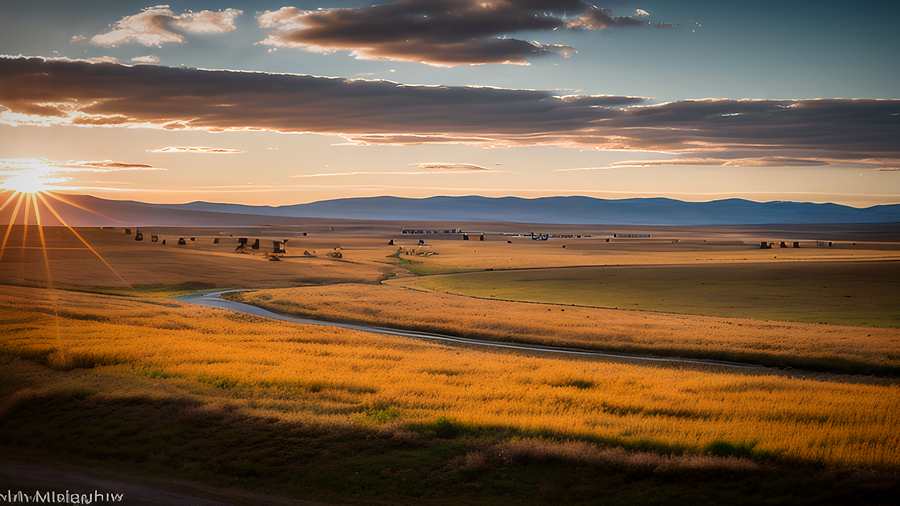
I drove this loop in the first week of September, after the summer crowds had gone and before the first snow. The distances look small on paper and they are small on the road: 615 km in nine days, with three nights in Hailar and three in Ergun. What fills the days is the walking, the driving on tracks across the grassland and the light, which changes every hour out here. The border is close for most of the loop, so papers stay in the car and the car stays clean, since the checkpoints take an interest in both. What follows is the day-by-day shape of the drive.
Trip overview
- D1 Manzhouli to Hailar, 215 km, across the open grassland
- D2 Hailar and the grassland east of the city, 0 km
- D3 The Molger river and a herder's camp, 0 km
- D4 Hailar itself on foot, 0 km
- D5 Hailar to Ergun, 145 km, wetland and birch
- D6 Ergun wetland and the town, 0 km
- D7 Birch forest and the village of Enhe, 0 km
- D8 The border river and Heishantou, 0 km
- D9 Ergun back to Manzhouli, 255 km
Total 615 km, and the only two driving days that need planning are the first and the last, both on good roads. Grassland tracks are fine when dry and should be avoided after heavy rain; a two-wheel-drive car is enough if you keep to the main tracks. Fuel is available at every town and at one station on the Ergun road, and the nights in September are close to freezing.
D1、Manzhouli–Hailar 215KM
Road
Out of Manzhouli on the G301, a straight two-lane road across open plain for 215 km; almost no bends, a few lorries, and long stretches where the only thing to do is watch the horizon.
Sights
The road crosses the Hulunbuir plain at its widest, and for the first hour there is nothing but grass, hay stacks and the telegraph line. I stopped twice at the roadside to walk a hundred metres into the grass, which is cropped short by sheep and smells of dust and wild mint. Hailar arrives as a surprise: a proper city with wide streets, and the Genghis Khan square in the middle with its equestrian statue and a row of fountains that run in the evening.
Food
Hailar does lamb in every form; the simplest is boiled mutton with salt, eaten with a bowl of milk tea and a piece of dried curd.
Where to stay
A hotel on the main street with parking at the back, warm rooms and a breakfast of millet porridge and fried bread.
D2、Hailar grassland east 0KM
Road
No long driving. A forty-minute run east of the city on a track, then the car stays parked at the camp.
Sights
The grassland east of Hailar rolls rather than lies flat, with low ridges that hide the next valley. I walked up one of them in the morning and could see perhaps twenty kilometres of grass, a few herds and the dust of a lorry on the main road. There is a tourism camp with yurts and a horse string; the horses are worked daily and are calm under a beginner. In the afternoon I sat on the ridge and watched a shepherd move several hundred sheep across the valley with two dogs and no voice at all.
Food
At the camp: hand-cut noodles with mutton, and a sour milk drink that is served cold in a wooden bowl.
Where to stay
Back in Hailar, same hotel.
D3、Molger river and a herder's camp 0KM
Road
An hour north-west on tarmac and then ten kilometres of track to the river; the track is rutted but passable in a normal car when dry.
Sights
The Molger river does not run straight; it doubles back on itself in loops through the grass, and from a low ridge you can count a dozen bends at once. The camp on its bank is a cluster of yurts with a cookhouse and a pen for the horses. I was given a bowl of tea and shown how the felt is laid over the frame; the whole structure goes up in under an hour with four people. Late afternoon the light comes along the water and the loops turn gold, which is why everyone waits for it.
Food
Boiled lamb ribs, a dish of fried millet and a bowl of tea with salt and milk.
Where to stay
Back in Hailar, same hotel.
D4、Hailar on foot 0KM
Road
No driving; the city is flat and the parks are linked by footpaths.
Sights
The morning went to the museum of the region, which covers the grassland peoples, the railway and the war years at the border; the section on the Buryat and Evenki households is the most interesting. Then the square and the riverside park, where the bridge crosses the Yimin river and the water is shallow enough to see the gravel. In the afternoon I walked the old railway quarter, where the station buildings from the Russian period still stand, with brick walls and pitched roofs.
Food
A bowl of beef noodles in a shop near the station, and later a plate of grilled lamb skewers from a street stall.
Where to stay
Same hotel, fourth night.
D5、Hailar–Ergun 145KM
Road
North on the G301 then a provincial road; 145 km of good surface with one climb over a wooded ridge; watch for sheep on the road, which move without warning.
Sights
Ergun sits above a bend of the Gen river, and the wetland below the town is a wide flood plain of reed and willow with a boardwalk and a viewing tower. I walked the lower path at four in the afternoon, when the light comes through the reeds sideways and the water shows brown and green at once. The town itself is small, with a wooden church left from the Russian period and a street of low houses with carved window frames.
Food
Ergun cooks a river fish with sour cream, and bakes a round bread in a wood stove that is eaten with butter and jam.
Where to stay
A guesthouse on the ridge above the wetland, with rooms facing the river and a stove in the hall.
D6、Ergun wetland and town 0KM
Road
No driving; the boardwalk starts at the edge of town.
Sights
The wetland in the morning is full of birds: herons on the shallows, small warblers in the willow and a pair of kites over the far bank. The boardwalk runs for about three kilometres and the tower at the end gives the whole flood plain at once, with the river looping away north. Back in town I looked at the wooden church, then the little museum with its photographs of the Russian traders who built the place, and walked the lane of carved windows before the light went.
Food
A bowl of mushroom soup with a spoon of sour cream, and a slice of the stove bread toasted on the range.
Where to stay
Same guesthouse, second night.
D7、Birch forest and Enhe 0KM
Road
Forty kilometres north on the main road, then a track into the birch; the forest road is firm and easy when dry.
Sights
The birch forest here grows on sandy ridges, the trunks white and the undergrowth low, so you can see a long way between the trees. I walked a loop of about five kilometres on paths that are used by berry pickers, and the silence between the trunks is the thing I remember. Enhe is a village of wooden houses with blue painted window frames, settled by Russian and Chinese families, and the bakery in the middle of the lane still heats its oven with birch wood.
Food
At Enhe: a bowl of borscht with a spoon of cream, and a pie filled with bilberry.
Where to stay
A wooden guesthouse in Enhe, with a stove and a bed under a heavy quilt; nights are cold by mid-September.
D8、Border river and Heishantou 0KM
Road
South-east along the border road, 60 km of narrow tarmac that follows the river; the fence is close on one side and the bends are constant.
Sights
The border river runs wide and slow here, with sandbars down the middle and a fence line on the bank. Heishantou is a low hill with the remains of an old fort on top, a square of earth walls and a ditch, and from it the river and the plain on both sides are visible for a long way. I walked the bank in the late afternoon; a barge went past on the far side and the wash came across the water a minute later.
Food
A grilled river fish with cumin, and a bowl of noodles with mutton and wild onion.
Where to stay
Back in Ergun, the same guesthouse.
D9、Ergun–Manzhouli 255KM
Road
The long run back: 255 km on the G301, straight and fast, with one service area and a checkpoint near Manzhouli where papers are checked.
Sights
Nothing scheduled. The road crosses the same plain in reverse and the light is better in the morning, with the hay stacks casting long shadows. Near Manzhouli the country changes: lines of wind turbines, then the roofs of the town, then the border fence and the gate.
Food
At the service area, a bowl of noodles; in Manzhouli, grilled lamb and a slice of the local milk cake.
Where to stay
A hotel near the border gate for an early crossing, with parking and a view of the fence.
Practical tips
- Grassland tracks become impassable after heavy rain; ask at the guesthouse before setting out and keep to the main tracks.
- Sheep and cattle move across the road without warning, especially at dusk; reduce speed on any road with open pasture beside it.
- Nights drop close to freezing by mid-September, and the wind on the plain is constant; a windproof layer is more useful than a heavy coat.
- Fuel stations are spaced widely on the Ergun road; fill up in Hailar and again in Ergun rather than relying on the one in between.
- The border fence is not to be approached on foot, and photographs of the checkpoint buildings are not permitted.
- Foreign Car Entry Self-Drive on the Hulunbuir plain is straightforward, and Renting a Car in China as a Foreigner needs the temporary licence, the passport and the vehicle papers kept together in the car.
About this route
Nine days, 615 km, three bases: Hailar, Ergun and one night at Enhe. Best from late June to early September; the grassland is greenest in July and the light is best in September. Two driving days of 215 and 255 km, the rest short hops.
Distances, road surfaces and checkpoint arrangements were checked on the ground in September. For documents, customs formalities and vehicle papers, the Manzhouli border office and the traffic management office in Hailar answer enquiries directly.
Route notes by Zara, Yunnan Province International Travel Agency (Group) Co., Ltd.