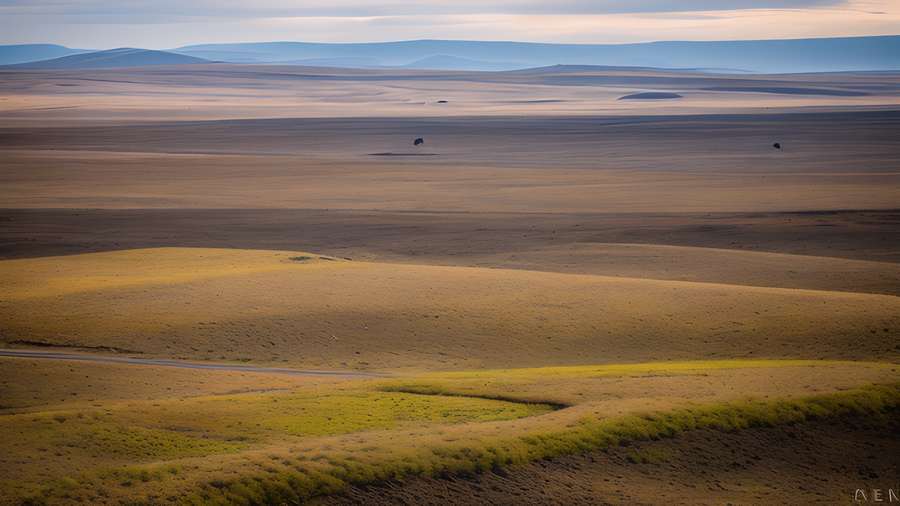
Most visitors to Inner Mongolia see either the grasslands north of Hohhot or the desert south of the Yellow River, and rarely both in one trip. This 14-day loop does both, plus a mountain meadow plateau, a brand-new city built on coal and gas money, an old industrial city on the river, and the wheat plain of the Hetao bend. I drove it as a closed circuit starting and ending in Hohhot: 200 km south to the Singing Sands, three days on the dunes, 340 km north-east to the Huiteng Xile plateau and Huanghua Gou, two days there, 395 km south-west to Ordos and its Kangbashi district, one full day around the Genghis Khan Mausoleum, then 145 km north to the steel-and-vehicle city on the Yellow River, three days between its weapon park, its urban grassland and its hillside monastery, 250 km west to Bayannur on the irrigation plain, two days by the river and the lakes, and finally 450 km east back to Hohhot. Total 1780 km over fourteen days, with six free days on site and eight driving stages, the longest of which are the 395 km run to Ordos and the 450 km return. The roads are mostly expressway and four-lane provincial highways; the real hazards are wind across the plain, dust on the desert edge, and long gaps between fuel stations on the western stages. If you are weighing Foreign Car Entry Self-Drive for this loop, note that the crossings serving Inner Mongolia sit a long day away from the route, so most visitors end up choosing Renting a Car in China as a Foreigner at the Hohhot or Ordos station, where the licensed agency sorts the licence translation and customs bond at the desk before you reach the exit.
Trip overview
- Day 1 – Hohhot to Xiangshawan, 200 km: the dune field and the desert cableway.
- Day 2 – Xiangshawan, 0 km on the loop: the dunes in full daylight, islands reached by cable car.
- Day 3 – Xiangshawan, 0 km on the loop: sunrise on the ridge and the dune-ringed water.
- Day 4 – Xiangshawan to Ulanqab, 340 km: the Huiteng Xile plateau and Huanghua Gou valley.
- Day 5 – Ulanqab, 0 km on the loop: the valley boardwalk and the meadow slopes.
- Day 6 – Ulanqab, 0 km on the loop: a slow grassland day on the high plateau.
- Day 7 – Ulanqab to Ordos, 395 km: Kangbashi avenues and the square by the lake.
- Day 8 – Ordos, 0 km on the loop: the Genghis Khan Mausoleum and the Mongolian culture museum.
- Day 9 – Ordos to the industrial city on the Yellow River, 145 km: the weapon park and the urban grassland.
- Day 10 – that city, 0 km on the loop: the hillside monastery of Wudang Zhao.
- Day 11 – that city, 0 km on the loop: a second look at the park and the river front.
- Day 12 – that city to Bayannur, 250 km: the river weir, the canal head and Mirror Lake.
- Day 13 – Bayannur, 0 km on the loop: Wuliangsuhai reeds, water and migratory birds.
- Day 14 – Bayannur back to Hohhot, 450 km: the plain east, then the city in the evening.
Total 1780 km over fourteen days, an average of 127 km a day; eight stages drive, six stay put. Fill the tank at every town on the western and northern stages; fuel prices vary little between grassland and desert, but stations close early in the smaller banners.
Day 1 · Hohhot to Xiangshawan, 200 km
Road
Leave Hohhot south, cross the Yellow River bridge and follow the expressway toward the dune country in Dalad Banner: 200 km, about two and a half hours including the crossing. The road is a wide four-lane, light traffic outside the morning rush. The resort road branches off the highway and climbs over a few dune ridges; the cable-car gate and the sand-gate car park are both signed. Fill the tank before leaving the city: stations are sparse on the southern side until you reach the resort.
Sights
Xiangshawan is the dune field that has been made into a resort, and it earns its name: on a dry, hot day, walking down a face of loose sand produces a low hum that carries for hundreds of metres, a phenomenon recorded in old local geographies. The park works on a system of islands, reached by desert cable car from the sand-gate town, each cluster of buildings sitting in a fold of the dunes; the cableway hangs over the sand valley, with ripples and sparse desert plants underneath. Do not rush to the ride machines when you arrive. Take the footpath up to the high ridge and look at the whole sand field first: dune after dune pushed out to the edge of the river terrace in the distance, the wind carving parallel lines along the crests. In the afternoon you can try sand sliding, sitting on a board and coming down the face, fast enough to feel the wind past your ears but not dangerous. Camel trains file across the valley in a line, bells carrying across the sand. The water ring sits in a dune hollow, sand on all sides and the surface shining; it is most comfortable once the evening cool comes on. On the first day, keep to the cableway, the ridge and the water ring, and leave the rest for the two full days ahead.
Food
Start with a proper Mongolian plate: hand-grabbed lamb boiled in plain water, cut with a knife at the table, with salt tea and millet fried in butter. The resort canteen serves lamb-soup noodles and baked flatbread; the wind off the sand makes hot soup the right first course.
Where to stay
Sleep inside the resort, in the courtyard rooms beside the dune hollows. The car stays in the sand-gate car park and you cross to the island by cable car. It cools fast after dark on the sand, so keep an outer layer in the room.
Day 2 · Xiangshawan, 0 km on the loop
Road
No driving today. If you move at all, it is by cable car between the two sand islands; the car stays in the gate car park and everything on foot runs along the park boardwalks.
Sights
The whole day belongs to the sand. Early, before the tour buses arrive, climb the ridge behind the rooms: the sand is still cool and the shadows draw every ripple out clearly, and from the crest you can see the lit and shaded faces of the dunes apart. In daylight, take the cable car across to the second island and walk its loop: boardwalks, rest pavilions and water stalls among the dunes, desert plants bending and lifting in the wind. Rest in the island canteen through the two hottest hours. In the afternoon do the sand slide again, watch the camel trains come back, or sit a while in the shallow water by the sand edge. The sand here is fine and clean, and it will get into your shoes; tie the trouser cuffs down before you go out. The sun is strong on clear days, so hat, sleeves and water all matter. Evening light stretches long, the sand turning gold, which is the best hour for photographs; by then the boardwalks have thinned out. It cools quickly on the sand after dark, wind coming through the valley, and the rooms keep a thick jacket ready.
Food
Lunch at the island canteen: grilled lamb skewers, cold dressed sand onion, and milk curd with crushed grain. In the afternoon, a bowl of yogurt with fried millet cuts through the richness and keeps you going.
Where to stay
Second night in the same resort rooms, so nothing has to be packed and moved. If you want the sunset, walk up to the ridge half an hour early.
Day 3 · Xiangshawan, 0 km on the loop
Road
No driving today either. The sunrise walk is up the ridge behind the rooms; midday you go back to the room to rest, and down to the sand again after four. On windy days the boardwalks close temporarily; check the notice at the cable station.
Sights
The third full day moves more slowly. Wake early for sunrise: the eastern ridge lights first, then a band of light pushes over one crest after another, and the sand warms from cool in about half an hour. In the morning walk the edge ground you missed the day before, where the sand thins out and hard earth and drought-resistant grass show through; sand lizards dart across and the wind piles thin streams of fine sand against the hard soil. Rest through the afternoon heat, then go down to the water ring around four and sit watching the shadows lengthen. Today you can fill in whatever queue you did not wait for on the first two days, or simply lie on a slope and listen to the wind. Before leaving, note the park announcements: in strong wind the cableway stops and the walkways close, and these arrangements follow the day's weather, posted at the gate and the cable station. Pack tonight, because tomorrow leaves the desert for the grassland; the temperature gap is large, so put the warm clothes where they are easy to reach in the car.
Food
Breakfast is grassland-style tea: milk tea, milk skin, a millet porridge. Dinner in the resort restaurant is stewed lamb with braised greens, with oat flour fish-shaped noodles as the staple.
Where to stay
Third night inside the resort. Gather the luggage before bed; tomorrow morning leaves straight for the plateau.
Day 4 · Xiangshawan to Ulanqab, 340 km
Road
A long driving day. Leave the sand country north-east, cross the river, then take expressway and provincial road up toward the Huiteng Xile grassland: 340 km, about four hours with stops. After the county town the road climbs onto the high plateau; low cloud and cross-wind are possible on summer afternoons. The valley gate has a large car park and a shuttle into the gorge.
Sights
Leaving the sand, the country turns from yellow to green. Huiteng Xile is a high meadow plateau at around 1800 metres, open and windy all day, with gentle slopes and shallow hollows spreading out, and white wind turbines lined along the distant ridges. Huanghua Gou is a valley cut down into the plateau, with a stream, grassy slopes and broad patches of yellow wildflowers; the rock is dark, left by old volcanic activity, and wooden boardwalks run along the stream bed and halfway up the slope, a full loop of two or three hours. The valley is several degrees cooler than the plateau, the stream water cold, and the wildflowers run from early summer into early autumn; horses graze on the slopes, and felt tents stand at the valley mouth. When you arrive, change to the shuttle at the gate car park and do not drive onto the meadow itself. In the afternoon walk the boardwalk to the upper section, watching the stream wind down between grass slopes, and look back from the crest at the flat line of the plateau. Grassland weather moves fast: one cloud can bring a shower, and after rain thin mist often hangs on the hillside.
Food
Take baked flatbread and boiled eggs on the road; in the plateau town eat oat flour nests in mutton soup, with a plate of stir-fried wild greens.
Where to stay
Sleep in the Ulanqab town or in a felt-tent guesthouse near the grassland. The high plateau is cold at night, so the room needs thick bedding.
Day 5 · Ulanqab, 0 km on the loop
Road
Hardly any driving: accommodation, valley mouth and meadow sit within a dozen kilometres, on wide roads with little traffic.
Sights
The full day goes into the grassland and the gorge. In the morning walk the meadow path up to the slope crest: gentle green pushing out in every direction, cattle and sheep scattered on the hills, a herder on horseback looking small against the expanse. In the gorge take the lower loop: the boardwalk follows the stream, crosses several wooden bridges, past ferns and wildflowers by the water, with marmot holes in the rock crevices. Midday rest at the herder's home by the valley mouth, drinking milk tea and eating milk snacks. In the afternoon ride a horse over a gentle slope, led by a herder, slow enough for a first-time rider. The plateau sun burns hard, but the wind cools it at once; do not stand in the draught once you are sweating. The viewing terrace on the valley halfway looks down over the whole curve of the gorge and the bright stretch of stream; before sunset the slopes turn green-gold, the best light of the day. Back in town in the evening, and watch for the thunder showers that tend to come through at dusk.
Food
Lunch at the herder's home: hand-grabbed meat, a milk-food platter and milk tea. In the evening, iron-pot braised noodles with potato and mutton in a town restaurant.
Where to stay
Second night in the same Ulanqab lodging; the gorge runs as a day trip from here, so no room change.
Day 6 · Ulanqab, 0 km on the loop
Road
Still on the grassland today. Short round trips to another slope and a nearby lake; parking stays in the marked grassland areas, do not drive onto the meadow.
Sights
The third grassland day is a slow walk. Morning mist sits over the meadow; after the sun comes up it drains along the valley bottom, dew shining on the grass blades. Today you take another slope and a shallow lake: a few small pools on the plateau, shallow water with reeds along the edge where migratory birds stop in spring and autumn; in summer dragonflies are on the surface and the horses come down to drink. Back to town for lunch and a siesta, then in the afternoon finish the gorge section you missed yesterday, or sit on the meadow watching cloud shadows sweep across the slopes. A single grassland day can bring sun, cloud, wind and shower in turn, so carry a raincoat; after rain the stones and boardwalks are slippery, and walk slowly. Pack in the evening, because tomorrow is the long run to Ordos; fill the car's tank at the town station.
Food
Breakfast is porridge with pickles and fried millet. Lunch in town: offal soup with baked flatbread. Dinner: thin-sliced noodle soup with wild greens.
Where to stay
Third night in the town, in a lodging with its own car park; the food street should be within walking distance.
Day 7 · Ulanqab to Ordos, 395 km
Road
One of the longest driving days. South-west across the plateau and down onto the plain, mostly expressway: 395 km, four to five and a half hours with stops. The road is straight and wide with exits far apart; wind comes in side gusts that push the car when you pass a lorry, so keep both hands on the wheel. Dust on the plain in the afternoon can cut visibility; read the warning board at the toll gate before setting off. Fill up in the county seat before you leave. Arrive in Kangbashi late afternoon.
Sights
Today is a transit day and should not carry a scheduled sight. Kangbashi is the district planned on coal and gas money at regional-capital scale: wide avenues, huge intersections, an opera house and a museum by the lake, people walking the promenade after dinner. When you arrive, settle in first and walk the lake to take the new district in at dusk. Genghis Khan Square sits in the city centre; at night the lights come up and the fountains run on the hour. The drive itself shows the transition from plateau grassland to plain farmland, and the road signs mark each banner as you cross into it.
Food
Long day: lunch is hand-pulled noodles at a midpoint town restaurant. Dinner in Kangbashi is Mongolian hot pot, bone-in mutton cooked at the table in a copper pot with a chimney.
Where to stay
Stay in Kangbashi, where the hotels are large and mid-range, built around the lake with plenty of surface parking; the evening walk along the water is the whole entertainment, and it is good.
Day 8 · Ordos, 0 km on the loop
Road
No driving to speak of: accommodation, museum quarter and mausoleum sit within a few tens of kilometres on wide new roads, and the intersections are empty at nine in the morning.
Sights
A full day in Ordos. In the morning go to the Genghis Khan Mausoleum at Id Qin: this is a memorial, not a grave, since no one knows where he was buried, and its core is the eight white felt halls, a portable shrine kept, moved and defended since the thirteenth century by the hereditary Darhud keepers, who still recite the same oath and hold the keys. The main buildings you see now are three connected domes on a small hill, with a long colonnaded walk in front and glazed-tile walls showing the coronation, the campaigns and the laws. Inside are the shrine rooms with his belt, his bow and a copy of the scripture, and a corridor of murals that amounts to a short history of the steppe in pictures. The mausoleum is reached by shuttle from the visitor centre; follow the gate notices about photography in the shrine rooms. In the afternoon back to Kangbashi for the Mongolian culture museum: saddlery, silver, milk-food vessels and the rites of the eight white halls are explained properly, and the lake promenade shows how the district fills from morning to dusk. Museums usually close on Mondays; check the notice at the gate before you plan it.
Food
Breakfast tea with fried millet. Lunch at a town restaurant near the mausoleum: stewed mutton with wide noodles, finished with a bowl of yogurt.
Where to stay
Second night in the same Kangbashi hotel, which makes it easy to go back to the museum or the mausoleum for anything missed in the morning.
Day 9 · Ordos to the industrial city on the Yellow River, 145 km
Road
North-east on the expressway along the river bend: 145 km, under two hours. Entering the city from the south, the avenues run along the river; both sights have car parks.
Sights
This old industrial city spreads along the river bend, built on heavy industry, with freight lorries and factory-road signs in the streets. In the morning go to the Northern Weapon City: a park beside the works where tanks, artillery pieces, armoured vehicles and retired ordnance are displayed in the open, lined up by type with plaques explaining which local vehicle works produced them. The indoor hall tells the city's military-industrial history and the origins of its vehicle building, with components, drawings and old photographs. The armoured vehicles can be examined from outside the fence, and some exhibits allow access to the outer platform. In the afternoon go to Saihan Tara: an urban grassland embedded inside the city, meadow cut through by footpaths and a ring road, with ponds, scattered trees and locals walking and cycling, a large patch of green kept in the middle of an industrial city. The park is huge; if you do not walk the whole way, there are electric carts inside. End the day along the river front, watching the Yellow River bend past the city.
Food
City restaurants concentrate between the park and the factory district: local stew with rice, mutton shaomai dumplings and cold dressed gluten. The night market has grilled skewers and lamb soup.
Where to stay
Sleep in the city centre, on the street near the park, in a hotel with easy parking; an evening walk along the river is on offer.
Day 10 · that city, 0 km on the loop
Road
No driving in town: the hillside monastery north of the city is twenty-some kilometres out, and the park lies on the way back; mornings and evenings are cold on the hill, so take an extra layer.
Sights
Today go up the hill to Wudang Zhao. The monastery sits in a hollow in the northern hills, a Tibetan Buddhist establishment whose white walls climb the slope and whose red courtyards step up one above another; seen from below, it looks layered along the mountainside, and locals compare it to the hillside monasteries of Lhasa. Enter by the gate and climb the stone steps through the courtyards, each hall housing different Buddha images, with murals, prayer banners and butter lamps; monks walk and chant in the yards. Follow the monastery's own rules: hat off, voices low, no photography where signs say so. The hill is cooler than the city and some steps are steep, so wear walking shoes. In the afternoon come down and walk the eastern section of Saihan Tara, meadow and pond in the afternoon light; if the weapon park was not fully seen yesterday, the indoor hall can be revisited today. The city's restaurants cluster between the park and the factory district; dinner is a local stew.
Food
At the foot of the monastery, a small eatery serves vegetarian noodles and tea snacks. Back in town, sweet-and-sour crispy pork with steamed rolls, then an evening mutton hot pot.
Where to stay
Second night in the same city hotel; the hill monastery is an early trip in the morning and coming back needs no luggage move.
Day 11 · that city, 0 km on the loop
Road
Staying in the city today. Morning revisit of the monastery direction, afternoon short trips around the grassland park and the market streets.
Sights
The third full day moves slowly in the city. Go back toward the monastery in the morning: without entering the courtyards, walk the village and slope road below, watching the white walls and red courtyards in the morning outline; the village has small stalls selling milk food and baked flatbread. Back to the city for lunch. In the afternoon browse the other side of the urban grassland: ring road, open tree-dotted meadow and pond, locals walking, practising ball games and cycling, an easy pace; the market streets beside the park sell dried fruit, milk food and local flour goods. In the evening go to the river bank: the Yellow River here runs yellow-brown, ferries and bridge side by side, wind coming off the water. Three days here cover the weapon park, the urban grassland and the monastery; tomorrow west to Bayannur, fill the tank in the morning.
Food
Breakfast is shaomai with brick tea. Lunch near the park: stewed river fish and braised mixed vegetables; buy sunflower seeds to crack on the road.
Where to stay
Third night in the city centre; pack the luggage, because tomorrow morning heads west to Bayannur.
Day 12 · that city to Bayannur, 250 km
Road
West along the north-bank plain: 250 km, three hours. After crossing into the irrigation district, the road runs flat and straight through canal country; side wind continues, and fuel stations are in the towns, so fill whenever you see one.
Sights
West along the north bank into the Hetao: the bend-country where canal engineering carries Yellow River water out over a flat plain, and the roadside shows wheat fields, sunflower plots and ditches lined with poplars. First stop is the Yellow River water scenic area at the Shengong works: a low weir running the width of the river, a lock and a diversion gate beside it, a monument on the bank. Standing on the weir and watching the water choose between the canal and the river explains this irrigation plain better than a week of reading. The nearby hall keeps survey maps, old water gauges and farm tools dug out of the ground. Then into Linhe, with Mirror Lake in its centre and a smooth lakeside promenade where locals walk in the evening. Wuliangsuhai lies north of the city, a large sheet of water with reeds across it; if time allows, circle over to see the birds on it. Fuel stations sit in the towns along the way, so top up at each one.
Food
Linhe lunch: Yellow River carp fried first, then stewed with dried chilli; followed by thick hand-pulled noodles tossed with mutton and yellow bean paste.
Where to stay
Sleep by the lake in Linhe, mid-range hotels with the car park behind a barrier the desk can open; the evening walk along the water is the whole entertainment.
Day 13 · Bayannur, 0 km on the loop
Road
No driving: lake, canal head and wetland sit within twenty kilometres or so, on level county roads.
Sights
The full day stays on the irrigation plain and the lakes. In the morning go to Wuliangsuhai: a large sheet of water left by an old river channel, reeds cut each autumn, and a long stop for migratory birds in spring and autumn, herons, gulls and larger birds on the reed edges; in summer the water is green, and a boat runs through the reed ditches past dragonflies and water birds. Back in Linhe, take the county roads through the canal grid: ditches straight as rules, water running in the shadow of the poplars, wheat and sunflower plots one after another, villages along the channels. The small local water-culture hall explains how the canals were cut and how the water is divided, with old farm tools and hydraulic drawings on the walls. Afternoon rests by Mirror Lake, watching the surface shine, benches along the shore. Plain food here leans to wheat and fish; arrange dinner at a lakeside restaurant with river fish and noodles.
Food
Plain breakfast: millet porridge with pickles. Lunch at a canal-side eatery: catfish and buckwheat jelly noodles. Evening: roasted leg of lamb by the lake.
Where to stay
Second night in the same Linhe hotel; tomorrow's long run back to Hohhot, and the tank fill is left to the morning.
Day 14 · Bayannur back to Hohhot, 450 km
Road
The longest closing leg. East on the expressway across the plain and over the edge of the plateau: 450 km, five to five and a half hours. Fill up in Linhe before departure, stop for lunch at a midpoint town, and do not try to do it in one push. A long straight plain road makes drowsy driving easy; swap drivers or wash your face at a service area. Side wind continues on the open stretches, and pass lorries slowly. Arrive in Hohhot in the evening.
Sights
A driving day. The scenery moves from the green and yellow of the irrigation plain to plateau grass slopes, then to the outskirts of the city. One break makes sense: a riverside town where the old ferry ramps still stand beside the bridge, the water the colour of the loess it has carried all summer. Arriving back in Hohhot late afternoon leaves time for the old city food streets: shaomai, grilled skewers and milk tea, and milk snacks to carry away. If the loop ends with returning the car, book the drop-off for the following morning rather than the same evening, since the city desk's paperwork is slower than you expect.
Food
Last lunch on the road: noodles or a stew at a midpoint town. Finish in Hohhot's night market, where the food is the region in miniature; buy milk snacks for the journey home.
Where to stay
The loop closes in Hohhot. If onward travel is by air, sleep in the old town and return the car at the city desk, which is cheaper than the airport lot and closes later.
Practical tips
- The best season for grassland and desert is late June to early September; the plateau nights are cold and the desert afternoons are hot, so dress in layers.
- Fill the tank whenever you see a station on the western and northern stages; stations in the smaller towns close early, do not wait until the gauge is near empty.
- Cross-wind runs on the plain and grassland; keep both hands on the wheel when passing lorries, and afternoon dust can cut visibility, so check the toll-gate board before setting off.
- Dress according to gate notices when entering the mausoleum and monastery; no photography where signs forbid it, and the mausoleum requires a shuttle from the visitor centre.
- Wudang Zhao sits on a hillside with steep, slippery steps; wear walking shoes and take it slowly after rain.
- For 14 days like this, Renting a Car in China as a Foreigner is the practical option; Foreign Car Entry Self-Drive means an extra day to reach a crossing and back, which the schedule cannot absorb.
About this route
Fourteen days is generous for 1780 kilometres, and deliberately so: three days on the sand, three on the grassland, three in the city, with room to move slowly; only two of the eight driving stages exceed three hundred kilometres. With twelve days, cut one full day from either the desert or the grassland. With sixteen, add the salt lake west of Linhe or a second night north of Hohhot for more grassland. The three full days in the industrial city are meant for the weapon park, the urban grassland and the monastery separately; do not try to compress them into one day.
Kilometre figures are what this drive logged against exit markers and the fuel log. Opening hours, shuttle arrangements and photography rules at the mausoleum, monastery and resorts were confirmed at each gate and move with the season.
Route notes by Zara, Yunnan Province International Travel Agency (Group) Co., Ltd.