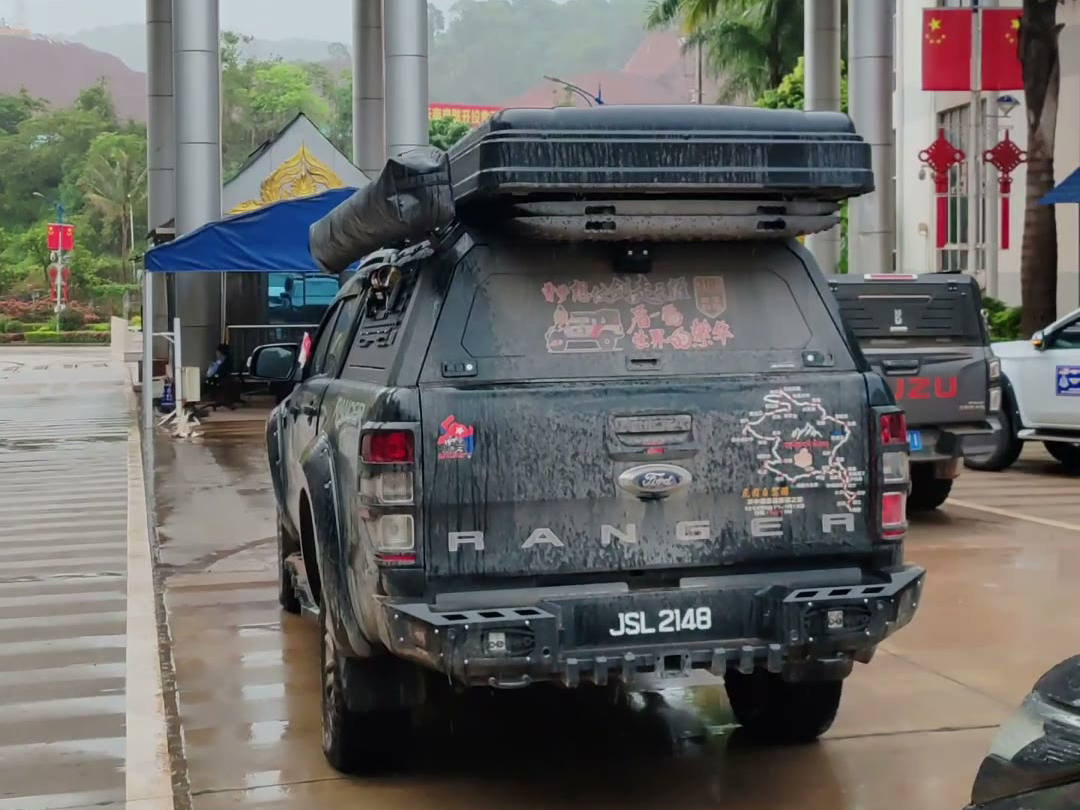
This photo shows a mud-covered Ford Ranger, plate JSL 2148, roof box on, a sticker that says travel the world with a sword, at a rainy border. I've driven in these conditions, and I've learned what the wet does. Four-wheel drive helps you keep going, but it doesn't shorten your stopping distance, and it doesn't let you ignore the physics.
I frightened myself once braking in the wet. I came into a junction a touch too fast, pressed the brake, and the ABS kicked in and the bike, or the car in that case, kept rolling longer than I expected, and I only just stopped in time. After that I doubled my following distance in the wet and slowed earlier. The road surface in rain has a fraction of the grip, and the braking distance grows accordingly, whatever you're driving.
I also know what driving through deep water can cost. If the water gets into the engine's intake, you can do serious damage, and it happens quickly. I've seen a driver push through a flooded stretch and kill the engine halfway, and the repair was expensive and slow. I check the depth, watch where other vehicles go through, cross slowly and steadily, and if it looks too deep, I don't chance it. A short wait or a detour is cheaper than a flooded engine.
Four-wheel drive is a useful thing, and I've used it on muddy tracks and wet roads. But it has a way of making people feel invincible, and that's the danger. It helps you move and keep traction; it doesn't help you stop or turn on a slippery surface. I've seen four-wheel-drive vehicles in the ditch because the driver confused being able to accelerate with being able to control the vehicle. Stay clear-headed about it.
The Ranger in the photo is covered in the evidence of the road, mud splashed up the sides, and the stickers on the back tell you the owner enjoys the travelling. I've nothing against that; I've put a sticker or two on myself over the years. But the words on the rear window don't change the weather, and in the rain the sensible thing is to slow down and leave room.
I've also learned to use the lights and the wipers properly, keep the demister going so the screen doesn't fog, and watch for the places where water pools or the surface turns greasy. In the wet, the smooth inputs matter: gentle steering, gentle brake, gentle throttle, no sudden moves. A calm, steady drive in the rain gets there; a sharp one can come unstuck.
The formalities don't change with the weather. Temporary plate for three months, temporary licence, insurance, deposit, handled by the travel agency. The Ranger in the photo is a capable vehicle, but capability in the wet still depends on the driver's judgement, and the paperwork being in order doesn't change the grip on the road.
I've driven through a good many rainy borders and muddy tracks, and I've kept the same view: respect the wet, keep the distance, and don't let four-wheel drive make you brave. The muddy Ranger in the photo has done its share of the road, and the lesson written all over it is a simple one. The machine can do a great deal, but the physics still applies.