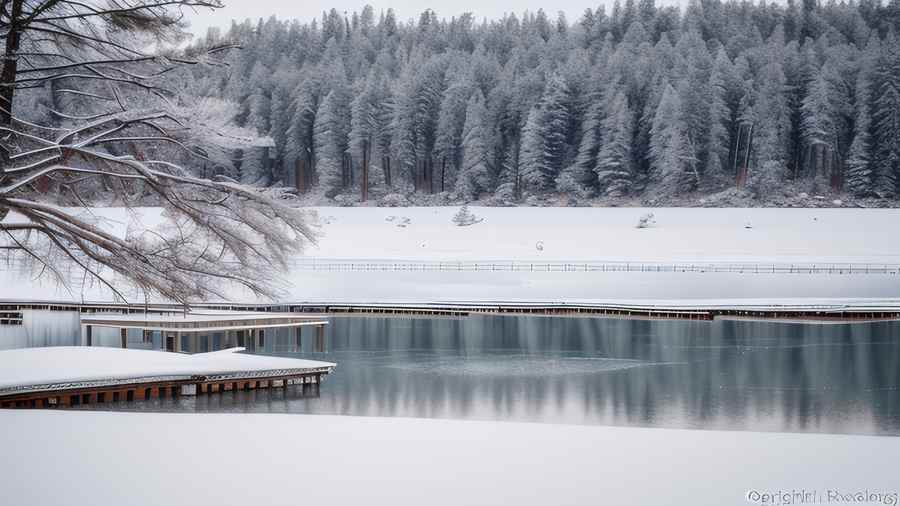
This is the easiest long weekend in the north-east, which is exactly why people skip it. Changchun to Songhua Lake is an hour and a half on a good expressway; the lake, the hills and the city are close enough for anyone who can keep a car on a snowy road, and the whole loop is only 310 kilometres. I did it in four days in mid-November, when the reservoir was low, the last boats had gone in and the first hard frost had just come. The reason to drive it is that two hours of road connect three separate stories: a hydroelectric station begun in 1937 and rebuilt twice since, which is still the reason the river below it does not freeze; a reservoir behind that dam which drowned a valley and made an archipelago; and a Manchu banner town on the north-east shore that once supplied the Qing court with fish, sturgeon and river pearls. If you are weighing Foreign Car Entry Self-Drive against hiring locally for a loop this short, note that the crossings nearest this region are in Liaoning, a long day each way, so most visitors end up choosing Renting a Car in China as a Foreigner at Changchun airport, where a licensed agency can have the documents settled before you leave the terminal.
Trip overview
- Day 1 – Changchun to Songhua Lake, 150 km: the dam at Fengman first, then the lake and its islands.
- Day 2 – Songhua Lake to Jilin City, 40 km: the banner street, the Manchu kitchens, then the river.
- Day 3 – Jilin City, 0 km on the loop: North Hill park, Dragon Pool hill, and the embankment at night.
- Day 4 – Jilin City back to Changchun, 120 km: an easy morning and the expressway home.
Total 310 km over four days, an average of under 80 km a day, with no stage longer than an hour and a half. The driving is gentle; between November and March the weather is the only real difficulty.
Day 1 · Changchun to Songhua Lake, 150 km
Road
Take the G12 expressway east out of Changchun and get off at the Fengman exit, then follow the lakeside road up the valley: 150 km in about two hours, wide and well signed. From November to March the surface is packed snow or black ice in the shadow of the overpasses, and winter tyres or chains are required in practice, not on paper. There is a car park at the dam and another at the Wangjia pier, the main boat landing.
Sights
Fengman is one of the most consequential pieces of engineering in north-east Asia. Japan began the station in 1937 to power the armaments works it had built around Changchun and Shenyang, putting a concrete gravity dam across the Songhua; the job was half finished in 1945, the equipment that was left was dismantled and hauled north, and the first years of running were improvised. It was repaired and rebuilt, and in 2012 a new station was raised alongside while the old dam was kept, so you can stand on the near bank and read the whole history in one line of concrete: the original face, the repair seams, the spillway blown during the civil war and built again, and the tailrace below, where the water runs warm enough that the river fails to freeze for eleven kilometres downstream. That is the entire reason for the frost fog of Jilin City, which makes the dam the most useful thing to see first on this loop, and the small exhibition at the gate does it properly, with construction photographs, turbine models and the labour records. Above the dam lies the reservoir, Songhua Lake, the drowned valley of the same river: some five hundred square kilometres of long, branching water, with hills that come down to the edge and are left standing as islands when the level rises. Two of them are worked: one has a path, a viewing terrace and a stand of Korean pine; the other has a row of pavilions and a legend about a general. Boats run an hour and a half from the pier in summer; in the cold months the piers are quiet and the best of the lake is done from the road, driving the ridge above the eastern shore where the water sits far below and the villages stand on terrace after terrace of corn.
Food
The lake's own dish is its fish; four kinds are reckoned the local prize, stewed in an iron pot until the broth is white and peppery, eaten with rice and a plate of pickled mustard greens at the farmhouse kitchens along the eastern shore. In Fengman town, buy the smoked fish sold by weight outside the market: it is the same catch, and it keeps in a cold car.
Where to stay
Sleep at the lake. The block at the main pier has the only rooms facing the water, and the farmhouse beds on the eastern ridge are cheaper, hotter and better fed. Either way you want to be here for the first half hour of light.
Day 2 · Songhua Lake to Jilin City, 40 km
Road
A short stage. Down from the lake to the dam, then north-west into the city on a wide riverside road, 40 km in under an hour. To reach the banner street on the north-east shore, add twenty kilometres of county road that narrows to a single lane at two points; go in the morning, when the light on the water is behind you.
Sights
That street is the reason to break the short drive. Under the Qing this was the Wula banner, one of the offices appointed to gather tribute for the court from the rivers and forests of the north-east: sturgeon and salmon from the Songhua, pearls from its tributaries, ginseng from the hills, sable from the traps, wildfowl from the marshes. The administrative yard stood here, and the town kept the shape of that economy, with a Manchu quarter, a set of ancestral halls and a continuing habit of cooking what the water and the woods give. What can be seen now is a street of low brick shops, the office site with its steles, a Manchu courtyard museum with the drum used in the old rites, and kitchens still making the tribute dishes. Then Jilin City itself, which is not what visitors expect from a place that lends its name to a province. It is the older town, founded on river trade and the banner system, built in a long bend so that the water passes three times on its way round; that is why the Chinese name contains the word for river, and why the bridges, the embankments and the evening walks are arranged around the water rather than around a market square. Along the south bank a continuous promenade runs under a set of modern bridges, with a musical fountain in summer and, on cold still mornings, the frost fog that the dam makes, when mist off the unfrozen water settles on the shore trees and every branch carries a feather of ice.
Food
Jilin eats three traditions at once: the Manchu boiled lamb and blood sausage of the old banners, served white with a garlic paste and a sesame dip; the Korean cold noodles and grilled meat of the city's Korean quarter, which is the best lunch here in any weather; and the local pan-fried millet cake, a crisp disc cut up and fried with vinegar and garlic, sold from carts on the corners, which is the true breakfast of the town.
Where to stay
Stay on the south bank, within walking distance of the promenade, so that a frost-fog morning can be watched from your own window. Parking is the hard part here: choose a hotel with a barrier and a yard, not a tower with one ramp.
Day 3 · Jilin City, 0 km on the loop
Road
Walk and short hops. North Hill park is fifteen minutes from the water on foot; Dragon Pool hill is eight kilometres east, a taxi or a brief drive up a cleared but steep road. No fuel needed.
Sights
The two hills are the city's own. North Hill is a low park in the middle of the old town carrying something unusual: a Buddhist temple, a Daoist hall and a Confucian shrine packed into one courtyard complex on the same ridge, which is how religion is actually practised in this border country, and which fills with the whole city at the fair in the fifth month. There is a small local-history museum inside the park, a pond that freezes into a skating ground, and a pavilion on the top from which both the old rooflines and the river show. Dragon Pool hill to the east is older and stranger: on its shoulder sits a Goguryeo hill fort of the fifth or sixth century, its walls run along the ridge with four gates, and inside the circuit, at the highest point, a pool cut into the rock, used by the garrison for water and never once dried. It is a short, cold, windy walk, and the view from the wall across the river basin is the best in the region. Down in the town, add the city museum for its bronzes and its photographs of the frost fog; if you still have an hour, the Korean quarter's night market is loud, cheap, and sells everything eaten in this part of China twice over.
Food
On the third day, eat at the old places. A Manchu hot pot on charcoal, lamb shaved thin, cabbage and tofu under it, is what the banner town left behind; a bowl of beef-brisket rice noodles for lunch; and the local millet pastry filled with brown sugar. Ask for the blood sausage plain, without sauce, and add the sauce yourself.
Where to stay
Same hotel, second night, with one change of plan: if it is cold, still and snowless, be on the bank before seven, when the fog is thickest, because after nine it has fallen.
Day 4 · Jilin City to Changchun, 120 km
Road
The G12 west, 120 km, an hour and a half from ring road to ring road, with a service area at the midpoint worth ten minutes. Give the car back in the city rather than at the airport if you are flying out the next day; the return yard by the terminal is smaller and the queue longer.
Sights
Nothing new on this leg, which is the point of leaving it last. Take the twenty minutes to drive out to the eastern edge of the city before you go, where the river makes its widest bend, so that the shape of the place, the three times the water turns, explains itself from the overlook. On the expressway the only stop worth making is the small town where the road comes over the low divide, because on a clear day the range that holds the lake is visible behind you for the first twenty kilometres, and that is as close as this loop lets you come to the country you have just spent four days inside. If the forecast has changed and the first hard freeze has come, the lake road will be closed to boats by the time you read this, and the frost fog will be beginning its season, which is the trade. Passing Longjia on the way down, where the airport branch leaves the mainline, is the one stretch on this loop where travellers misjudge time: the drive from the city centre of Jilin to the terminal runs twenty minutes longer than the map says, because the airport road beyond the expressway exit is the part that jams.
Food
Breakfast in the city, lunch on the road: the service area food is better than its reputation, and the cold noodles from the counter are honest. Buy a bag of roasted seeds at the toll town; it is the season for them and they keep in the car for a week.
Where to stay
The loop closes in Changchun. If you have an evening left, the old railway quarter to the north is lit after dark and the provincial museum keeps the regional bronze collection under a roof, warm and free to enter.
Practical tips
- From November to March assume snow: keep a spade, a torch and a spare can in the trunk, and check the road state before the lake stage.
- Frost fog needs three things: cold, no wind, and water that has not frozen. If two are missing, sleep in.
- The boats to the lake islands stop in the cold months; the shoreline road is the alternative and is better anyway.
- The banner street is a twenty-minute detour that costs an hour once you count parking; arrive before ten.
- City fuel is cheaper than expressway fuel, and the stations on the lake road close early.
- For a 310 km loop, Renting a Car in China as a Foreigner beats Foreign Car Entry Self-Drive by a full day of driving to a crossing and back.
About this route
Four days sounds generous for 310 kilometres and it is exactly right: the dam needs a morning, the lake an afternoon, the banner town one lunch, and the two hills a clear day. Come in winter if you can stand the cold, because the frost fog is the single best thing on this loop; come in summer if you want the boats, the swim and the pine islands. The same four days run very well in reverse, starting at Changchun and sleeping the first night in the city rather than on the water.
Distances are the ones this drive logged against exit markers. The boat timetable, the dam exhibition and the museum hours were confirmed at the gate and shift with the season and the water level.
Route notes by Zara, Yunnan Province International Travel Agency (Group) Co., Ltd.