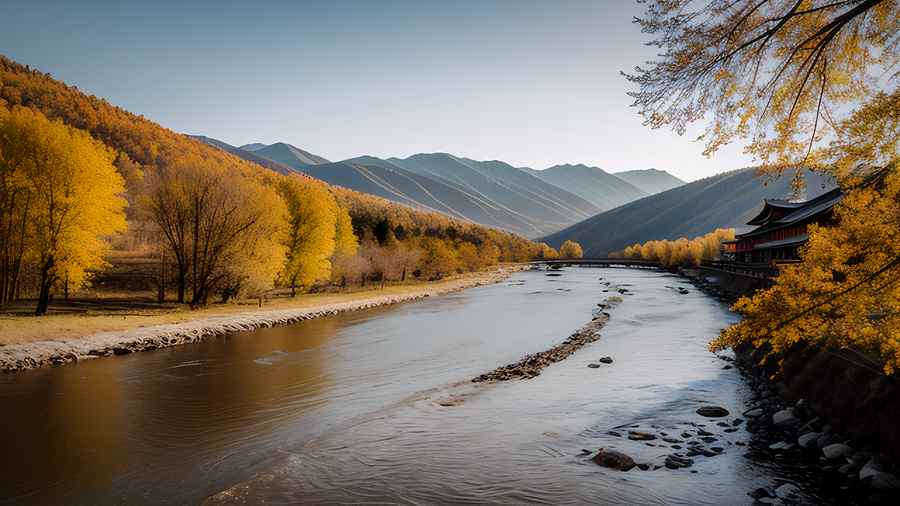
I drove this in the middle of October, after the first frost and before the snow, which is the best window in this part of the province. Southern Jilin is not the postcard north of the films; it is small cities, mining histories, Korean-Chinese villages and a river that marks a border. The distances are short, 790 km over eleven days, and four of the days involve no driving at all. Roads are good throughout, with one slower stretch along the river where the surface is patched. What follows is the day-by-day record.
Trip overview
- D1 Changchun to Yitong, 65 km, volcanic cones
- D2 A day around Yitong, 0 km
- D3 Yitong to Liaoyuan, 65 km, Ciluhu lake and the mine museum
- D4 A day in Liaoyuan, 0 km
- D5 Liaoyuan to Tonghua, 180 km, Yuhuang Shan and the memorial park
- D6 A day in Tonghua, 0 km
- D7 Tonghua to Jian, 85 km, the Gwanggaeto stele and the Goguryeo capital
- D8 A day at Jian, 0 km
- D9 Jian to Linjiang, 90 km, the Yalu river road
- D10 Linjiang to Baishan, 30 km, the river bank and the lake
- D11 Baishan back to Changchun, 275 km
790 km total, with the longest day at 275 km and the shortest at 30. The river road between Jian and Linjiang is the only stretch that needs care: it is narrow in places and follows the water closely, and lorries use it. Fuel is easy in every town; the gap between Linjiang and Baishan is short enough that it does not matter.
D1、Changchun–Yitong 65KM
Road
South out of Changchun on the G1 then a provincial road; 65 km of flat farmland, with one stretch of patched surface near the county boundary.
Sights
The volcanic cones at Yitong are low grass-covered hills standing singly out of the fields, seven or eight of them within a few kilometres. The largest has a path around its rim and a small crater floor where the grass is shorter and the soil dark. The Manchu museum in the county town is in a low building with a courtyard; the displays cover the banner system, the household registers and the clothing, and one room is given to the local dialect, recorded from the last speakers.
Food
Yitong is Korean-Chinese country on the edge of the plain: cold noodles in a chilled beef broth, and a stone bowl of rice mixed with vegetables and a raw egg.
Where to stay
A hotel on the main street with parking at the back; warm rooms, and a breakfast of rice, soup and pickles.
D2、Yitong on foot 0KM
Road
No driving beyond a short run to the cones; the museum is in the town centre.
Sights
I walked the rim of the biggest cone in the morning, which takes about an hour and gives a view across the whole field of hills, each one a slightly different green. The crater floor is grazed by a few cattle and the path around it is worn to bare earth. In the afternoon back to the museum for the room on the Manchu language, where a recording plays on a loop and the transcript is pinned to the wall; the caretaker explained which villages still use the words at home.
Food
A bowl of cold noodles at a shop near the market, and in the evening a plate of braised pork with pickled cabbage.
Where to stay
Same hotel, second night.
D3、Yitong–Liaoyuan 65KM
Road
East on a provincial road, 65 km of gentle country with a few wooded ridges; the approach to Ciluhu is a narrow lane between fields.
Sights
Ciluhu is a shallow lake in the hills with reed beds around the shore and a boardwalk on the southern side; in October the reeds are cut and stacked and the water is very still. The mine museum in Liaoyuan is in a converted pit building, with the winding gear still in place, a cage hanging from the cable, and a gallery of photographs of the shifts. Below the museum a section of the old workings has been opened as a walkway, lit and chilled, with the coal seam visible in the wall.
Food
Liaoyuan does a stewed chicken with potato and dried chilli, and a buckwheat noodle served cold with a spicy sauce.
Where to stay
A hotel near the museum with a car park and a small restaurant downstairs; quiet after nine.
D4、Liaoyuan on foot 0KM
Road
No driving; the museum and the lake are reached by taxi in ten minutes.
Sights
The morning went back into the mine walkway, where the air is cold and the timber props are original; the guide explains the ventilation and the way the seam was followed. Up on the surface the pit head frames are still standing and the winding house has its original dials. In the afternoon the lake again, this time walking the eastern shore where the reeds are uncut and the birds sit in the channels, then the town's main street with its 1950s buildings and a shop selling coal carvings.
Food
A bowl of the cold buckwheat noodles, and a plate of stir-fried potato with green pepper.
Where to stay
Same hotel, second night.
D5、Liaoyuan–Tonghua 180KM
Road
The longest leg so far: 180 km on a mix of provincial road and motorway, with two climbs over wooded ridges and a long straight across a basin.
Sights
Yuhuang Shan is a park hill inside Tonghua with a pavilion on top, a stairway through pines and a view over the whole city and the river. The memorial park on the eastern side is a formal place: a statue on a terrace, a hall of photographs, and a wall of names; the displays cover the resistance years in the mountains, with weapons, letters and winter clothing. The old town along the river has a few timber houses left among the new build, and the riverside walk is used by everyone in the evening.
Food
Tonghua is known for its ginseng and for a chicken stewed with it; the plainer dish is a bowl of noodles with soybean paste and shredded cucumber.
Where to stay
A hotel near the river with rooms on the upper floors, parking underneath and a view of the bridge.
D6、Tonghua on foot 0KM
Road
No driving; the hill, the park and the river are all within the city.
Sights
Up Yuhuang Shan early, when the mist sits on the river, then along the ridge path to a second pavilion. The memorial park took most of the afternoon: the hall of photographs is slow to walk through, and the wall of names runs the length of one side. In the evening the riverside walk, where the lamps come on at six and the food stalls set up under the bridge, selling grilled corn and hot wine.
Food
A bowl of noodles with bean paste, and a cup of hot rice wine at a stall under the bridge.
Where to stay
Same hotel, second night.
D7、Tonghua–Jian 85KM
Road
South on a provincial road that follows a river valley; 85 km of good surface with a few bends and one village where the road narrows between houses.
Sights
Jian was the capital of the Goguryeo kingdom, and the remains are scattered through the valley. The Gwanggaeto stele stands in a walled enclosure on a slope, a block of stone nearly seven metres high on a carved base, covered in text; the inscription is the reason scholars come from everywhere. The fortress on the hill above has runs of stone wall along the ridge, with gateways and a view down the valley to the river, and the tombs in the fields below are mounds with stone kerbs.
Food
Jian has a Korean-Chinese table: dog meat is traditional but rabbit stew is the easier choice, with cold noodles and a dish of pickled daikon.
Where to stay
A guesthouse in the old quarter with a courtyard and rooms off it; simple, warm, and the owner knows the tomb sites.
D8、Jian on foot 0KM
Road
No driving. The stele, the fortress and the tombs are within ten minutes of each other by taxi.
Sights
The morning went to the fortress hill, walking the wall from the south gate round to the northern point, where the stone blocks are laid in courses and the drop below is steep. Then the tomb field, where two of the mounds have been opened and the stone chambers are visible behind glass. In the afternoon the river bank, where the water is wide and the opposite shore is another country; the border fence runs along the promenade and nobody goes near it. The town museum has a model of the old capital with the palace and the streets marked.
Food
A bowl of cold noodles with a slice of braised beef, and a plate of fried tofu with a dipping sauce.
Where to stay
Same guesthouse, second night.
D9、Jian–Linjiang 90KM
Road
The river road: 90 km along the Yalu with the fence on one side, narrow in places, patched in others, and used by lorries; allow two and a half hours.
Sights
The road follows the water for its whole length, with the opposite bank visible across a few hundred metres of current. There are viewpoints every few kilometres, and one village where the houses are built on stilts above the flood line. Linjiang itself sits in a bend, with a promenade along the river and a memorial hall on the hill above the town, and the bridge downstream is the one that carries the crossing.
Food
River fish stewed with bean paste and chilli, and a bowl of corn noodles with pickled vegetables.
Where to stay
A hotel on the promenade with rooms facing the river; the fourth floor is above the road noise.
D10、Linjiang–Baishan 30KM
Road
A short thirty kilometres on the river road, then into Baishan on a wide new avenue; the only slow part is the bridge over the Hun river.
Sights
The river bank at Linjiang in the morning is the best hour: the water is flat, the fishermen are out and the opposite shore is in shadow. Baishan has a lake on the Songhua above the dam, reached by a road through the hills, with a viewing platform over the water and a scatter of islands. The Manchu culture museum in the city is worth an hour, with a room on the mountain worship and a collection of paper cuttings. The West Slope of Changbai Shan and the gorge at Shiwidaogou are both three hours further and do not fit into this day.
Food
A lake fish grilled with salt, and a bowl of rice with stewed chicken and chestnut.
Where to stay
A hotel in the city centre with parking and a laundry; the lake road is twenty minutes away for an early start.
D11、Baishan–Changchun 275KM
Road
The long run home: 275 km, motorway most of the way with two service areas, then the ring road into Changchun.
Sights
Nothing scheduled. The road climbs out of the river valley onto the plateau, and for an hour there is forest on both sides with the last colour still on the birches. Near Changchun the fields open out and the city appears as a line of towers.
Food
A bowl of noodles at the second service area; Changchun has better, so I waited.
Where to stay
A hotel near the station for an early train, with parking and a laundry service.
Practical tips
- The river road between Jian and Linjiang is narrow with lorries; drive it in daylight and do not stop on the bends.
- The border fence along the Yalu is not to be approached, and photographs of the opposite bank are best avoided at checkpoints.
- The mine walkway at Liaoyuan is cold even in summer; a jacket is needed and the floor is damp.
- Ginseng is sold everywhere in Tonghua and prices vary enormously; buy from a shop with a licence rather than a roadside stall.
- Hotels in Jian and Linjiang are busy in the October holiday week, so book ahead if travelling then.
- Foreign Car Entry Self-Drive in southern Jilin is easy on the roads, and Renting a Car in China as a Foreigner needs the temporary licence, the passport and the vehicle papers kept together for the river checkpoints.
About this route
Eleven days, 790 km, six bases: Yitong, Liaoyuan, Tonghua, Jian, Linjiang and Baishan. Best from late September to late October, or May. One 275 km day and one narrow river road; everything else is short.
Distances, road surfaces and museum arrangements were checked on the ground in October. For documents, customs formalities and vehicle papers, the Jilin traffic management office in Changchun and the border office at Jian answer enquiries directly.
Route notes by Zara, Yunnan Province International Travel Agency (Group) Co., Ltd.