This loop cuts the middle of Jiangxi. It starts in Nanchang, the provincial capital on the lake's north end, climbs to the forest county of Jing'an, drops north to Jiujiang where the Yangtze takes the whole drainage of Poyang Lake on its way east, and finishes at Jingdezhen, the town that has made porcelain for a thousand years and still does. I drove 70, 0, 140, 0, 150 and 175 kilometres across six days, which is easy going: the roads are good, the distances between sights are short, and the three cities each want a full day. Two things mark this country. One is that its wealth came from water and from the examination system, so every county seat here has a literary association, an academy site, or a temple with a famous calligrapher's name on it. The other is that the land is still green: Jiangxi grows more forest than most provinces and the loop spends two days inside it. For Foreign Car Entry Self-Drive, the nearest crossings lie far to the south and north, so no border route brings you usefully to this region; for six days inside one province, Renting a Car in China as a Foreigner out of Nanchang's airport, where a licensed agency handles the licence translation and the bond at the desk, is the faster and cheaper choice.
Trip overview
- Day 1 – Nanchang to Jing’an, 70 km: up to the forest county, Baofeng Temple on the way.
- Day 2 – Jing’an, 0 km on the loop: the Sanshana gorge walk and the county's tea.
- Day 3 – Jing’an to Jiujiang, 140 km: down the lake plain to the river, the two towers.
- Day 4 – Jiujiang, 0 km on the loop: the Yangtze front, the academy below the mountain, the bells.
- Day 5 – Jiujiang to Jingdezhen, 150 km: across the lake country to the kiln city.
- Day 6 – Jingdezhen to Nanchang, 175 km: one last morning at the kilns, then home.
Total 535 km over six days, an average of 90 km a day, with no stage above two and a half hours. The expressway tolls here are low and the roads are new; the exception is the loop road in the forest park, which is a mountain lane.
Day 1 · Nanchang to Jing’an, 70 km
Road
Take the expressway north-west out of Nanchang and leave it at the Jing'an exit. 70 km, roughly an hour, and the last stretch climbs into timber country with a soft shoulder and a lot of parked log trucks. Stop in the city before you go if you want the great riverside pavilion; otherwise set off early and use the day in the hills.
Sights
Jing'an is a small county that lives on two things: forest, and one of the most important Zen sites in China. The temple is Baofeng, founded in the eighth century on a shoulder of the Mjia hills and rebuilt in the 1990s after centuries of decline. It is the burial place of Mazu Daoyi, the teacher who set the style of Chan argument, whose saying about everyday mind is quoted more than any other line of Zen; the pagoda that holds his relics stands in the courtyard of the rebuilt hall complex, and the site is large, quiet, and free of the market smell that temples elsewhere develop. The approach is a valley road lined with old camphor trees. The county's second attraction is its forest: Sanshana is a national park made of a gorge system with plank paths along the water, and in the warm months a raft run goes down it. In late autumn the water is low, the walk is easy, and the hills are terraced with tea and Chinese fir. Jing'an also keeps the memory of a Ming official who served the region, Kuang Zhong, the prefect of Suzhou whose reputation for plain dealing is still told in local drama; the county has a garden and a hall named for him.
Food
The county eats what the hills give: bamboo shoots in winter, river prawns, a clay-pot chicken stewed with dried mushroom, and a bowl of the local rice noodles in a clear broth. Buy the pine-tea green leaf grown in these hills since Tang times and still made by small workshops in the county seat rather than at the gate.
Where to stay
Stay in the county seat, where the hotels are new, cheap and have real parking, or at a guesthouse at the park gate if you want to be on the path at seven. Either way ask for directions to the night food street, which is the whole evening's entertainment.
Day 2 · Jing’an, 0 km on the loop
Road
The park road runs north from the seat for some forty kilometres; it is paved but narrow, with hairpins above the gorge. Go out in the morning and come back before dark, because the lane is unlit and fog sits in the valley.
Sights
Give the day to the gorge park. It is a chain of canyons and side valleys with plank walk, a set of viewing platforms, and a number of named pools where the water is green enough that people forget it is wild. Two features are worth the walk: a hanging cliff where the rock folds in stripes, and a fall that runs all year and throws mist across the path in spring. Walkers who want more take the upper ridge route for four hours and come out at a village; those who do not can do a two-hour circuit and be back for lunch. Then Baofeng Temple again, or rather its second half: the side halls, the hall of the patriarchs, the grove of tomb pagodas behind the temple, and the small museum that keeps the steles, the rubbings and the record of how the site was excavated and rebuilt. It is a good place to sit; the county is proud of the fact that the temple was rebuilt almost entirely by local subscription, and the donor list is carved on a wall.
Food
Today eat mountain food twice: a bamboo-shoot and cured-pork stew at a farmhouse in the gorge, and at night a pot of the county's fish, cooked with ginger and a spoon of chilli oil, with the local greens dressed in lard. For the road, buy dried bamboo shoots and a bag of tea.
Where to stay
Second night in Jing'an. If the weather turns wet, the plank path is slippery and the temple is the better half of the day; both are within a short drive.
Day 3 · Jing’an to Jiujiang, 140 km
Road
Down to the lake plain and north to the river, on expressway and good provincial road. 140 km, about two hours. The final approach into Jiujiang is a wide industrial avenue, and the river front is a set of one-way streets; park once and walk.
Sights
Jiujiang is a river port built where the Yangtze leaves the lake, and it has been a customs town, a treaty port and a rail junction in that order. Its two towers stand a kilometre apart on the waterfront and are the reason to spend an afternoon here. The upstream one, the Xunyang Tower, is a three-storey structure rebuilt on an old site and made famous by the novel in which a doomed official writes a defiant poem on its wall after drinking; the interior now has painted figures from that book and a storey of the poems written about the town, which is the best short history of Yangtze poetry you can get indoors. The downstream one, the Lock-the-River Tower with its pagoda, was raised in the Wanli years to hold the water with a charm, a piece of river superstition that has been rebuilt twice and still stands where the current turns. Between them is the promenade, and from it you can watch the traffic: barges four deep, tankers at anchor, and the whole freight of the middle of China moving past in line.
Food
Jiujiang eats lake and river: fish stewed with chilli and pickled vegetable, a pancake of radish and rice batter fried in a shallow pan, and a bowl of the rice noodles in beef broth that the port serves at any hour. Buy the ginger-and-chilli sauce the old shops make, which is the flavour of the town.
Where to stay
Stay near the river front on the east side, where the hotels are tall, the parking is underground and the towers are a ten-minute walk. Do not take a room over the port road if you can avoid it; the trucks start before six.
Day 4 · Jiujiang, 0 km on the loop
Road
Today is short hops: the customs museum ten minutes north, the academy thirty minutes south-east at the base of the mountain, and the old consulate quarter back in town. The academy road climbs the first shoulder of the range and is well paved.
Sights
Start with the river's own record, in the museum built on the site of the customs: the treaty-port years, the consular quarter, the tea trade and the steamers. Then go south to the White Deer Cave Academy, which sits in a hollow below the Five Old Men peaks and is the most famous of China's academies: founded in the Tang, reorganised in the twelfth century by Zhu Xi, whose rules for study and self-examination were used across east Asia for five hundred years. What you see now is the reconstructed courtyard plan, the halls, the stone tablets, the pond and the pines, with a set of exhibition rooms that explain how a place of study differs from a temple and how the two overlapped. It is a quiet visit and a serious one. If you have the afternoon left, take the mountain road partway up to the edge of the cliff terraces and look down on the lake; that single view produced more of the poems in the last anthology than any other place on this loop. Do not try to see the whole mountain on the same day as this.
Food
Tea is the day's subject: the cloud-mist leaf is grown on the terraces above you and served everywhere in town, and the correct accompaniment is a dish of the mountain's long moss fungus, cooked with egg or stewed with pork. Lunch at a river kitchen, dinner at the noodle house near the museum.
Where to stay
Back to the same hotel. If the weather is clear, ask for a room facing south: from some of them the first shoulder of the mountain is visible over the rooftops.
Day 5 · Jiujiang to Jingdezhen, 150 km
Road
East across the lake country on the expressway, past the flood basins and the lotus ponds. 150 km, under two hours. The last approach to the city runs through a district of tile workshops, so the road is busy with slow vehicles; go before eight or after ten.
Sights
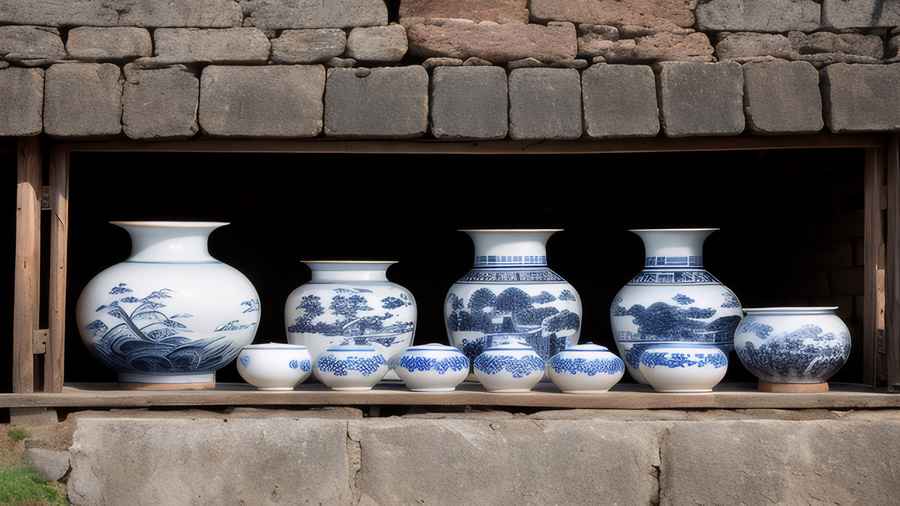
Jingdezhen is the reason the word porcelain is in English, and it is a working city, not a museum. Its kilns have run since the Song, its imperial manufactory served the court for five centuries, and today it makes everything from hotel services to the porcelain bought as art. Two visits carry the whole story. The Ancient Kiln and Folk Customs Museum is a compound where the great traditions have been brought back and fired: a reconstruction of the old egg-shaped imperial kiln, a set of dragon kilns climbing a hillside, workshops for turning, glazing and painting, and a schedule of firings you can plan around. The second is Taoxichuan, built on the site of a state factory closed in the 1990s: the brick workshops and the tall chimney have been kept, and inside them there is a museum, a market, studios, and on weekend evenings a stall fair where several thousand young potters sell their own work at prices that are honest. Between the two, add the imperial yard on Zhushan, excavated and now sheltered by a low building that displays the shards which failed quality control, a lesson in how the court dealt with waste.
Food
The city's daily food is cold rice noodles, a thick strand dressed with chilli, pickled mustard and peanuts, eaten at any hour; and chicken wrapped in paper and salt and baked in waste kiln heat, which the kiln workers invented. Order the lotus-seed soup for dessert, since the ponds outside town are full of the plant.
Where to stay
Stay near Taoxichuan, where the factory yards are the street and the studios open late, and the parking is easy because the yards are large. The old town near the river is cheaper and noisier.
Day 6 · Jingdezhen to Nanchang, 175 km
Road
South-west home on the expressway, 175 km, about two and a half hours. Leave by mid-morning; the last stretch into Nanchang is a city ring road with heavy evening traffic. Fill up before the toll town.
Sights
Give the last hour to the kilns. If you have not seen a firing at the Ancient Kiln compound, time the morning to it, because the work goes in a sequence worth watching once and understanding: throwing, trimming, dipping, painting and the second firing, which is the reason the trade took a town rather than a workshop. Then the road, which runs across the lake plain through county seats that each keep a piece of this history: a warehouse, a temple with a kiln god's name, a lane of dealers. On the approach to Nanchang the lake appears on your left before the city does, and that is the best sight of the loop's last day, the widest body of fresh water in China, shallow, seasonal, with dikes and villages on its islands. In Nanchang itself, if the afternoon is left, finish at the riverside pavilion, rebuilt on the bank and famous for a tenth-century preface that schoolchildren still recite.
Food
Last lunch in Nanchang: a bowl of the mixed rice noodles the capital is named for, with a jar of soup stewed over charcoal for eight hours, which is the city's standard breakfast and is eaten at any hour. Buy lotus seed and dried lily at the market for the trip.
Where to stay
The loop closes in Nanchang. If you fly out, sleep near the airport road and give the agency's desk until six in the morning; if you take the train, the west station sits on the ring road and is easy to reach.
Practical tips
- The mountain lane in the forest park is unlit: come out of the gorge before four in winter.
- Baofeng Temple closes its halls early; go before noon, or take the museum on day two instead.
- Plan the Ancient Kiln visit around a firing; without one it is a display, with one it is a workshop.
- Taoxichuan's stall fair runs on weekend evenings, and the good pieces go before nine.
- Jiujiang's river-front streets are one-way and its parking is underground; stop once and walk.
- For six days in one province, Renting a Car in China as a Foreigner beats Foreign Car Entry Self-Drive, since no crossing lies on this loop.
About this route
Six days suits this loop because three of its places want a full day and one wants half: Jing'an for the gorge and the temple, Jiujiang for the river and the academy, Jingdezhen for the kilns and the studios. Add a seventh day and put it on the mountain behind Jiujiang, which needs a night at the top. Cut it to four and lose day two, keeping the temple and the academy, the two deepest things on the route.
Kilometre figures are what this drive recorded against the exit signs and the fuel log. The firing schedule, the academy's opening hours and the museum's free-entry days were confirmed at the gate and change without notice.
Route notes by Zara, Yunnan Province International Travel Agency (Group) Co., Ltd.