I drove this loop in the second half of October, when the bamboo was still green but the light had gone flat and gold. Southern Jiangsu is dense: a town every twenty minutes, a lake every hour, and roads that are almost all good. That makes it a gentle route, 625 km over twelve days with five days of no driving. The trick is to pick one thing per day and walk it properly rather than trying to see everything. What follows is the day-by-day record.
Trip overview
- D1 Nanjing to Jurong, 45 km, Maoshan and Baohua Shan
- D2 A day around Jurong, 0 km
- D3 Jurong to Liyang, 80 km, bamboo hills and hot springs
- D4 A day at Liyang, 0 km
- D5 Liyang to Lake Tianmu, 25 km
- D6 A day at Lake Tianmu, 0 km
- D7 Lake Tianmu to Wuxi, 95 km, the lake headland and the great Buddha
- D8 A day in Wuxi, 0 km
- D9 Wuxi to Changshu, 55 km, Yushan and Shanghu
- D10 Changshu to Tongli, 65 km, the garden and the three bridges
- D11 Tongli to Yixing, 110 km, the cave and the bamboo sea
- D12 Yixing back to Nanjing, 150 km
625 km total. The longest day is 150 km and the shortest 25, and everything is on good tarmac with light traffic. Fuel is available everywhere and tolls are modest. The only thing to plan is parking in the old towns, where cars are kept outside the walls.
D1、Nanjing–Jurong 45KM
Road
East out of Nanjing on the ring road then a provincial road; 45 km, with a short climb to the Maoshan gate and a narrow lane to the Baohua monastery.
Sights
Maoshan is a wooded ridge with a Daoist temple complex on the shoulder, reached by a stairway of several hundred steps through bamboo; the halls are small and the courtyards are quiet, and the view from the top terrace covers the plain. Baohua Shan is a Buddhist monastery built into a cliff, with a hall cut into the rock and a stairway that passes under a stone arch; the incense yard is at the top and the drop below is steep.
Food
Jurong does a duck stewed with soy and star anise, and a bowl of noodles with pickled vegetables; both are cheap and served in ordinary shops.
Where to stay
A guesthouse at the foot of Maoshan with rooms facing the bamboo; quiet, and the walk to the gate starts at the car park.
D2、Jurong on foot 0KM
Road
No driving; both hills are walked from their car parks.
Sights
The morning went up Maoshan again, this time by the older path on the western side, which is steeper and emptier and passes two small shrines. The stone steps are laid in courses and the bamboo closes over them. In the afternoon Baohua Shan, where the cliff hall is lit by a single window and the stone floor is worn smooth; the monastery's vegetable garden is terraced up the slope behind.
Food
A bowl of noodles at the foot of the hill, and a plate of stir-fried bamboo shoots with cured pork in the evening.
Where to stay
Same guesthouse, second night.
D3、Jurong–Liyang 80KM
Road
South on a provincial road through low hills and tea terraces; 80 km of good surface with a few bends and one stretch of roadworks near the reservoir.
Sights
The bamboo hills at Nanshan are a working forest with paths cut through it, a ridge walk that takes about two hours and a lake at the foot where the water is green and still. The hot springs at Yushui are in a valley below the bamboo, with pools set among rocks and a stream running past the bathing houses. In the late afternoon the bamboo turns from green to blue as the light drops.
Food
Liyang is known for a fish head soup cooked with a sour pickle, and for bamboo shoots braised with pork; the town has several restaurants doing both.
Where to stay
A hot spring guesthouse in the valley with a private pool in the room; expensive by local standards but worth one night.
D4、Liyang on foot 0KM
Road
No driving; the bamboo paths start behind the guesthouse.
Sights
The ridge path through the bamboo in the morning, when the mist is still in the hollows and the cutters are at work with their bundles tied with strips of bamboo. The path is mud and stone and the bamboo leans over it. In the afternoon the lake at the foot, walking the shore where the boats are pulled up and the fishermen's nets are hung on frames.
Food
Fish head soup with pickles at a restaurant by the lake, and a bowl of rice with braised bamboo shoots.
Where to stay
Same guesthouse, second night.
D5、Liyang–Lake Tianmu 25KM
Road
A short 25 km run east on a provincial road, then a lane along the lake shore; the surface is good and the traffic light.
Sights
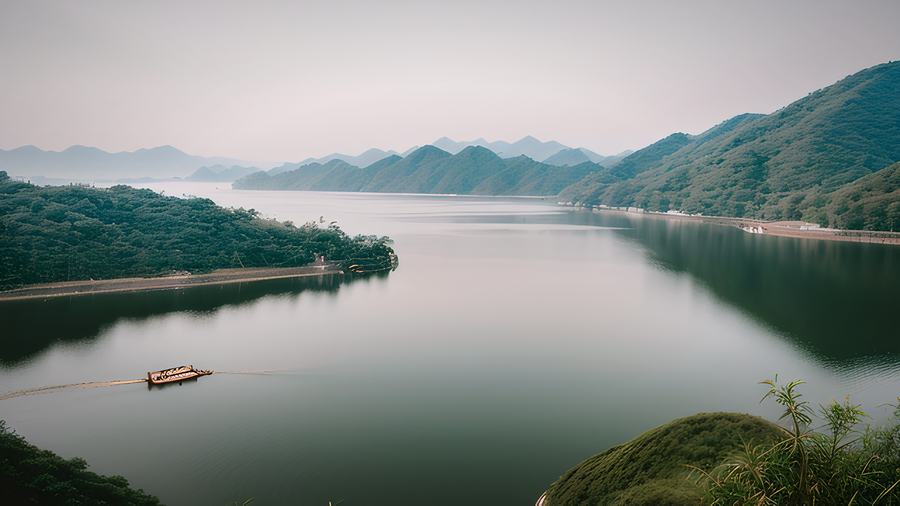
Lake Tianmu is a long reservoir in the hills with a dam at one end and wooded islands in the middle; boats run from the jetty to a peninsula where a path climbs to a viewpoint. The water is deep and clear and the shore is terraced with tea. There is a small museum of the reservoir's construction, with photographs of the dam being built by hand.
Food
The lake's specialty is a soup of small fish with tofu and scallion, and a dish of tea-leaf fried with egg.
Where to stay
A guesthouse on the lake shore with rooms facing the water; the upper floor is quieter and the view is over the dam.
D6、Lake Tianmu on foot 0KM
Road
No driving; the jetty and the shore path are within walking distance.
Sights
The morning boat to the peninsula, then the climb to the viewpoint, which looks back over the whole lake and the terraced hills. In the afternoon the shore path on the eastern side, where the tea terraces come down to the water and the pickers work with baskets on their backs. The dam is walked at dusk, when the water on the inside is flat and the valley below is in shadow.
Food
A bowl of the small fish soup at a shore restaurant, and a plate of stir-fried lake shrimp.
Where to stay
Same guesthouse, second night.
D7、Lake Tianmu–Wuxi 95KM
Road
East on the highway for 95 km, with one toll section and steady traffic; the exit for the lake headland is well marked.
Sights
Yuantouzhu is the headland on Lake Tai, with a long causeway, a hill of cherry trees and a pavilion at the tip where the water opens out. The great Buddha at Lingshan is a bronze figure on a terrace above the lake, with a hall below and a flight of steps up; the scale is the point, and the walk around the base takes half an hour.
Food
Wuxi is famous for spare ribs braised in soy and sugar, and for a soup of fried gluten balls stuffed with meat; both are sweet, which is the local taste.
Where to stay
A hotel near the lake headland with parking and rooms on the upper floors; convenient for an early start and quiet at night.
D8、Wuxi on foot 0KM
Road
No driving; the headland is walked and the city is reached by taxi.
Sights
The causeway at Yuantouzhu in the morning, then the hill and the pavilion at the tip, where the wind comes off the lake. In the afternoon the old canal quarter of the city, where the houses stand on stone walls above the water and the lanes are narrow; a small museum covers the silk trade that built the town.
Food
Spare ribs and a bowl of noodles with shredded pork and pickled vegetable, eaten at a shop by the canal.
Where to stay
Same hotel, second night.
D9、Wuxi–Changshu 55KM
Road
North-east on a provincial road for 55 km; flat, fast and dull, with one bridge over the Yangtze canal.
Sights
Yushan is a low hill inside Changshu with a pagoda on the ridge, a walled garden at the foot and a path that climbs through sweet osmanthus. Shanghu is a lake west of the town with a causeway, reed beds and a park of old willows, and the light at dusk comes across the water to the city wall.
Food
Changshu does a duck cooked in a clay pot with tea leaves, and a bowl of noodles with crab roe when the season is right.
Where to stay
A guesthouse near the old town wall with a courtyard and parking outside the gate.
D10、Changshu–Tongli 65KM
Road
South for 65 km on a provincial road, then into the water town where the car stays in the car park outside the wall.
Sights
Tongli is a canal town with three stone bridges at its centre, a garden called the Retreat of Reflection with a covered walkway over the water, and lanes so narrow that two people pass with difficulty. The garden's windows are framed to catch a view of a tree or a roof tile, which is the whole art of the place.
Food
Tongli's specialty is a braised pork with rock sugar, and a bowl of glutinous rice balls in sweet wine soup.
Where to stay
A guesthouse inside the town on the canal, in a converted house with rooms over the water; ask for one away from the boat lane.
D11、Tongli–Yixing 110KM
Road
West for 110 km on the highway, with one toll section; the exit for the cave is a short run on a provincial road.
Sights
Shanjuan Cave is a limestone system with a boat passage at the bottom and a lit walkway above, where the formations are named after animals and gods. The bamboo sea at Yixing is a hillside covered in moso bamboo with paths cut through it and a temple at the top; the air is cool and the light is green even at midday.
Food
Yixing is the pottery town, and its restaurants serve a clay-pot chicken and a dish of river fish with ham; the teapots are sold everywhere and the good ones are worth the price.
Where to stay
A guesthouse at the foot of the bamboo hill, with rooms facing the slope and tea served in local pots.
D12、Yixing–Nanjing 150KM
Road
The longest day: 150 km north-west on the highway, with two service areas and steady traffic into the Nanjing ring.
Sights
Nothing scheduled except the drive, which crosses the tea hills and then the plain. A stop at the second service area gives a view over the canal and the lines of poplars along it.
Food
A bowl of noodles at the service area; Nanjing has better, so I waited and ate in the city.
Where to stay
A hotel near the Nanjing station for an early train, with parking and a laundry service.
Practical tips
- Cars are kept outside the walls in Tongli and Zhouzhuang, so pack light for the night inside the town.
- Cherry blossom season at Yuantouzhu is crowded beyond reason; October gives the same walk with a tenth of the people.
- Hot spring guesthouses at Liyang charge by the room with a private pool, which is expensive; a public pool ticket is far cheaper.
- The bamboo paths are mud after rain and the cutters' bundles block them at midday, so walk early.
- Fuel is easy throughout, but the service areas on the last day are the only reliable stops between Yixing and Nanjing.
- Foreign Car Entry Self-Drive in southern Jiangsu is all good roads, and Renting a Car in China as a Foreigner needs the temporary licence, the passport and the vehicle papers kept in the car.
About this route
Twelve days, 625 km, eight bases: Jurong, Liyang, Lake Tianmu, Wuxi, Changshu, Tongli, Yixing and Nanjing. Best in October and November, or late March. Five days with no driving at all and no day over 150 km.
Distances, road surfaces and parking arrangements were checked on the ground in October. For documents, customs formalities and vehicle papers, the Jiangsu traffic management office in Nanjing and the airport counters answer enquiries directly.
Route notes by Zara, Yunnan Province International Travel Agency (Group) Co., Ltd.