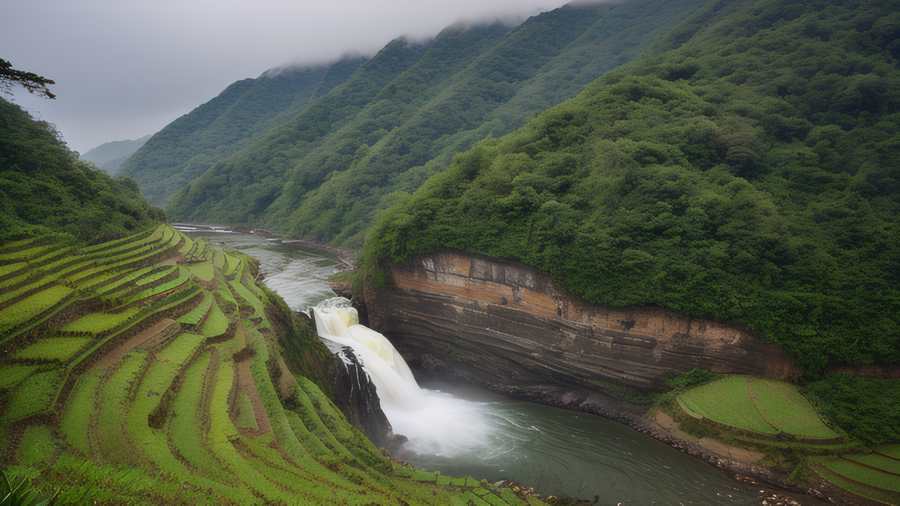
Most visitors to Hunan arrive in Changsha and head straight for the mountain resorts, missing the quiet arc north-west to Yiyang, south to Shaoshan and east through Zhuzhou into the Yanling hills. I drove this loop over seven days in a hired hatchback: eighty kilometres to the lakeside county, two slow days around old alleys and a revolutionary village, a city park in Zhuzhou, a long mountain run to the forest valley at Yanling, and a final motorway leg home. Two things stand out. The first is the contrast between plain and hills: the early days roll over red-soil farmland and open lake country, while the last two climb into folded mountains where the road bends with the ridge and the air turns cool. The second is how straightforward the driving is: motorway for the long hauls, good provincial roads between towns, short local transfers once you settle in for a play day. If you are weighing Foreign Car Entry Self-Drive for this loop, the honest answer is that own-vehicle border permits are a poor fit for a closed 700 km circuit returning to its starting city; Renting a Car in China as a Foreigner at the Changsha station or airport, where the agency desk arranges your licence translation and the customs bond before you reach the exit, gives you the whole arc in one car handed back in the same place.
Trip overview
- Day 1 – Changsha to Yiyang, 80 km: the Ming-Qing old alley and the Royal Lake.
- Day 2 – Yiyang, 0 km on the loop: the alley in daylight and the lakeside walk.
- Day 3 – Yiyang to Shaoshan, 90 km: the former residence and the Dripping Water Valley.
- Day 4 – Shaoshan, 0 km on the loop: the village, the fields and the hillside retreat.
- Day 5 – Shaoshan to Zhuzhou, 75 km: the Shennong City park and the Yan memorial square.
- Day 6 – Zhuzhou to Yanling, 200 km: the Yan Emperor Mausoleum and the Shennong Valley.
- Day 7 – Yanling back to Changsha, 255 km: motorway return, arriving in the city at dusk.
Total 700 km over seven days, an average of 100 km a day; the longest stages are the mountain run to Yanling and the motorway run home, while the middle days stay short.
Day 1 · Changsha to Yiyang, 80 km
Road
Take the Changsha–Zhangjiajie motorway north-west to Yiyang, eighty kilometres, about an hour on a wide, lightly trafficked road with farm trucks rather than commuter traffic. Leave at the Yiyang exit and run a few kilometres of two-lane county road into the seat. The old alley has one signed car park near the entrance; the Royal Lake promenade has marked waterside bays, and both fill after eleven in the busy season, so arrive early.
Sights
The first stop is the Ming-Qing old alley, a riverfront quarter keeping the merchant grain of old Yiyang along the Zi River. Bluestone flagstones are polished smooth by centuries of feet; both sides carry timber-framed shopfronts, grey-tile gable walls and carved doorheads over old money houses and guild halls. An old ferry landing steps down to the water, and in the morning vendors carry baskets of snacks and dried goods in while elders sort vegetables at their doorways. A few kilometres south is Royal Lake, open water with reed banks, willow shade, lotus ponds in summer, a shore path, fishing decks and boardwalks over the water. The evening light off the lake is the best part of the day, and the waterside kitchens cook the lake catch and seasonal greens.
Food
Start with sour-spicy rice noodles for breakfast, the broth topped with pickled beans and minced pork. Lunch near the alley: smoked pork with bamboo shoots, steamed fish with chopped chilli, and local greens, with rice steamed in a wooden bucket.
Where to stay
Stay in the Yiyang county seat close to the alley; small hotels and chain properties have their own yards and the food street is minutes on foot. A lakeside guesthouse is quieter but far from the lanes, so for a walking day book in town.
Day 2 · Yiyang, 0 km on the loop
Road
No driving today. The lake is reachable on foot or by bicycle from the town, the car left in the yard until the evening.
Sights
Leave the alley for daylight. As the market opens, blacksmiths, bamboo-weavers and teahouses come to life; elders play chess in the guild courtyard, dried corn and chilli hang under the eaves. Follow the flagstones to the river embankment, where freight boats work the channel and stone steps drop to the water near the landing. In the afternoon take Royal Lake again: a short boat trip through the reed beds, waterbirds skimming the surface, and a tea hut with pounded tea, rice cakes and roasted pumpkin seeds. Walk the second half of the shore loop; if it rains, settle into an old teahouse in the alley until the cloud lifts. The lanes and lake are meant to be taken slowly.
Food
Lunch at a lakeside kitchen: fresh fish simmered with tofu, dried bamboo shoots braised with pork. The tea hut serves rice cake and pounded tea; back in town for dinner, sour-spicy lotus root tips and cured sausage over rice.
Where to stay
Second night in the same Yiyang lodging, luggage staying put. Ask for a waterside-facing room if available.
Day 3 · Yiyang to Shaoshan, 90 km
Road
South-west from Yiyang to Shaoshan, ninety kilometres: a short motorway section then provincial road over rolling red-soil hills, about an hour and a half with stops. Tractors and three-wheeled carts use this road, so overtake only on open stretches and slow at village entries. The scenic area has dedicated carparks with a shuttle to the residence quarter.
Sights
Shaoshan is Mao Zedong's birthplace village, a southern Hunan hamlet among hills, fields and bamboo groves that still reads like working countryside. Begin at the former residence: a timber-and-earth farmhouse with tiled roof, earthen walls, inner courtyard and the bamboo grove behind kept in place; rooms are restored to their old arrangement, main hall, kitchen and bedrooms open to view, and beyond the courtyard lie the fields and pond of his boyhood. The memorial hall presents the life in text, photographs and artefacts on a chronological line, deserving an hour or two. In the afternoon go to Dripping Water Valley, a retreat hollow behind the village hill: spring water drips from rock into a pool, with a stream path, pavilions and courtyards along the ravine. The woods stay damp and quiet, cooler than outside in summer, and the stone route from mouth to floor takes a slow hour or more.
Food
Try the local braised pork, stewed glossy and rich without being heavy, with farmhouse tofu, dried bamboo shoots and fresh chilli; village eateries portion generously and refill the rice.
Where to stay
Stay in Shaoshan village or just outside the entrance, within walking distance of the residence quarter, parking in the yard. For quiet, book at the foot of the back hill; nights are full of insect sound, and you can walk into the village first thing ahead of the crowds.
Day 4 · Shaoshan, 0 km on the loop
Road
No driving today. The village is walked on foot; the trip back up to the valley can be made on the scenic shuttle or along the stream path. The stone slabs are slippery in rain, so wear grippy shoes.
Sights
Spend the day inside Shaoshan without a timetable. In the morning, while quiet, walk the village again: the old school site, the memorial square, the big camphor tree, and the ridges out to the pond where ducks and egrets work the paddies. Elders sit in the sun at their doorsteps, local speech carrying across the lane. Afternoon, climb back to Dripping Water Valley: the stream path threads through bamboo, the spring runs from a crevice into its pool, pavilions hold stone benches, and the deep hollow gathers mist where the trees shade the sky; a good place to sit still. If time allows, take the rear-hill path to the slope top for a view over village and paddies; in heavy rain, stay near the mouth and listen to the stream.
Food
Lunch: farmhouse cured pork steamed with dried bamboo shoots, stewed free-range chicken, and mountain greens. Dinner at the guesthouse: cured-sausage rice with sour-spicy soup and a low-strength local rice wine.
Where to stay
Second night in the same Shaoshan guesthouse, luggage untouched. The run to Zhuzhou is short tomorrow morning.
Day 5 · Shaoshan to Zhuzhou, 75 km
Road
Shaoshan to Zhuzhou, seventy-five kilometres, motorway then city expressway, just over an hour. The land transitions from hills to plain across mixed urban-rural edges; trucks increase, so watch limits and lights entering the city. Shennong City has large car parks, and the park is walked on foot.
Sights
The fifth stop is Zhuzhou. Shennong City is a Yan Emperor themed park, a lake at its centre ringed by paths, green belts and a medicinal-herb section; a tall statue stands on the rise, and below lie the memorial square and hall, the stone avenue lined with pines where residents exercise and fly kites. The park presents the old farming and herbal-medicine stories as displays, with signs explaining the legends of tasting herbs and planting grain. Teahouses and a boat jetty sit by the lake, the shade a good place to sit through the afternoon. On the other side of the city, an old industrial quarter rebuilt as a walking district keeps its factory walls and chimneys, suited to an evening stroll.
Food
Zhuzhou eats steamed dishes: a row of bamboo steamers with steamed pork, fish and aubergine, plus chilli stir-fried pork and seaweed egg soup; street shops turn food out fast.
Where to stay
Stay in central Zhuzhou near Shennong City, ample parking and a wide choice of meals. Fill the tank tonight before the mountain leg.
Day 6 · Zhuzhou to Yanling, 200 km
Road
Zhuzhou to Yanling, two hundred kilometres, the longest stage: motorway first, then mountain provincial road as elevation climbs. Bends are frequent and loaded trucks share the road; in rain cloud presses onto the surface, so hold speed and sound the horn into hairpins. Mountain stations are sparse, fill up before leaving. The mausoleum and valley each have car parks; valley trails are walked on foot.
Sights
Yanling sits in the mountains of south-eastern Hunan, on the folded ridges near the Jiangxi border. In the morning visit the Yan Emperor Mausoleum, laid out along the hillside: an avenue of ancient cypresses, stone archway, stele pavilion, memorial hall and the tomb rising in sequence, the steps even and the mood solemn. The hall presents the Yan Emperor's story and the history of the ceremonies; from the high point of the mausoleum you can look out over the mountain hollow. In the afternoon enter Shennong Valley, a national forest reserve where a stream cuts through the woods with cascades and waterfalls along its course. The forest holds well-preserved evergreen broadleaf growth, the air stays damp, and the path follows the stream to several waterfall viewpoints. The water runs full in the wet season with heavy spray; summer is several degrees cooler than the city; autumn turns the foliage, and high sections may ice over in winter. Mosquitoes are plentiful in the valley, so take long sleeves; on slippery sections hold the rail and do not leave the waymarked path.
Food
Mountain cooking: stream fish, dried bamboo shoots braised with cured pork, wild mushroom slices with meat, mushrooms from regular village stalls only, not self-picked unknown kinds; finish with wild greens and tofu soup, rice and sweet-potato noodles.
Where to stay
Stay in Yanling county town or at a lodge near the valley gate. The county seat has a wider choice and regular standards; the mountain lodge is closer to the scenery but simpler. With the long return leg ahead, the town is the easier base for an early start tomorrow.
Day 7 · Yanling back to Changsha, 255 km
Road
Yanling back to Changsha, two hundred and fifty-five kilometres, mostly motorway. The mountain section drops to plain first, then the road runs flat and straight; rest once or twice at service areas. The drive takes about three and a half to four hours; time the city entry to avoid the evening peak, arriving around dusk.
Sights
The last day is mainly a return run. Leaving Yanling in the morning, the view shifts from dense forest to hills then plain, streams and villages dropping away; service areas give a chance to stretch the legs. Reaching Changsha late afternoon leaves time for the Xiang river embankment if schedules allow, walking the levee with city lights and bridges over the water. The night market serves rice noodles, stinky tofu and sugar oil cakes to close the circuit. The loop comes full circle: out of Changsha, back to Changsha, with alleys, village, park and valley in one arc.
Food
Last meal at the Changsha night market: sour-spicy rice noodles, stinky tofu, sugar oil cakes, spicy crayfish or stir-fried snails and herbal tea; milder option, steamed dumplings and century-egg pork congee.
Where to stay
The loop closes in Changsha. If you continue by rail or air, stay near the station or the airport; hand the car back at the city desk, which closes later than the airport lot.
Practical tips
- The second and fourth days are full play days, so leave the car parked and do not plan long drives on those mornings.
- The Zhuzhou–Yanling leg and valley roads bend often and share the surface with trucks; in mountain fog and rain, corner slowly and check the weather before the pass.
- Parts of the Shennong Valley trails are unsurfaced; wear walking shoes, take water, and do not leave the marked path in the wet season.
- Hunan cooking is chilli-forward; ask for less heat if you cannot manage it, and cured pork or bamboo shoot dishes can be cooked milder on request.
- Fill up in the county seats: mountain stations are sparse, and fuel prices vary a little between towns.
- For a 700 km loop closed in Changsha, Renting a Car in China as a Foreigner suits this trip better than Foreign Car Entry Self-Drive, since the border paperwork takes longer than the drive itself.
About this route
Seven days for seven hundred kilometres is paced wide on purpose: two play days in Yiyang and Shaoshan, one park day in Zhuzhou, two mountain days in Yanling, driving split around them. With five days, cut the second Yiyang day and run Changsha–Shaoshan–Zhuzhou–Yanling–Changsha. With nine, add a night in Shaoshan or a second hiking day in Shennong Valley; mountain weather changes fast, so check the valley's condition before committing the extra day.
Kilometre figures are what this drive logged against the exit signs. The mausoleum's opening hours, the valley trail status and weather conditions were confirmed at each gate and move with the season.
Route notes by Zara, Yunnan Province International Travel Agency (Group) Co., Ltd.