I drove this loop in late October, when the osmanthus was still hanging on the trees in Xianning and the mountains above Luotian had begun to turn. The whole route is 445 km over eight days, which means most mornings involve an hour or two behind the wheel and the rest of the day on foot. Wuhan is the natural start because the airport and the high-speed station both sit close to the ring road, and a car collected there can be out of the city within twenty minutes. What follows is the day-by-day shape of the drive, with the road surfaces, the food I actually ate and the kind of place I slept in each night.
Trip overview
- D1 Wuhan to Xianning, 100 km, hot springs and osmanthus country
- D2 A full day in Xianning on foot, 0 km
- D3 Xianning to Huangshi, 100 km, Eastern Mountain and Xian Island Lake
- D4 A full day around Huangshi, 0 km
- D5 Huangshi to Huanggang, 40 km, Red Cliff and Yiai Lake
- D6 A full day in Huanggang, 0 km
- D7 Huanggang to Luotian, 75 km, Tiantangzhai and Bodao Peak
- D8 Luotian back to Wuhan, 130 km, motorway most of the way
Total driving is 445 km, and no single day asks for more than two and a half hours at the wheel. The two long legs are motorway, the middle legs are ordinary provincial roads with light traffic, and the mountain stretch into Luotian is the only place where bends slow you down. Fuel is easy everywhere; the last reliable filling station before the mountain road is on the edge of Huanggang.
D1、Wuhan–Xianning 100KM
Road
Out of Wuhan on the third ring road, then the G4 motorway south for about seventy kilometres before leaving at the Xianning exit; the final twenty kilometres are flat two-lane road through villages, with a couple of speed cameras at the entry to town.
Sights
The hot spring belt begins just north of Xianning city, where several pools sit in a shallow valley fed by water that comes out of the ground at about forty-five degrees. I went in at dusk, when the steam sits low over the pools and the hills behind go soft. The osmanthus gardens at Guihua Source are a twenty-minute drive west; late September and October are the season, and the whole lane smells of the flowers drying on mats laid out in the yards.
Food
Xianning is known for its clay-pot braised pork with dried bamboo shoots, and for a clear soup of local river fish with ginger; both are cheap and served in ordinary street restaurants rather than hotel dining rooms.
Where to stay
Guesthouses around the hot spring valley, mostly low buildings with their own small pools; a room with a private bath runs about the same as a mid-range city hotel.
D2、Xianning on foot 0KM
Road
No driving. The car stays in the guesthouse yard, which is the point of the day.
Sights
A morning in the pools, then a slow walk along the Gan River embankment where the old wharf steps are still in use by fishermen. In the afternoon I took a taxi to the osmanthus fields and walked the lanes between the trees; the harvest is done by hand and the pickers stack the blossoms in shallow baskets. The old town near the north gate has a small museum on the tea trade that once went through this river port.
Food
Breakfast is rice noodles in a pork bone broth with pickled beans; lunch was a plate of stir-fried lotus root with dried chillies, which is the local way with the root.
Where to stay
Same guesthouse, second night.
D3、Xianning–Huangshi 100KM
Road
Provincial road east through farms and small cement towns, then a stretch of the G56 with light traffic; the approach to Xian Island Lake is a narrow road with passing places, and I met almost nothing on it.
Sights
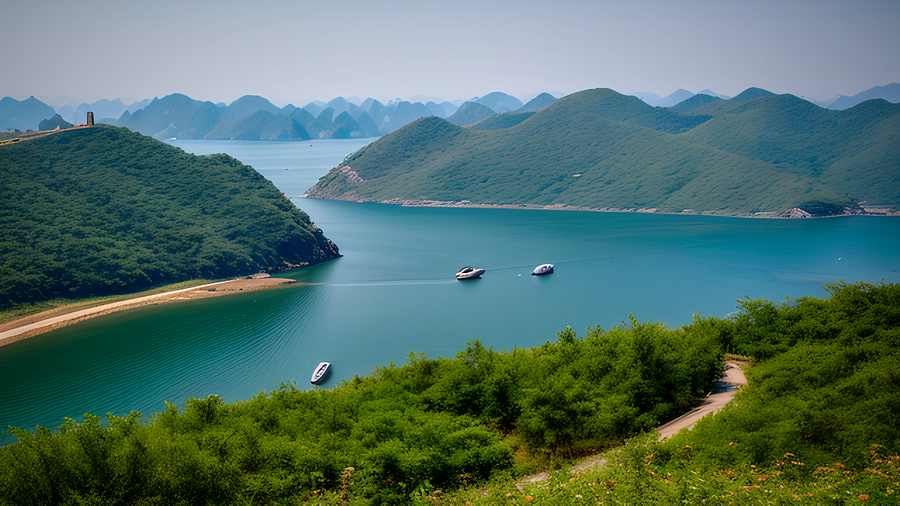
Eastern Mountain rises straight out of the plain east of Huangshi, a wooded hill with a Buddhist temple halfway up and a stairway of polished stone that takes about forty minutes. From the top the industrial city and the Yangtze are both visible. Xian Island Lake, an hour further south, is a drowned valley with hundreds of green islands; boats run from the jetty to the main viewpoint, and the water is clean enough that the locals swim from the concrete steps in summer.
Food
Huangshi cooks its fish with a fermented bean paste that gives a deep savoury edge; the local silver carp steamed with ginger and scallion is the thing to order.
Where to stay
A hotel in the city centre near the lake road, with parking in the basement; simple, clean and quiet after ten at night.
D4、Huangshi on foot 0KM
Road
No driving again; the lake road is walked and the boats do the rest.
Sights
The morning boat to the islands takes about half an hour and stops at two viewpoints, one of them a short climb to a pavilion that looks back over the whole drowned valley. Back on shore, the old industrial quarter along the river has a converted cement works that now holds a small exhibition on the mines; the concrete silos are still standing and the scale of them is worth the detour. In the evening the lakeside promenade fills with families and the food stalls light up.
Food
Evening stalls sell grilled small fish with cumin and a bowl of rice wine soup with fermented rice; I ate both standing up by the water.
Where to stay
Same hotel, second night.
D5、Huangshi–Huanggang 40KM
Road
A short hop across the Yangtze bridge and up the north bank; forty kilometres of city edge and riverside road, twenty-five minutes outside the rush hour.
Sights
Red Cliff in Huanggang is the riverside cliff that carries the name of the famous battle, with a hall of stone tablets and a walkway along the water where the current is visibly fast. Yiai Lake is a long park in the middle of the city, with a boardwalk through reed beds and a pagoda on the far bank; the light at sunset comes straight down the water. Both are city sights rather than wilderness, and both are best in the late afternoon.
Food
Huanggang does a steamed pork with rice flour that is lighter than the Hunan version, and a fish ball soup with white pepper; the market street behind the lake has several stalls doing both.
Where to stay
A riverside hotel with rooms facing the bridge; the upper floors are quieter because the road below carries night traffic.
D6、Huanggang on foot 0KM
Road
No driving. The old town is flat and walkable, and the lake park is a fifteen-minute walk from the hotel.
Sights
The morning went to the old streets behind Red Cliff, where the timber shopfronts have been left alone and the smell of soy sauce from a small fermenting yard carries down the lane. After lunch I walked the full circuit of Yiai Lake, about nine kilometres on the boardwalk, stopping at the reed beds where the birdwatchers set up their scopes. There is a small museum of the Su Dongpo years in the city, with facsimiles of the letters he wrote while exiled here.
Food
Lunch was a bowl of noodles with braised beef and pickled greens in a shop with no sign, and dinner a plate of river shrimp fried with salt and chilli.
Where to stay
Same riverside hotel, second night.
D7、Huanggang–Luotian 75KM
Road
The mountain road begins about twenty kilometres east of the city; after that it is seventy-five kilometres of climbing bends with concrete barriers, some broken edges and one long section of roadworks where a slope is being pinned. Drive it in daylight and keep to your own side.
Sights
Tiantangzhai is the high point of the Dabie range on this side, a forest park with a cable car partway up and a ridge path that runs for several kilometres above the tree line. The waterfalls below the ridge are the reason most people come, and in autumn the maples along the stream turn properly red. Bodao Peak is the sharp ridge an hour west, a narrower walk with iron chains on the steep parts and a view over three provinces from the top.
Food
Mountain food here is simple: cured pork with dried bamboo shoots, wild garlic fried with egg, and a chestnut stew that appears in autumn.
Where to stay
A farmhouse guesthouse inside the forest park boundary, with wood floors and a stove in the common room; hot water comes from a tank and is best taken early.
D8、Luotian–Wuhan 130KM
Road
Back down the mountain road to the plain, then the G42 motorway west; 130 km with a toll section, and the traffic thickens from about sixty kilometres out as you enter the Wuhan ring.
Sights
Nothing scheduled on the last day except the descent itself, which is the best drive of the week: the valley opens up below you and the terraced fields step down to the river. If time allows, stop at the small reservoir halfway down for a last look, then join the motorway.
Food
A bowl of hot dry noodles at a motorway service area near Wuhan is not the real thing, so I waited and ate in the city instead.
Where to stay
A city hotel near the airport road for an early flight, or the same riverside place in Huanggang if the drive is split.
Practical tips
- Fuel up before the mountain road at Huanggang; the stations inside the forest park are few and close early.
- The hot spring guesthouses fill at weekends with visitors from Wuhan, so a weekday arrival gets a better room for the same money.
- Mountain roads in the Dabie range are narrow with blind bends; a small car is easier than a large one and headlights should be on by four in the afternoon in autumn.
- Cash is still useful at the small stalls inside Tiantangzhai, where card machines do not always work.
- The osmanthus season is short, roughly late September to the end of October, and the gardens are quiet outside it.
- Foreign Car Entry Self-Drive on this loop is straightforward, and Renting a Car in China as a Foreigner needs only the temporary licence, the passport and the vehicle papers kept in the car for checks.
About this route
Eight days, 445 km, four bases: Xianning, Huangshi, Huanggang and Luotian. Best from late September to November for the osmanthus and the autumn colour, or April for the mountain flowers. Two long motorway legs and one mountain road; the rest is short and easy.
Route notes, distances and road conditions were checked on the ground in October. For documents, customs formalities and vehicle papers, the counters at Wuhan Tianhe arrivals and the Hubei traffic management office handle enquiries directly.
Route notes by Zara, Yunnan Province International Travel Agency (Group) Co., Ltd.