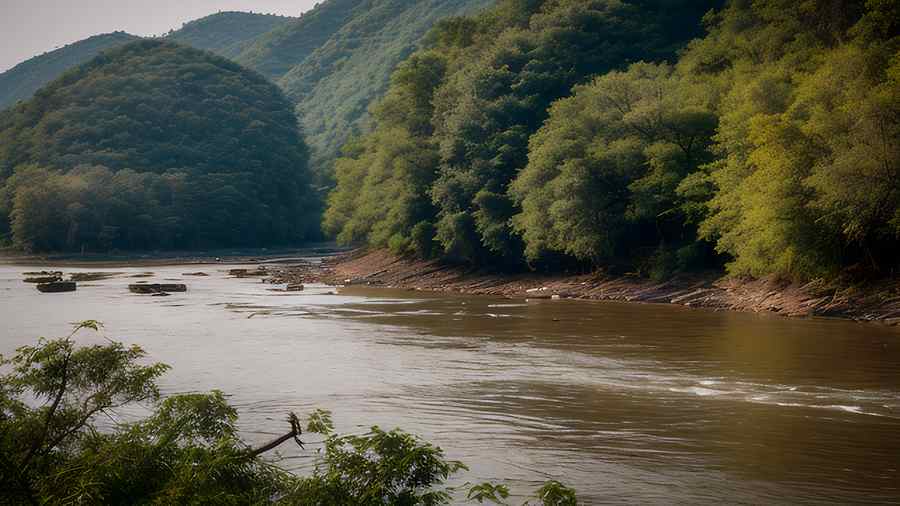
The loop circles the northern bank of the Yangtze, and every leg is under a hundred and sixty kilometres. Wuhan is the hinge: a city of lakes and bridges where the car is more trouble than it is worth inside the ring road, so it stays parked and the metro does the work. Xiaogan is ninety kilometres north-west. Huanggang is a hundred and fifty east. Xianning is a hundred and twenty south. Chibi is sixty-five beyond that, and Wuhan is fifty back. Add two days on foot and you have seven. The roads are flat and fast, four lanes mostly, with the usual mix of lorries and electric scooters; the river bridges are the only places where the traffic genuinely stops.
Trip overview
- 475 km in seven days, no leg over 150 km
- Two zero-km days: one in Wuhan, one at the hot springs
- River cliffs, a red-stone battlefield, and a lake city
- Autumn is best; summer is hot and the lakes are crowded
I keep Wuhan at the end rather than the start. Arriving with the car, parking it and forgetting it for two days is the only sane way to see that city.
D1、Wuhan—Xiaogan 90KM
Road
Ninety kilometres north-west on the expressway, an hour, one toll section. Leaving Wuhan in the morning means the ring road, which is slow between seven and nine.
Sights
Wuhan in the early morning before the drive: the Yellow Crane Tower is the postcard, but the riverbank below it is the better hour, with the bridge, the barges and the fishermen. Xiaogan in the afternoon: the filial-piety sites that give the town its name, the carved stone tablets in the park, and the old street behind the county office where the wooden shopfronts survive.
Food
Wuhan breakfast is hot dry noodles, sesame paste and pickles, eaten standing. Xiaogan in the evening: lotus root soup, which is the local signature, and a plate of the town's rice cakes.
Where to stay
Xiaogan town centre, with parking; the hotels on the ring road are cheaper and the walk into the old street is twenty minutes.
D2、Xiaogan—Huanggang 150KM
Road
A hundred and fifty kilometres east, mostly four-lane, with one stretch of road works near the river. Lorries dominate after ten; overtaking needs patience.
Sights
The drive crosses the river at a long bridge with a view up and downstream. Huanggang's cliff is the afternoon: red sandstone above the water, the pavilion on top, and the inscriptions cut into the rock face. The lake west of town is a long shallow sheet with a boardwalk and a pagoda.
Food
Lunch at a riverside place before the bridge: fish from the river, steamed with ginger. Huanggang in the evening: duck, and a soup of the local greens.
Where to stay
Huanggang, near the cliff, with a car park. The old-town guesthouses are down lanes too narrow for a car.
D3、Huanggang—Xianning 120KM
Road
A hundred and twenty kilometres south, half expressway, half provincial road through market towns. Speed limits drop to forty through each town and the cameras are real.
Sights
A morning on the cliff and in the small museum beside it, which explains the poet who made the place famous. Then the drive south, and Xianning's hot spring country in the afternoon: the pools in the bamboo, the old stone basins at the spring heads, and the valley of osmanthus that runs for a kilometre above the town.
Food
Lunch in a market town on the road: noodles with preserved beans. Xianning in the evening: clay-pot chicken and a sweet rice wine.
Where to stay
A hot spring hotel with parking; the pools are the point, and the ones with a car park are on the edge of town.
D4、Xianning on foot 0KM
Road
No driving. The car stays at the hotel and the day is pools, valley and town on foot.
Sights
The springs in the morning, when the water is fresh and the pools are empty. The osmanthus valley after that: a stone path between old trees, a small tea plot at the bottom, and a pavilion halfway where the villagers sit. In the afternoon the old town's one street, with the wooden houses and the shop that sells nothing but bamboo baskets.
Food
Lunch at the valley entrance: wild greens, tofu, and rice cooked in a clay pot. Dinner at the hotel, which is usually the only kitchen open after eight.
Where to stay
Same hotel, second night.
D5、Xianning—Chibi 65KM
Road
Sixty-five kilometres west, a provincial road along the river with one low pass. An hour, unless a market day clogs the town in the middle.
Sights
Chibi is a small town with a large story: the red cliff above the Yangtze where a fleet was burned, the reconstructed camp on the slope, and the museum with the arrowheads and the scale models of the ships. The cliff path itself is short and steep, with the river wide and brown below.
Food
Fish is the whole menu here: braised, steamed, and a soup with pickled chillies. The riverside restaurants keep their tanks outside and you point.
Where to stay
Chibi town, with parking. The riverside inns are prettier, but the road down to them floods in a high river.
D6、Chibi—Wuhan 50KM
Road
Fifty kilometres back north-east on the expressway, forty minutes, one toll. Entering Wuhan from the south avoids the worst of the ring-road traffic.
Sights
A slow morning at the cliff before the coaches arrive, then the drive. In Wuhan, park the car at the hotel and take the metro: the riverfront at dusk, the old concession district with its stone banks and plane trees, and the night market at the university end of the city.
Food
Lunch on the road at a service area, which in this province is better than average. Dinner in Wuhan: kebabs, cold noodles, and a bowl of the local rice wine.
Where to stay
Wuhan, outside the ring road, with a garage. Inside the ring the parking is expensive and the lanes are narrow.
D7、Wuhan on foot 0KM
Road
No driving. Metro and feet; the car stays in the garage until you leave.
Sights
The East Lake greenway in the morning, twenty kilometres of path with no cars, and the option of a shared bicycle. Then the provincial museum, which is the best collection in central China: the bronze bells alone are worth an hour, and the lacquerware is better than the photographs.
Food
Breakfast: hot dry noodles again, at a different stall, because everyone has an opinion. Lunch: a bowl of soup with rice cakes near the museum.
Where to stay
No hotel needed if you leave in the evening.
Practical tips
- Wuhan's ring road is a car park between seven and nine and again after five. Time the crossings around it.
- Town speed limits really are enforced at forty. The cameras are on the entry signs, not hidden.
- Hot spring hotels fill on weekends with local families; a midweek night is half the price and twice as quiet.
- Chibi's cliff path is closed after heavy rain; ask at the gate before driving out.
- The river bridges can be closed to high-sided vehicles in strong wind; the diversion adds forty minutes.
- Keep the Foreign Car Entry Self-Drive papers and the Renting a Car in China as a Foreigner contract in the door pocket: this loop crosses two city limits where checks are routine.
About this route
Seven days, 475 km, five towns and two days on foot. Nothing here is a long drive; the loop is about the river, the springs, and the fact that Wuhan is best seen without a car at all.
Distances and times are from my own log. Yunnan Province International Travel Agency (Group) Co., Ltd. answers port entry, temporary plate and route questions on weekdays; contact Zara.
Route notes by Zara, Yunnan Province International Travel Agency (Group) Co., Ltd.