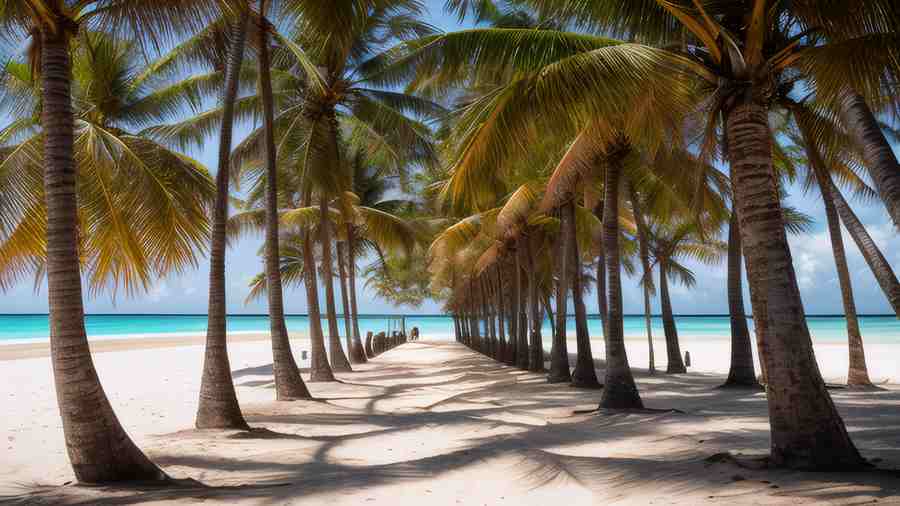
Most visitors fly to Sanya and never come north. That is a mistake, because the island's older and stranger life is on this arc between Haikou and Wenchang. I drove it as a loop of five days with a hired hatchback, 110 kilometres out to the coast road, a day and a half around Boao, then inland to Ding'an, back east to the coconut country and home along the northern expressway. Two things surprise people here. The first is that Hainan's motorways carry no toll booths; the cost sits in the price of fuel, so the island's petrol is dearer than the mainland's and the driving, which looks long on a map, is cheap in money and quick in time. The second is how green and empty the east is compared with the resort coast, and how much of it is still working country: fish fry, coconuts, cold mineral springs, rice paddies with herons in them. If you are weighing Foreign Car Entry Self-Drive for this loop, the honest answer is that own-vehicle border permits are a poor fit for an island you will cover in 320 kilometres; Renting a Car in China as a Foreigner at the Haikou station or airport, where the agency desk holds your licence translation and the customs bond before you reach the exit, gives you the whole east coast in four days and a car you hand back in the same place.
Trip overview
- Day 1 – Haikou to Boao, 110 km: the forum site on East Isle and the sand spit at the river mouth.
- Day 2 – Boao, 0 km on the loop: up the Wanquan by boat, the town's arcade street and the opera stage.
- Day 3 – Boao to Ding’an, 65 km: the Taoist mountain, the lake park, and the cold spring.
- Day 4 – Ding’an to Wenchang, 60 km: the Confucian temple, the Qifu arcade, then the coconut coast.
- Day 5 – Wenchang back to Haikou, 85 km: the rocket town and the northern shore.
Total 320 km over five days, an average of 65 km a day, with no stage over two hours. Hainan's motorways are unbarriered, so the only cost is fuel; fill up in the county seats, where the price is a little lower than at the coast.
Day 1 · Haikou to Boao, 110 km
Road
Take the G98 east out of Haikou and leave it at the Boao exit: 110 km, one hour and a quarter on a road that is wide, new and lightly trafficked. There is no toll station, so the driving feels unrealistically cheap once you have paid for fuel. The exit road down to the town is another ten kilometres of good two-lane. Boao has one car park at the visitor centre for the forum island and one at the sand spit; both are signed and both fill by eleven.
Sights
Boao is a river-mouth town that was chosen in 2001 as the permanent site of an international forum, and the choice was made precisely because it was small and far from anywhere: the point was to give delegations a place that felt removed. East Isle, the island at the junction of three rivers and the sea, now carries the conference centre, a set of hotel pavilions and the exhibition halls, and it can be visited between summits; you can walk the deck outside the plenary hall and see the room where the leaders' dialogue takes place, and the guides will tell you which seat belongs to which delegation. More memorable, because it is geography rather than diplomacy, is the Yudai sandbar a few kilometres downstream: a barrier beach eight and a half kilometres long, thrown up by the river and held by the current, with the fresh water of the Wanquan on one side and the South China Sea on the other, and a line of casuarina along its back. At the tip there is a platform and a set of ferries, and the water on the two sides differs in colour enough to be seen in the same photograph. Between the two sites, the old town has a small arcade street of 1930s shopfronts, which is where the returned overseas Chinese from Malaya and Siam built, and where the place still gets its coffee.
Food
Eat river fish, not sea fish. The local plate is a mandarin fish steamed with ginger and vinegar, a pot of small river shrimp fried with chilli, and a bowl of the noodle soup the town serves from carts in the evening. For breakfast, ask for the rice cake and coconut milk; the island makes it everywhere and here it is thickest.
Where to stay
Stay in Boao town rather than on the island: the guesthouses on the arcade street and along the north bank cost a fraction of the resort rooms and put you at the ferry in five minutes. Every one of them will take your car, and the river-side yards have space.
Day 2 · Boao, 0 km on the loop
Road
No driving today. If you want to move, the Wanquan boat runs upriver from the town quay in the morning, and the round trip is an hour and a half on the water with the car left in the yard.
Sights
The river is the thing to take slowly. The Wanquan is the island's longest clean water, rising in the central mountains and reaching the sea here, and on a still morning you can see the water hyacinth, the herons working the banks and the villages set back behind lines of areca and coconut; the song everyone in China knows about the river's clear water is not a tourist slogan but an old ballet score, and the river is exactly as it says. Upstream, the stops are a small park with the island's boat shapes, a bridge where the locals fish after rain, and the site of the former customs landing. Back in town, walk the arcade again in daylight, when the shutters are off and you can see the timber and the tile; find the temple with its inscribed steles; and in the evening go to the stage where the local opera rehearse, which is Hainan's own form, sung in the island dialect, with a drum and a small gong, and a repertoire that borrows from Cantonese opera but keeps its own tunes. If there is a launch at the spaceport that week, Boao is where the coast hotels fill with photographers, and the forum island closes early.
Food
Breakfast at the northern end of the arcade, which sells rice noodles in a pork and peanut broth; lunch at a river kitchen, the same fish as yesterday but cooked as a sour soup with wild basil; and the local cold dessert, shaved ice with beans and coconut, sold from a stall that has been in the same family for three generations.
Where to stay
Second night Boao, same guesthouse. Ask for a room with the window over the water so you can see whether the boats have gone out before you get dressed.
Day 3 · Boao to Ding’an, 65 km
Road
North-west across country on the provincial road and a short section of expressway, then the run up to the mountain gate. 65 km, about ninety minutes with stops. The road is flat and straight but the traffic is slower than on the motorway, and tractors and milk vans use it; overtake on the open stretches and not at the villages. At Wenbi Peak the car park is large and free, with a shuttle to the gate.
Sights
Ding'an is one of the four old counties of the island's north-east, and it keeps two kinds of attraction. The first is Wenbi Peak, a limestone hill that has been the site of a Southern-lineage Taoist tradition since the twelfth century and has now been rebuilt as a proper complex on the rock: the hall of the founder, the pagodas, a wall of carved tablets and a sequence of gates going up to the summit, which is called the Brush Peak because the shape, seen from the plain, is an upended writing brush. The climb is paved and short, and the views across the flat paddy country are the reason to do it in clear weather. The second is water of two sorts. Nanli Lake, half an hour north, is a reservoir ringed with a park and a walk, with areca palms along the shore and birds on the far bank, the kind of place the people of the county come to on a Sunday with a mat. The cold spring at Jiuwentang, near Longhe, is a genuine oddity: a spring of mineral water that runs cold out of volcanic rock in the middle of the tropics, which the county has turned into a shallow bathing channel where you sit in the water up to your knees while the villagers wash vegetables downstream; it is the only such spring in the tropics of China and it is a good hour. Between the two sites, the old county seat has a Confucian temple, a wall of exam memorials and the lanes that produced more successful candidates in the Ming than its size explains.
Food
Ding'an's claim is a black pig raised on the county's crop residue, and its cooking is roasting and steaming with garlic and bean paste; the other is salted noodles, the county dish of rice noodles dressed with rendered fat, dried shrimp and a spoon of dark sauce. At Longhe, eat at the spring-side kitchens, which put out a pot of river snails and a plate of the local greens with oyster sauce.
Where to stay
Stay in Ding'an county seat, near the temple, where the hotels are cheap and the food street is under a window. If you would rather be at the lake, there is a resort on the shore with a boat jetty and more space than anyone uses.
Day 4 · Ding’an to Wenchang, 60 km
Road
East and south on good provincial road, then the coast highway to Wencheng. 60 km, eighty minutes. The final approach to Dongjiao is a road through coconut groves on both sides, with no street lighting after dark and a great many scooters; do not save this leg for the evening.
Sights
Wenchang is the county of scholars, sea traders and rockets, and it is the east coast at its least built over. Begin in the town with the Confucian temple, the best preserved in the province, founded in the Yuan and rebuilt many times, whose courtyard holds the stone archway, the Hall of Achievement and a grove of old banyans; beside it, the museum explains why this place produced so many degree-holders and so many overseas Chinese. Then drive north to Qifu, a trading port whose arcaded street was built by money from Malaya and Thailand in the 1920s and 1930s, with the shop fronts, the family halls and the old ferry landing intact; on market mornings the arcade is a working street, selling fish, salted vegetables and betel. On the eastern finger of the coast, the moon bay and the stone park at Tonggu are the best walk on this loop: a national reserve whose headland drops into deep water, with a shoreline of granite boulders thrown down by typhoons, and a view along the whole curve of the bay. Then the rocket country. The launch site at Longlou, on the south-east shore, is China's lowest-latitude spaceport, chosen because heavy stages can be brought in by sea and because spent hardware falls into water; the fenced area is closed, but the town has an exhibition hall, and on the beach at Qishui you can see the tower across the headland. Book the last days of the loop around a launch if you can: the roads fill, the hotels sell out and the whole coast turns to watch the sky.
Food
You cannot leave Wenchang without eating the chicken for which the island is named, one of China's four: the bird is boiled and served cold with a bowl of the broth and rice cooked in fat, and the good place is a market restaurant rather than a resort. At Qifu, eat the sour broth made from the vinegar lees of the local wine, with shellfish and tripe in it; on the coconut coast, drink the young nut and eat the flesh with a spoon.
Where to stay
Stay at Wencheng, the county town, or on the coast at Longlou if a launch is due; Longlou has small hotels and one or two good guesthouses, and everyone there watches the same sky from the same beach.
Day 5 · Wenchang back to Haikou, 85 km
Road
Take the northern coast road or the expressway home; 85 km, about ninety minutes, and the coastal version is worth the extra half hour. The road west from Longlou passes Baohu Point, where the current turns, and then a chain of fish-fry villages whose yards are full of white tubs.
Sights
Do not rush this. On the north shore, the bay at Jishui is where the sand and the dead coral make the shallowest and most photographed water on the loop, and at low tide you can walk far out. Fengjiawan, a little further, is the village that supplies most of southern China with fish fry: the trade is small, precise and almost entirely a family affair, and the museum of the coast in the county town explains it better than any signpost. Continue west to the old port of the island's northern trade, where the customs buildings, the missionary house and the arcade street are still standing, and where you can eat oysters on the quay. Arriving in Haikou in the afternoon leaves you time for the city's own reason for being here: the Qilou old town, a grid of 19th-century trading arcades with carved fronts, now slowly repaired, with the temple of the city's founder at its centre; the museum, which is good on the island's maritime trade; and the evening food streets, where the whole island eats outside.
Food
Last lunch on the coast: the oysters, the crab in ginger, and the fish-fry soup the fry sellers make from their own catch. Finish in Haikou at the night market, where the food is the island in miniature, and buy the cold coconut jelly to take to the airport.
Where to stay
The loop closes in Haikou. If your onward travel is by air, sleep in the old town and leave the car at the agent's city desk, which is cheaper than the airport lot and open later.
Practical tips
- No toll booths on Hainan's motorways: fuel is the cost, and island fuel is dearer than the mainland's.
- The forum island closes to visitors during summit weeks and during launches; check the notice at the gate.
- Boao's best light is at seven on the sand spit, when the two waters still look different and no boat has crossed.
- Wenbi Peak has a shuttle from the car park; the walk up is short but the queue for the cart is not.
- Longlou's hotels sell out two days before a launch; if you are chasing one, sleep in Wencheng and drive down early.
- For 320 km like this, Renting a Car in China as a Foreigner beats Foreign Car Entry Self-Drive outright, since the border paperwork cannot be finished in the time you have.
About this route
Five days is generous for 320 kilometres, and deliberately so: the point of this loop is the slow river, the cold spring and the coast where the rockets go up. If you have three days, cut day two and drive the loop as Boao, Ding'an, Wenchang, Haikou. If you have seven, add the volcanic county to the west of Haikou and the old port towns to the north-west, which are the same island without the tourists.
Kilometre figures are what this drive logged against the exit signs. The forum island's opening days, the launch schedule and the spring's bathing hours were confirmed at each gate and move with the season.
Route notes by Zara, Yunnan Province International Travel Agency (Group) Co., Ltd.