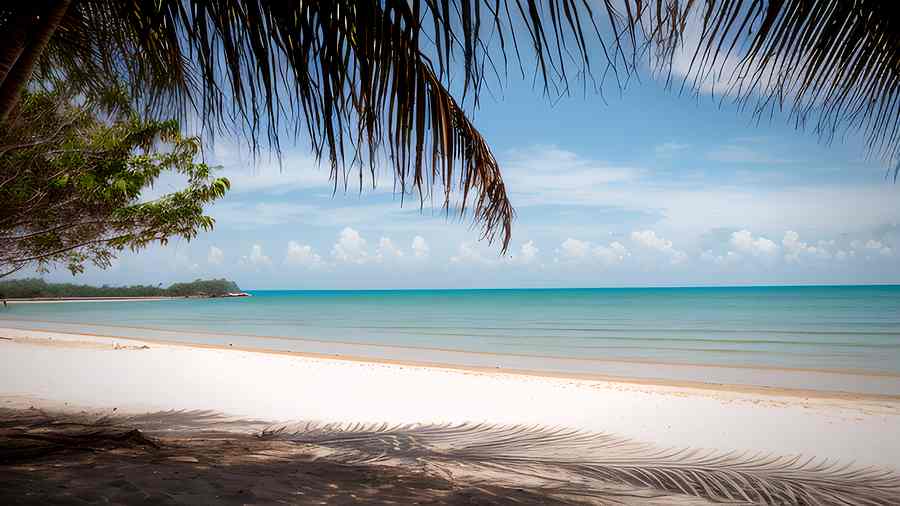
I drove this in early November, when the north-east monsoon had started and the afternoons were still hot but the mornings were bearable. Most people who rent a car in Hainan drive the coast road and stop at the resorts; this loop goes inland instead, through the coffee hills, up the east coast to the surf towns and then into the centre, where the roads climb through rainforest and the nights are cool. Distances are short, 495 km over eleven days with five days of no driving at all. What follows is the day-by-day record.
Trip overview
- D1 Danzhou to Chengmai, 60 km, mangrove bay and coffee country
- D2 A day around Chengmai, 0 km
- D3 Chengmai to Boao, 90 km, the river mouth and the sand spit
- D4 A day at Boao, 0 km
- D5 Boao to Wanning, 60 km, surf beach and the tropical garden
- D6 A day at Wanning, 0 km
- D7 Wanning to Baoting, 95 km, rainforest and the Li villages
- D8 A day around Baoting, 0 km
- D9 Baoting to Wuzhi Shan, 30 km, the mountain and the gorge
- D10 Wuzhi Shan to Ledong, 45 km, the west coast
- D11 Ledong back to Danzhou, 115 km
495 km in total, with the longest day at 115 km. Roads are good throughout, and the only slow stretch is the climb into the hills above Baoting, which is steep and winding. Fuel is available in every town. Tolls are low and most of the inner roads are free.
D1、Danzhou–Chengmai 60KM
Road
East out of Danzhou on a provincial road, 60 km of flat farmland with one bridge over a river; the lane to the mangrove bay is narrow but paved.
Sights
The mangrove bay at Chengmai is a shallow inlet where the trees stand in the water on stilt roots, with a boardwalk over the mud and a small boat that takes visitors along the channel. At low tide the roots are fully exposed and the mud is alive with crabs. The coffee town of Fusheng is a lane of low buildings with roasting sheds behind, and the smell of the beans is in the street from morning.
Food
Chengmai coffee is served strong and sweet in small cups, with a plate of fried peanuts; the local dish is a bowl of rice noodles in a clear pork broth.
Where to stay
A guesthouse in the coffee lane with rooms above the shop, a courtyard and a kettle always on.
D2、Chengmai on foot 0KM
Road
No driving; the coffee lane and the bay are within a short taxi ride.
Sights
The morning went to the bay again, this time on the boat, which runs up the channel between the mangroves for about a kilometre and returns; the trees close over the water and the light comes through green. In the afternoon the roasting sheds, where the beans are turned in a drum over wood and the cooling tray is a wide basket. The old street in the town has a few shophouses with wooden shutters and a temple at the end with a stone lion.
Food
A second cup of coffee at the roastery, and a plate of steamed buns with coconut filling in the afternoon.
Where to stay
Same guesthouse, second night.
D3、Chengmai–Boao 90KM
Road
East on the highway for 90 km, with one toll section and light traffic; the exit for Boao leads through a town and then along the river.
Sights
Boao sits where the Wanquan river meets the sea, and the conference centre is a low building on the bank with a garden and a jetty. The sand spit is a narrow bar of white sand running out into the mouth, with the river on one side and the sea on the other, reached by a short boat ride. Standing on the spit, the two waters meet in a line of foam that shifts with the tide.
Food
Boao is known for a dish of duck stewed with coconut and for small crabs fried with garlic; both are served in the riverside restaurants.
Where to stay
A guesthouse on the river with rooms facing the water and bicycles for guests; quiet after the day visitors leave.
D4、Boao on foot 0KM
Road
No driving; the town is small and the jetty is a ten-minute walk.
Sights
The morning boat to the sand spit again, then a walk along the river bank where the fishing boats are moored and the nets are hung out to dry. In the afternoon the old street, with its shophouses and a small museum on the overseas Chinese families who left from this port. The river mouth at dusk is the thing to wait for: the tide turns, the foam line moves and the birds come in over the water.
Food
Coconut duck at a riverside table, and a bowl of rice with steamed fish and ginger.
Where to stay
Same guesthouse, second night.
D5、Boao–Wanning 60KM
Road
South on the coast road for 60 km, with the sea visible for much of the way; the last stretch to the surf beach is a lane through coconut groves.
Sights
Riyue Bay is a long crescent of beach with a reef at each end, and in November the swell arrives from the north-east, so the surfers are out at first light. The tropical garden at Xinglong is a working plantation with avenues of palms, a spice section and a small museum of the rubber industry, and the walk through takes about two hours. The garden's oldest trees are marked with their planting year.
Food
Wanning does a chicken cooked in coconut milk with ginger, and a bowl of rice noodles with a thick fish sauce.
Where to stay
A guesthouse a street back from the beach, with a courtyard and boards for guests who surf.
D6、Wanning on foot 0KM
Road
No driving; the beach and the garden are a short ride apart.
Sights
Sunrise on the beach, when the fishing boats come in and the surfers are already in the water. Then the garden, which is best walked slowly: the spice beds, the rubber trees with their collecting cups, and the avenue of palms that runs to the ridge. In the afternoon the small harbour, where the boats are drawn up on the sand and the catch is sorted in the shade.
Food
A bowl of noodles with fish sauce at the harbour, and a plate of grilled squid in the evening.
Where to stay
Same guesthouse, second night.
D7、Wanning–Baoting 95KM
Road
Inland on a provincial road that climbs into the hills; 95 km with a long ascent and a series of bends, and the surface is good throughout.
Sights
Yanuoda is a rainforest park in a valley, with a boardwalk through the trees, a suspension bridge over a stream and a set of pools at the top where the water is cold and clear. The Li village of Binglanggu is a cluster of timber houses on stilts with a museum of the tribal textiles, and the women still weave on the looms in the yard. The rainforest smells of wet leaves and the noise of insects starts before dark.
Food
Baoting cooks a chicken in a clay pot with wild herbs, and a dish of fern shoots with garlic.
Where to stay
A guesthouse at the edge of the rainforest with rooms on stilts; cool at night, and the frogs are loud.
D8、Baoting on foot 0KM
Road
No driving; the park entrance is a short walk from the guesthouse.
Sights
The boardwalk again in the morning, when the light comes down through the canopy in columns and the birds are active. Then the pools at the top, where the water runs over smooth rock and the local families come up for the day. In the afternoon the Li village, where the weaving is demonstrated and the indigo dye is prepared in a jar; the museum upstairs has a collection of looms and a room on the tattoo traditions.
Food
A bowl of rice with stewed pork and wild herbs, and a plate of fried banana flower.
Where to stay
Same guesthouse, second night.
D9、Baoting–Wuzhi Shan 30KM
Road
Thirty kilometres on a climbing road with tight bends; the surface is good but the gradient is constant, and the last stretch into the town is narrow.
Sights
Wuzhi Shan is the highest mountain on the island, and the town below it is a small place of markets and guesthouses with a river running through. The rainforest reserve on the slope has a trail to a waterfall and a canopy walkway, and the air at the top is cool enough for a jacket. The red canyon nearby is a gorge of red rock with a stream at the bottom and a path along one wall.
Food
Mountain food: bamboo rice cooked in a tube, wild honey, and a soup of river fish with sour herbs.
Where to stay
A guesthouse in the town with rooms facing the mountain; simple, and the owner drives guests to the trailhead.
D10、Wuzhi Shan–Ledong 45KM
Road
Down the mountain and west for 45 km on a provincial road; the descent has bends and the plain road is fast.
Sights
Longqi Bay is a long beach on the west coast with a reef offshore and a line of casuarina trees behind it, and in the afternoon the wind comes onshore and the water is choppy. The hill called Maogong Shan has a profile in the rock that is said to resemble a figure lying down, best seen from the road at a marked viewpoint. The coast road south of Ledong runs through salt pans, where the workers rake the crystals into white cones.
Food
Ledong does a salt-baked fish, and a bowl of rice with braised pork and pickled mustard greens.
Where to stay
A guesthouse near the beach with rooms facing the water and a yard of casuarina shade.
D11、Ledong–Danzhou 115KM
Road
The long run back: 115 km north-west on the highway, with one toll section and a service area.
Sights
Nothing scheduled. The road crosses the dry western plain, past mango orchards and salt pans, and the hills of Danzhou appear in the afternoon haze. Near Danzhou there is a stretch of old volcanic country with low cones among the fields.
Food
A bowl of noodles at the service area; Danzhou has better, so I waited.
Where to stay
A hotel near the Danzhou station for an early train, with parking and a laundry service.
Practical tips
- The climb into the hills above Baoting is steep and continuous; keep the car in a low gear on the descents rather than riding the brakes.
- Mangrove boardwalks and the sand spit are best at low tide, so check the tide table before setting out.
- The rainforest parks charge entry and the canopy walkway is separate; tickets are cheaper bought at the gate than through a hotel.
- Rain comes hard and briefly in November; the roads drain quickly but the mountain lanes carry water for an hour afterwards.
- Fuel is easy in every town, but stations in the central hills close early, so fill up before climbing.
- Foreign Car Entry Self-Drive on Hainan is straightforward, and Renting a Car in China as a Foreigner needs the temporary licence, the passport and the vehicle papers kept in the car.
About this route
Eleven days, 495 km, seven bases: Chengmai, Boao, Wanning, Baoting, Wuzhi Shan, Ledong and Danzhou. Best from November to March, when the north-east monsoon cools the island. Five days with no driving at all, and one climb into the hills.
Distances, road surfaces and tide arrangements were checked on the ground in November. For documents, customs formalities and vehicle papers, the Hainan traffic management office in Haikou and the port counters answer enquiries directly.
Route notes by Zara, Yunnan Province International Travel Agency (Group) Co., Ltd.