I drove this over the second half of October, when the typhoon season was over and the hills were still warm. Fujian suits a loop: the coast road is fast, the inland roads follow river valleys, and the distances break neatly into fifteen days of three to five hours. 1,364 km sounds like a lot; spread over two weeks it is 90 km a day, and six of those days involve no driving. What follows is the day-by-day record: surfaces, what I actually saw, what I ate and where I slept.
Trip overview
- D1 Fuzhou to Meizhou Island, 128 km, the temple and the sound of the tide
- D2 A day on Meizhou Island, 0 km
- D3 Meizhou Island to Quanzhou, 108 km, the old sea-trade city
- D4 A day in Quanzhou, 0 km
- D5 Quanzhou to Hui'an, 33 km, the bay and the windmill island
- D6 A day at Hui'an, 0 km
- D7 Hui'an to Yongtai, 150 km, into the hills
- D8 A day at Yongtai, 0 km
- D9 Yongtai to Nanping, 140 km, river town and gorge
- D10 A day at Nanping, 0 km
- D11 Nanping to Yong'an, 135 km, stone forest and old fort
- D12 Yong'an to Changting, 125 km, the Hakka walled town
- D13 Changting to Sanming, 165 km, caves and forest
- D14 Sanming to Taining, 105 km, the gorge and the raft
- D15 Taining back to Fuzhou, 275 km
1,364 km over fifteen days, with the longest day at 275 km on the final motorway run. Coastal roads are fast and busy; the inland roads are slower and follow rivers. Fuel is easy everywhere except the mountain stretch between Taining and the motorway, where the last station is at the county town.
D1、Fuzhou–Meizhou Island 128KM
Road
South out of Fuzhou on the coastal motorway for about a hundred kilometres, then a provincial road to the ferry port; the crossing takes twenty minutes and cars are left on the mainland side.
Sights
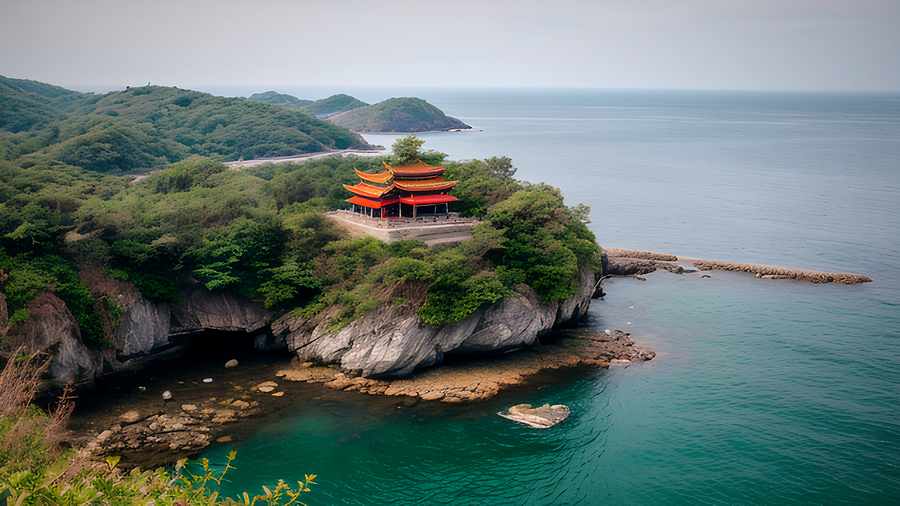
Meizhou Island is the home of the sea goddess Mazu, and the temple above the harbour is a complex of halls on a slope, with a stairway of several hundred steps and a view over the strait. The sound of the tide at Meiyu is a stretch of reef where the water comes in over the rock and makes a low boom at certain tides. The beach on the eastern side is a long curve of pale sand with a line of casuarina behind it.
Food
Island food is seafood and noodles: a bowl of rice noodles with small clams, and a plate of steamed prawns with garlic.
Where to stay
A guesthouse in the village behind the temple, with rooms facing the water; simple, and the family runs a boat to the reef.
D2、Meizhou Island on foot 0KM
Road
No driving; the island is walked and cycled, and the car stays at the mainland port.
Sights
The temple in the early morning, before the tour groups, when the halls are being swept and the incense is being lit. Then the reef path at Meiyu, where the rock is cut into steps and the water comes in below. In the afternoon the eastern beach, walking the whole curve to the headland, where the sand ends against a low cliff.
Food
A bowl of noodles with clams at a stall near the harbour, and grilled fish in the evening.
Where to stay
Same guesthouse, second night.
D3、Meizhou Island–Quanzhou 108KM
Road
Back across the ferry, then north-west on provincial roads for 108 km; the traffic is heavy near the city and the last ten kilometres are slow.
Sights
Quanzhou was the great port of the Song and Yuan sea trade, and the Qingjing mosque is the oldest surviving one in China, with a stone gate and a courtyard of carved inscriptions. The Kaiyuan temple has two stone pagodas in its yard and a hall of carved beams, and the West Street beside it is a lane of old shophouses selling incense and pastries.
Food
Quanzhou does a beef soup with a dark herbal broth, and a plate of fried oyster cakes with a sweet chilli sauce.
Where to stay
A guesthouse in the old quarter near West Street, in a converted shophouse; ask for a room at the back, since the lane stays busy.
D4、Quanzhou on foot 0KM
Road
No driving; the old quarter is flat and everything is within twenty minutes on foot.
Sights
The mosque and the temple in the morning, then the small museum of overseas trade, where the cargo of a wrecked Song ship is displayed with its ceramics and its coins. In the afternoon the lanes behind West Street, where the houses have stone doorways and the courtyards are open to the street; a puppet workshop still makes the marionettes by hand.
Food
A bowl of the herbal beef soup, and a plate of rice with braised pork and pickled mustard greens.
Where to stay
Same guesthouse, second night.
D5、Quanzhou–Hui'an 33KM
Road
A short 33 km run east along the coast road; the surface is good and the traffic is light outside the towns.
Sights
Half Moon Bay is a curve of sand between two headlands, with the water shallow for a long way out and the fishing boats drawn up at the western end. Jingfeng temple sits on a hill above the bay, with a stairway through pines and a view down the coast. Xiaozuo is a fishing village on a headland where the wind turbines stand along the ridge and the women still wear the blue headscarves.
Food
Hui'an is known for its sweet potato cakes and for a soup of small fish with mustard greens.
Where to stay
A guesthouse above Half Moon Bay with rooms facing the water; quiet, with a path down to the sand.
D6、Hui'an on foot 0KM
Road
No driving; the bay, the temple and the village are within a short ride.
Sights
The bay at low tide in the morning, when the sand flats are exposed and the villagers gather shellfish with baskets. Then the temple, where the stairway is lined with stone lions and the yard looks over the whole bay. In the afternoon the headland with the turbines, walking the ridge path to the village, where the boats are beached and the nets are spread out to dry.
Food
Sweet potato cakes from a stall by the bay, and a bowl of fish soup with mustard greens.
Where to stay
Same guesthouse, second night.
D7、Hui'an–Yongtai 150KM
Road
Inland on provincial roads, 150 km with a long climb into the hills and a series of bends; the surface is good but slow in the villages.
Sights
Yongtai is a river valley town surrounded by hills, and the old quarter has a street of wooden shophouses along the water. Songkou is an old trading town on the river, with a stone quay, a line of warehouses and a bridge of stone slabs; the lane up from the river is paved with river cobbles. Yunding is a mountain of cloud forest above the town, with a cable car and a path along the ridge.
Food
Yongtai does a river fish stewed with wine and ginger, and a bowl of rice noodles with pork and peanuts.
Where to stay
A guesthouse in the old quarter with rooms over the river; the upper floor is quieter and the view is down the street.
D8、Yongtai on foot 0KM
Road
No driving beyond the cable car station; the old town is walked.
Sights
Songkou in the morning, walking the quay and the warehouses, which still have their original timber doors and the marks of cargo on the stone. Then the old bridge, where the slabs are laid on stone piers and the water below runs clear. In the afternoon the hillside path above the town, through tea terraces, to a pavilion that looks over the whole valley.
Food
A bowl of rice noodles with pork at a shop on the quay, and a plate of stir-fried river shrimp.
Where to stay
Same guesthouse, second night.
D9、Yongtai–Nanping 140KM
Road
North on provincial roads and a stretch of motorway; 140 km through river valleys, with one long climb and a descent into the town.
Sights
Nanping sits where two rivers meet, and the town has a long promenade along the water with a pagoda on the hill above. Jiufeng Shan is a wooded hill inside the city with a stairway and a temple, and the view from the top covers both rivers. The Xiyuan gorge is a valley of streams and pools an hour out of town, with a path along the water and a series of small waterfalls.
Food
Nanping does a fish soup with sour bamboo shoots, and a bowl of noodles with braised pork and dried chillies.
Where to stay
A hotel on the promenade with rooms facing the river; parking underneath and a view of the confluence.
D10、Nanping on foot 0KM
Road
No driving; the hill is in the city and the gorge is a taxi ride.
Sights
The hill in the morning, then the promenade, where the fishing boats are moored and the old warehouses have been converted into teahouses. In the afternoon the gorge, walking the path beside the stream to the last pool, where the water is deep and green and the rock is worn into steps.
Food
A bowl of fish soup with sour bamboo shoots, and a plate of stir-fried greens with garlic.
Where to stay
Same hotel, second night.
D11、Nanping–Yong'an 135KM
Road
West on provincial roads, 135 km with a long climb and a winding descent; the surface is good but the bends are constant.
Sights
The stone forest at Linyin is a field of limestone pinnacles in a valley, with a path between them and a cave at one end where the rock has been hollowed into a hall. The fort at Anzhen is a square walled compound on a hill, with a gate, a well and a courtyard of timber houses. Gongchuan is an old river port with a stone street, a temple and a line of warehouses along the water.
Food
Yong'an does a chicken stewed with rice wine, and a bowl of noodles with pork and bamboo shoots.
Where to stay
A guesthouse in the town centre with parking at the side; simple and quiet.
D12、Yong'an–Changting 125KM
Road
West on provincial roads, 125 km through hills and Hakka villages, with one long pass and a descent into the river valley.
Sights
Changting is a Hakka town on the river, with a wall along the water, a gatehouse and a street of old shophouses. The Tingzhou old street is a lane of timber houses with stone lintels, and the Wolong academy is a courtyard school with a hall of tablets. The river bank in the evening has a line of old banyans and a stone bridge with a pavilion on it.
Food
Changting is famous for a salted pork with taro, and for a bowl of rice noodles with a thick pork broth.
Where to stay
A guesthouse inside the old street, in a timber house with rooms off a courtyard; the floorboards creak and the lane is quiet after nine.
D13、Changting–Sanming 165KM
Road
East on provincial roads and a stretch of motorway; 165 km with two climbs and a long descent into the plain.
Sights
Wanshouyan is a limestone hill with a cave where stone tools were found, and the site is opened as a small museum with a walkway into the cave. The forest at Geshikao is a hillside of old trees with a path and a viewing platform, and the air is cool under the canopy. Qilin Shan is a park hill in Sanming with a pagoda and a stairway, and the view covers the town and the river.
Food
Sanming does a dish of braised pork with dried bamboo shoots, and a bowl of rice noodles with a clear broth.
Where to stay
A hotel in the town centre with parking and a laundry; convenient for the road east in the morning.
D14、Sanming–Taining 105KM
Road
North-west on provincial roads, 105 km through hills, with a long descent into the Danxia country around Taining.
Sights
Taining is a town of red sandstone cliffs, and the Shangqing river runs through a gorge below the town, with rafts that take visitors down the water between the rock walls. The Jiulong pool is a deep green pool at the head of the gorge, reached by a path along the cliff. The Zhuangyuan rock is a pinnacle above the town with a stairway cut into the stone.
Food
Taining does a fish from the river steamed with herbs, and a bowl of rice with braised pork and dried vegetables.
Where to stay
A guesthouse on the river with rooms facing the gorge; the rafts leave from the jetty below.
D15、Taining–Fuzhou 275KM
Road
The long run home: 275 km, motorway most of the way with two service areas and a steady climb over the ridge.
Sights
Nothing scheduled except the drive, which climbs out of the gorge onto the ridge and then descends towards the coast. A stop at the second service area gives a view back over the red cliffs and the river below them.
Food
A bowl of noodles at the service area; Fuzhou has better, so I waited and ate in the city.
Where to stay
A hotel near the Fuzhou station for an early train, with parking and a laundry service.
Practical tips
- Cars are left on the mainland at Meizhou Island and the crossing is by ferry; pack a small bag for the night.
- The reef at Meiyu is slippery at low tide and the steps are narrow; keep to the marked path.
- Quanzhou's old quarter is best walked early, before the shops open and the lanes fill.
- The inland roads are slow in the villages, where drying grain takes half the width; allow extra time.
- Fuel is sparse on the mountain stretch before Taining, so fill up at the county town.
- Foreign Car Entry Self-Drive around Fujian is straightforward on these roads, and Renting a Car in China as a Foreigner needs the temporary licence, the passport and the vehicle papers kept in the car.
About this route
Fifteen days, 1,364 km, eight bases: Meizhou Island, Quanzhou, Hui'an, Yongtai, Nanping, Yong'an, Changting and Taining. Best from October to December, or April. Six days with no driving at all, and one 275 km motorway day at the end.
Distances, road surfaces and ferry arrangements were checked on the ground in October. For documents, customs formalities and vehicle papers, the Fujian traffic management office in Fuzhou and the ferry port office answer enquiries directly.
Route notes by Zara, Yunnan Province International Travel Agency (Group) Co., Ltd.