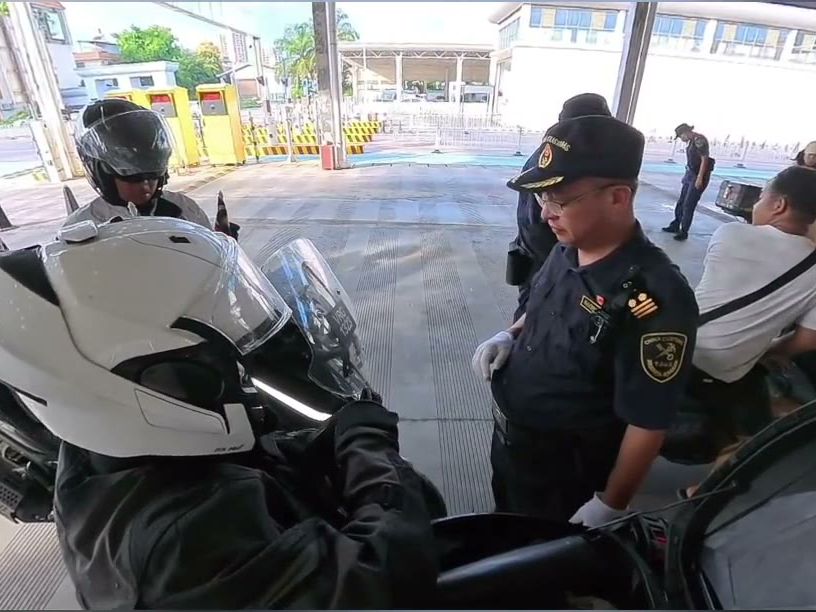
This photo shows a customs officer inspecting a motorcycle under a large shed. I've been through this more than once, and I know the routine. They check the documents, the luggage, and, importantly, the numbers on the bike: the frame number and the engine number. This is a part to take seriously, because a mismatch can get you refused.
Let me explain the pitfall. The frame number and engine number on the bike have to match the registration documents exactly. If they've been altered, ground down, welded, re-stamped, or if the engine was changed without the change being registered at home, you're in trouble. The officers know where to look and what a genuine number looks like, and there's no talking your way past it. I've seen a rider turned away over a number that didn't line up, and the whole trip stopped there.
The sensible approach is to check this long before you travel. Compare the numbers on the bike with the papers, make sure they're clear and legible, and if anything was ever changed, have the proper documents showing it. If a number is rusty or hard to read, clean it and photograph it. Don't arrive at the border hoping no one looks closely. They will.
The inspection itself isn't an ordeal if you cooperate. Stay calm, answer the questions, open the bags when asked, and let the officer work. I've found a calm, cooperative attitude makes the whole thing quick. The riders who get the longer look are the ones who seem nervous or evasive, and I've watched a perfectly innocent rider create suspicion by fussing. You've nothing to hide, so relax.
The shed in the photo is open-sided, simple, the bikes lined up waiting. It's a routine check, not a confrontation, and the officers do it all day. I've been through in a convoy and the whole process moved along steadily as each bike took its turn. Have the documents ready, in order, and don't hold things up by searching for a paper.
I also keep the bike clean enough that the numbers are easy to see. A bike caked in mud makes the inspection harder and slower, and it can look as if you're making the numbers hard to read. A quick clean before the border, and a note of where the numbers sit, saves time. I've learned to photograph the frame and engine numbers before the trip and keep them on the phone as well.
There's a related point I've mentioned before. Don't carry anything that touches on China's sovereignty or territory, on the bike or in the bags, because the inspection will find it. The ordinary stickers and rally badges are fine; the wrong print is a red line and can mean refusal. I go over the whole bike before every entry.
The customs shed in the photo is just where the paperwork meets the actual machine. The officers want to see that the bike is the one the documents describe, and that nothing has been tampered with. Get the numbers right before you travel, keep the documents tidy, and cooperate calmly. Then the inspection is a quick, ordinary step, and you're on your way with the bike properly legal.